Exploring the Main Types of Overhead Cranes Used in Factories
Why Are Overhead Cranes Essential in Modern Manufacturing?
Overhead crane types serve an important part in increasing industrial productivity and safety. Overhead cranes work to improve material handling efficiency. Overhead cranes also reduce manual labor. Throughput, therefore, increases. Workplace injuries decrease. Overhead cranes enable the secure lifting of heavy loads over factory floors. This process lessens the reliance on forklifts and manual hauling. This setup works well in busy spots like assembly lines, machine shops, and storage zones. Precise and timely movement of components aids smooth production and warehouse operations.
What Are the Key Categories of Overhead Cranes?
Overhead crane systems do not fit every situation. The primary overhead crane varieties in factories include gantry cranes, jib cranes, bridge cranes, workstation cranes, and monorail cranes. Every variety suits specific factory requirements. Such requirements encompass load capacity, movement range, and space constraints. Choosing the appropriate variety ensures optimal performance and longevity.
Gantry Cranes: Versatile Lifting for Indoor and Outdoor Use
What Is a Gantry Crane?
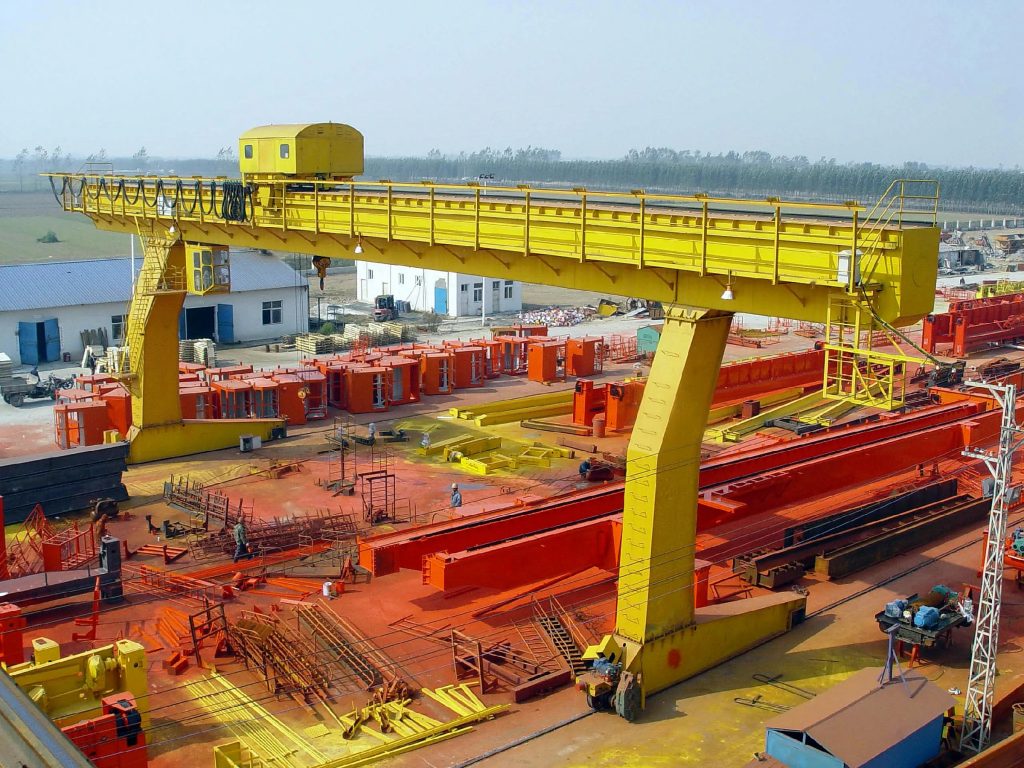
A gantry crane serves as an overhead crane with freestanding legs for support. This crane runs on wheels or tracks. Bridge cranes depend on ceiling structures, but gantry cranes suit spots without overhead runway systems. Gantry cranes provide flexibility in areas lacking fixed setups.
Common Uses for Gantry Cranes in Factories
Gantry cranes frequently manage transporting large equipment or massive components across vast workshop zones. The robust design fits well for loading and offloading substantial loads in ports or production areas. FLAGCRANE offers gantry cranes. These units feature a lifting capacity from 5t to 800t. The spans measure 7.5m to 35m. Lifting height reaches 6m to 30m. Gantry cranes function in severe environments. Temperatures range from -20℃ to 50℃.
Cost Considerations for Gantry Cranes
Costs change with crane size, load specs, and mobility options. FLAGCRANE supplies compact choices, too. Portable gantry cranes cost less than full models. Yet, portable versions meet operational demands well.
Jib Cranes: Compact and Efficient for Localized Lifting
What Is a Jib Crane?
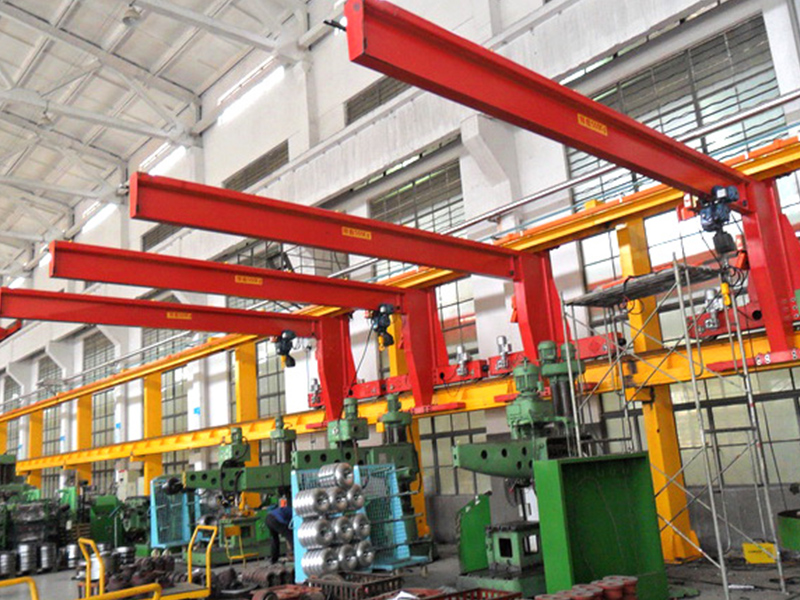
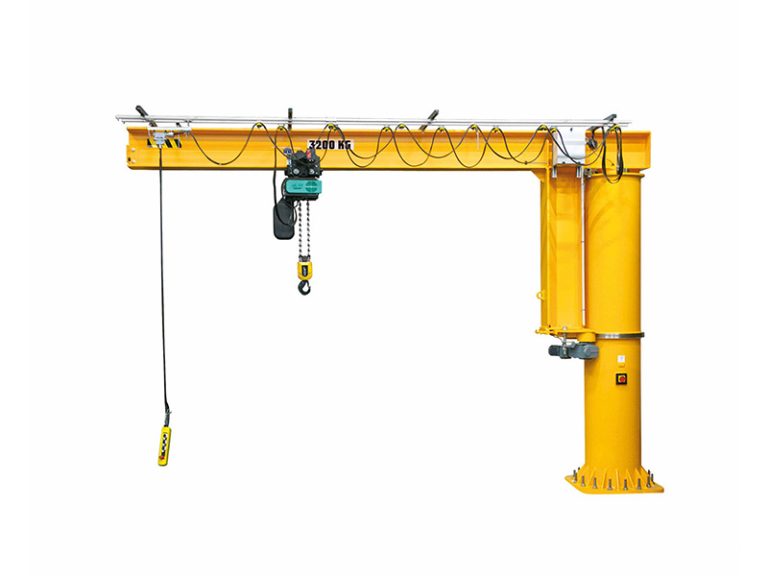
A jib crane acts as a wall-mounted or floor-mounted lifting setup with a rotating arm. This system handles localized lifting in a circular area. The design fits tight spaces that need frequent lifts.
Where Are Jib Cranes Commonly Used?
Jib cranes appear often near single workstations, such as CNC machines and welding booths. The cranes support repeated lifting tasks. These tasks demand short travel but great accuracy.
How Much Do Jib Cranes Cost?
The cost hinges on mounting type (wall vs floor), rotation angle (180° to 360°), and lifting capacity (typically up to 10t). FLAGCRANE adjusts these specs to match layout needs.
Bridge Cranes: Heavy-Duty Solutions for Full-Coverage Lifting
What Is a Bridge Crane System?
Bridge cranes use a horizontal beam, or girder, that travels along runways fixed to building structures. This setup covers the whole factory floor.
Single Girder vs Double Girder Bridge Cranes
Single Girder Features
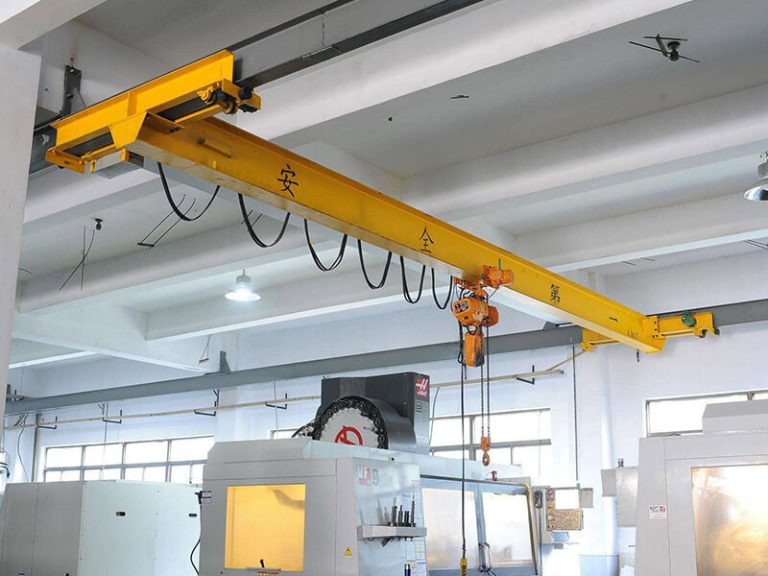
Single girder systems cost less and weigh less. They suit moderate load capacities. FLAGCRANE offers setups like lifting capacities from 1t to 32t, span length from 7.5m to 28.5m, and working classes up to A4.
Double Girder Features
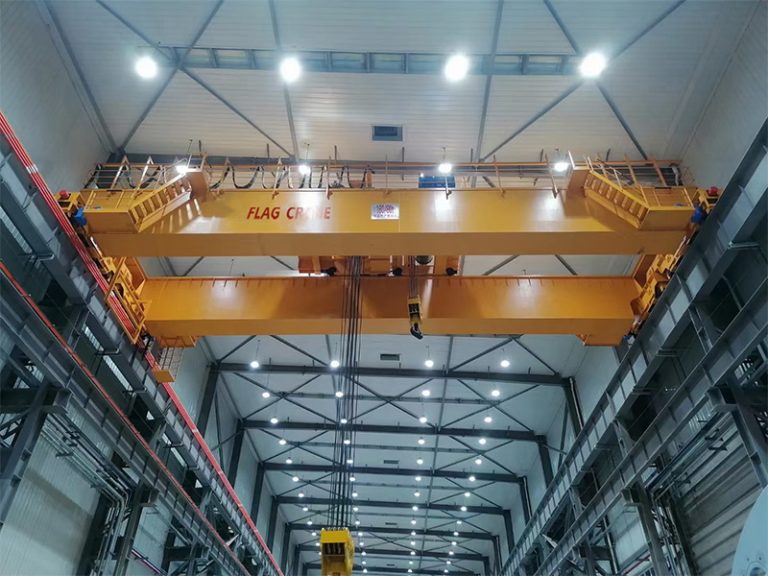
Double girder bridge cranes handle heavier loads. They provide taller hook heights. These cranes fit factories with large equipment or tall items. FLAGCRANE’s models include lifting capacities from 5t to 320t with spans up to 35m. The range covers many industrial uses.
Typical Applications of Bridge Cranes in Industry
Bridge overhead cranes serve widely in big manufacturing plants. Operators use them to shift raw materials or finished goods over long distances. Common fields include steel production, automotive assembly, and heavy equipment manufacturing.
Cost Factors of Bridge Crane Systems
Pricing depends on girder type, span length, control method (manual vs automated), and installation demands. Customization adds to the total cost.
Top Running vs Under Running Overhead Crane Systems
What Are the Differences Between Top & Under Running Designs?
Top Running Systems
Top running cranes travel on top of beams. They handle higher loads and broader spans. Such cranes fit heavy industrial work.
Under Running Systems
Under-running cranes hang from lower flanges. They make better use of headroom in buildings with height limits.
Where Are These Systems Typically Installed?
Use Cases Based on Design
Top running models appear in large plants like steel mills. Under-running types suit smaller areas like workshops or warehouses.
Cost Comparison Between Top & Under Running Options
Main price elements cover building support needs, lifting range, and custom engineering.
Why Safety Training Matters with Overhead Bridge and Gantry Cranes
Key Safety Practices for Operating Overhead Crane Equipment
Safe use requires operators to check equipment often before shifts. Checks spot wear or mechanical problems. FLAGCRANE stresses operator certification programs for correct use. Safety features contain emergency stop buttons and overload limiters. FLAGCRANE acts as a one-stop provider. FLAGCRANE provides safety training and related courses. These steps boost efficiency and cut workplace risks.
Discover FLAGCRANE’s Full Range of Overhead Crane Solutions
Who Is FLAGCRANE and What Do We Offer?
FLAGCRANE operates as a professional group company. The company combines crane design, manufacturing, sales, installation, after-sales service, and maintenance. The main base lies in Henan Province's Changyuan Industrial Park. More than 1,600 employees operate there. The production area covers over 400,000 square meters.FLAGCRANE focuses on quality solutions for all overhead crane types.
Notable products include:
- Double Girder Gantry Crane (Model: 800T) – suitable for ultra-heavy industrial tasks.
- European-style Double Girder Overhead Crane (Model: 360T) – Ideal for advanced manufacturing.
- Casting Overhead Crane (Model: 225T) – Tailored for metallurgical applications.
FLAGCRANE advances eco-friendly design. Precise energy control systems help. Material efficiency standards apply during production.
Why Choose FLAGCRANE Products for Your Factory Operations?
Custom-engineered solutions match facility layouts. Competitive pricing covers all overhead crane types. FLAGCRANE stands as a top pick. Global work spans over 50 countries, including Germany, the USA, and Brazil. End-to-end service runs from consultation to after-sales support.
FAQ
Q: What type of overhead crane is best suited for outdoor use?
A: Gantry cranes work well for outdoor settings. The freestanding design avoids the need for roof-mounted runways.
Q: Can workstation cranes be expanded later?
A: Yes. Workstation cranes from FLAGCRANE use modular designs. These designs support future scalability. Scalability comes from new layout changes.
Q: What’s the difference between monorail and bridge cranes?
A: Monorail systems move loads along a fixed linear path. Bridge cranes cover a wider area. Bridge cranes provide X-Y movement capabilities.
Q: Are jib cranes suitable for heavy lifting?
A: Jib cranes handle lighter loads near workstations in general. Bridge or gantry cranes handle heavier lifting.
Q: Do crane suppliers like FLAGCRANE offer installation services?
A: Yes. Our team follows in-house rules and regulations during installation. Compliance leads to smooth execution. Execution fits factory needs.