Understanding C Hook Coil Lifters
I. What Is a C Hook Coil Lifter? (Structure & Working Principle)
1. Definition and Basic Function
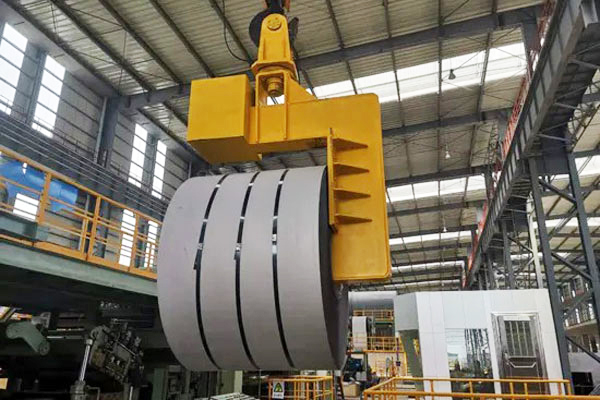
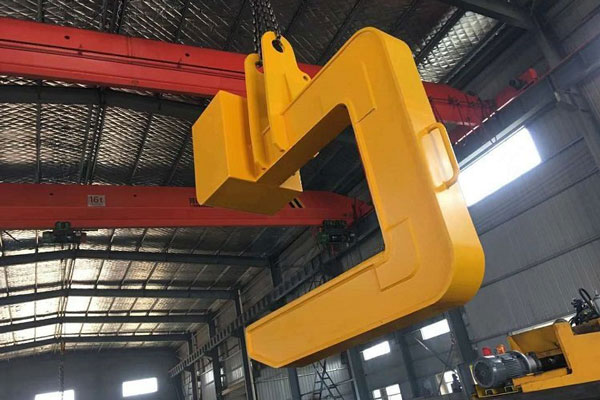
A C hook coil lifter serves as a specific below-the-hook lifting attachment built to manage and move coiled materials like steel, aluminum, and other metals. The main job of this device involves grabbing the inner diameter (ID) of a coil placed flat, which permits safe and effective lifting through an overhead crane setup.
The unique C-shaped form lets the lifter slide into the coil's center, where it holds the coil from the inside. After insertion, the C hook coil lifter relies on gravity and counterbalance ideas to keep the load steady while lifting and moving. This basic setup makes sure the load stays firm without needing outside locks or power supplies.
2. Core Structural Components
A C-hook for coil lifting consists of several vital structural parts that aid its safety and operation:
Main Load-Bearing Frame: Usually made from strong structural steel, this frame bears the full load weight and fights bending under pressure.
Load Arm: Stretches out level from the upright stem of the “C” and handles the coil's actual weight. The arm needs proper thickness and power based on the planned load.
Throat Depth and Opening: This means the level space between the upright stem and the inner side of the load arm. Enough throat depth guarantees a fit with different coil sizes.
Counterweight System: Built into the frame or added outside, it balances the lifter in use, which helps keep the position level.
Protective Liners and Coil Guides: These often get added to cut down metal-to-metal touch, which stops harm to both the coil and the lifter.
The carefully built structure makes certain that the C hook coil lifter delivers safe lifting, cuts down the risk of slips, and boosts operator control during placement.
II. Key Differences in C Hook Configurations
1. Capacity Classification: Standard vs. Heavy Duty
C hook coil lifters come in many rated load sizes, often grouped as standard or heavy-duty kinds:
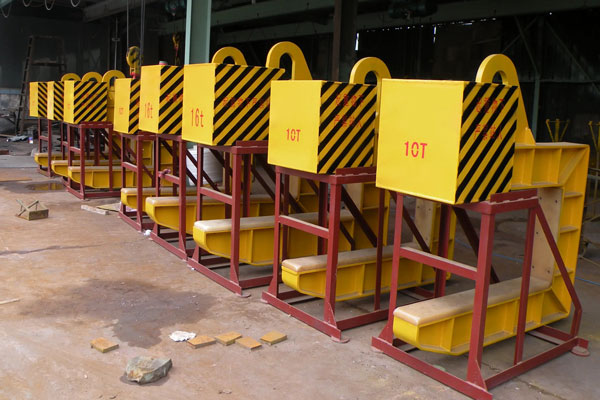
Standard Duty C hooks suit light to medium-weight coils, with usual capacity from 0.5 tons up to 10 tons.
Heavy-duty models handle much heavier loads and include stronger structural plates and thicker arms. For instance, FLAGCRANE supplies custom crane systems with lifting capacity from 5t to 800t, which shows the growth needed for heavy-duty uses.
The rated load capacity stands as the top factor in picking between standard and heavy-duty types. Putting too much load on a lifter can cause a structural break, so exact grouping matters a lot.
2. Functional Configuration: Manual vs. Motorized
Based on work needs, C hook coil lifters can work as fixed/manual or motorized:
Manual C Hooks keep a plain design with no moving parts except for insertion and crane lifting. These are cheap to buy and need little upkeep.
Motorized C Hooks add powered turn or tilt actions, which help a lot in busy settings where exact coil position counts.
Motorized choices fit best for automated or half-automated lines where cutting human work raises safety and speed.
III. How to Select the Right C Hook Coil Lifter
1. Match Coil Specifications
Picking a fitting C hook for coil lifting means lining up the device with exact coil details:
Inner Diameter (ID): Sets if the hook can enter the coil at all.
Outer Diameter (OD): Make sure of space and steadiness while lifting.
Coil Width: Impacts how load spreads on the arm.
Coil Weight: Has to stay well under the rated capacity of the C hook, with a good safety buffer.
The throat depth requires enough reach into the coil’s center without blocking other parts, while the load arm length should spread the weight evenly over its length.
2. Evaluate Operating Conditions
Site and workflow elements greatly shape lifter pick:
Lifting Frequency: Busy output calls for tougher builds and maybe motorized parts.
Environment: In open-air or rust-prone spots, paints or stainless-steel builds may prove needed.
Temperature Range: FLAGCRANE’s equipment handles air temperatures from -20℃ to 50℃, so it works in varied site conditions.
Basic Guide: Busy pace plus heavy loads call for stronger structural plans.
3. Ensure Safety and Compliance
Safety rules must not be ignored when picking a C-hook coil lifter:
Devices have to meet OSHA and ASME B30 standards for below-the-hook gear.
Rated capacity must be clearly shown on the frame.
Load testing papers and check records should come with each unit.
Steady upkeep logs and tags secure lasting work soundness.
FLAGCRANE also gives safety training for clients in various fields to push better use habits and raise output “ to increase safety and productivity during their lifting operations.”
IV. Operational Benefits of Using the Correct C Hook
1. Increased Handling Efficiency
Using a well-matched C-hook coil lifter greatly boosts handling tasks:
Quicker setup from the right throat depth and arm length
Shorter load/unload rounds cut crane wait time
Better steady flow in output lines
This aids stronger use of work force, gear, and hours.
2. Improved Safety and Load Stability
A well-chosen C hook for coil lifting sharply drops work risk:
Holds balance with built-in counterweights
Stops load sway or tilt
Cuts coil harm with soft liners or guides
These gains also ease stress on crane workers by cutting manual fixes in transit.
V. Maintenance Considerations for Long-Term Performance
To keep the operation strong over the years, C hook coil lifters demand steady upkeep:
Steady checks of welds and high-pressure areas
Watching wear on the load arms from the ongoing coil touch
Putting on rust-proof paints for units kept outside or in damp spots
Making sure all ID plates and safety tags stay clear and whole
FLAGCRANE aids lasting gear health by supplying spare parts for many brands and full after-sales support. “Our professional service team is dedicated to ensuring an operative crane in your worksite and is always ready to provide 24/7 after-sales services.”
FLAGCRANE supplies a broad set of lifting solutions made for coil handling tasks. For example:
A5-class cranes with a lifting capacity from 5t to 320t suit medium-duty steel mills.
For high-capacity tasks, FLAGCRANE offers heavy-duty gantry cranes up to 800t—fit for large steel coil work.
Each item gets built in FLAGCRANE’s current plant, covering more than 850,000 square meters with a heavy steel shop of over 400,000 square meters. All gear meets ISO, CE, and SGS certifications, which ensure a secure fit to world quality rules. “FLAGCRANE's equipment has passed ISO, CE, SGS, SABER, and other domestic and foreign professional certifications.”
FAQ
Q: What is a C-hook coil lifter used for?
A: A C hook coil lifter is used for lifting metal coils by inserting into their inner diameter (ID) and supporting them during horizontal transportation with overhead cranes.
Q: How do I determine which C hook is right for my coils?
A: You must match critical parameters like inner diameter, outer diameter, width, and weight of the coil, and confirm that your selected hook has sufficient throat depth, arm length, and rated capacity with a safety margin.
Q: What’s the difference between standard-duty and heavy-duty C hooks?
A: Standard duty C hooks are designed for lighter coils (up to about 10 tons), while heavy-duty models feature thicker structural elements suitable for high-capacity applications often exceeding 50 tons.
Q: Are motorized C-hook coil lifters worth it?
A: If your operation involves high-frequency lifting or needs precise positioning (e.g., automated processes), motorized versions offer significant time-saving benefits despite higher initial costs.
Q: Does FLAGCRANE offer custom solutions for coil lifting?
A: Yes. FLAGCRANE provides professional, customized lifting equipment for customers with different applications, including non-standard designs such as 800T double-girder gantry cranes or 225T casting overhead cranes, specifically engineered for coil-handling challenges.