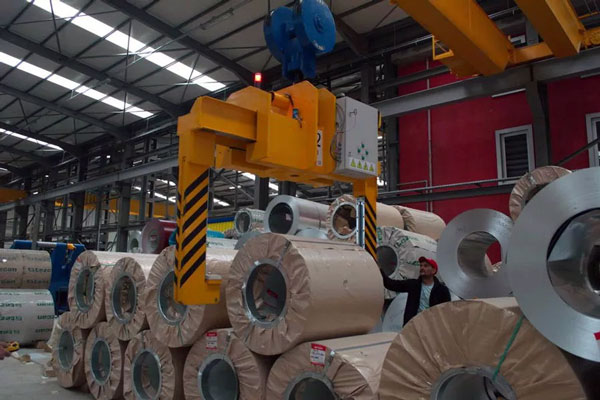
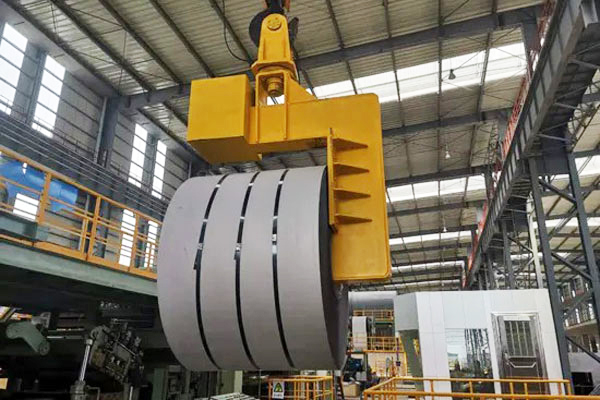
A 10 ton gantry crane may look simple on a quotation sheet, yet two cranes with the same capacity can perform very differently. Span, lifting height, duty cycle, travel distance, load shape, controls, and environment all affect the final configuration.
For steel processing, manufacturing, maintenance, and power or water facilities, the key question is not only “Can it lift 10 tons?” but “Which structure fits this workspace?” This guide covers crane types, specifications, applications, and the information needed for an accurate quotation.
Which 10 Ton Gantry Crane Type Is Right for Your Operation?
10 Ton Single Girder Gantry Crane: When Is It the Better Choice?
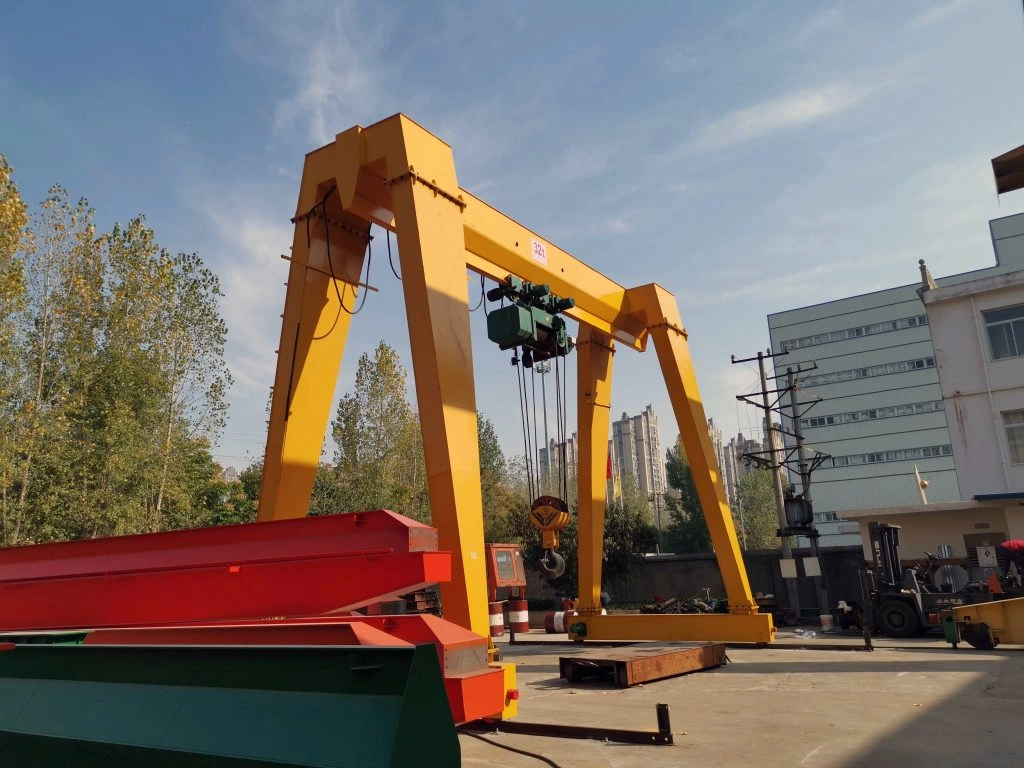
For standard material handling, an MH single-girder crane is often the first configuration to evaluate. FLAGCRANE’s MH series is a rail-running medium and light gantry crane with capacities from 1 to 32 tons. It can use a CD/MD electric wire-rope hoist or an electric chain hoist.
For the 10-ton MH configuration, the technical range includes a 7.5–35 m span and 6–30 m lifting height. Reference data gives 0.7/7 m/min lifting speed, 20/30 m/min trolley speed, and A4 working duty.
This structure suits applications where the load, lifting frequency, and span do not require a heavier double-girder system. Its simpler layout can also ease transport, installation, and maintenance.
10 Ton Double Girder Gantry Crane: When Do You Need More Rigidity?
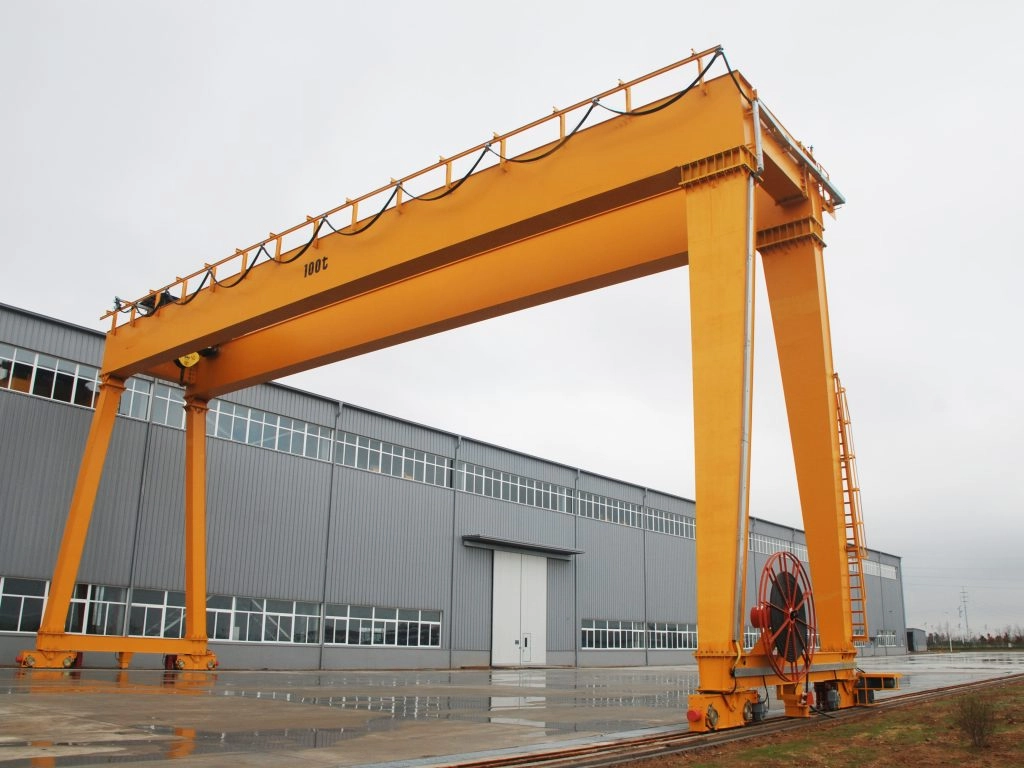
A double-girder crane becomes more attractive as operating frequency, span, structural demand, or load-control requirements increase. MG double-girder gantry crane is designed for heavier service and can work indoors or outdoors. It is suitable for high-frequency material handling and can be configured with hooks, lifting beams, C-hooks, lifting tongs, grabs, or electromagnets.
When Does a 10 Ton Semi Gantry Crane Make More Sense?
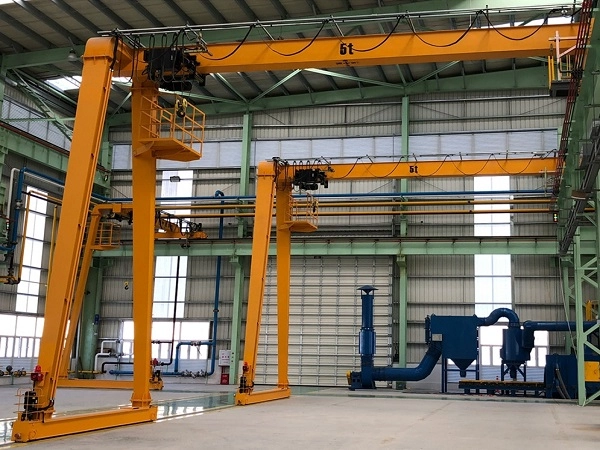
A semi gantry crane is useful when a full gantry arrangement is unnecessary or difficult to install. In the BMH/BMG crane design, one end travels on a ground rail while the other travels on a rail supported by the building. This can extend coverage close to walls.
The series includes a 10-ton configuration, with spans up to 35 m and lifting heights up to 18 m. It can suit manufacturing workshops, assembly plants, warehouses, storage areas, and outdoor production spaces where the layout favors one-sided building support.
| Design | Better fit | Main consideration |
| MH single girder | Standard industrial lifting | Lower structural complexity |
| MG double girder | Higher-frequency or demanding duty | Greater rigidity and configuration flexibility |
| BMH/BMG semi gantry | Sites using building support on one side | Uses existing plant structure |
10 Ton Gantry Crane Specifications That Actually Matter
Span and Lifting Height: Start With the Working Area
Capacity comes first, but span and hook height determine whether the crane can serve the required work zone. Measure span from the actual runway arrangement, not simply from building width. For lifting height, consider floor level, tallest load, equipment height, clearance, and hook approach.
A useful site survey should record:
- Maximum load and dimensions
- Required working span
- Hook lifting height
- Crane travel length
- Indoor or outdoor conditions
- Available power supply
Oversizing span or height can add steel weight and cost without improving production.
Working Duty, Hoist, Speed, Control and Power Supply
Working duty matters when a crane lifts repeatedly throughout a shift. Occasional maintenance does not impose the same service demand as regular production.
Hoist selection also changes handling behavior. The MH series can use wire-rope or chain hoists. Available gantry safety provisions include lifting and travel limit switches, overload protection, emergency stopping, low-voltage protection, buffers, and remote or indoor controls.
At FLAGCRANE, we match these elements to the load, operating frequency, facility layout, and local electrical conditions rather than treating rated capacity as the complete specification.
Where Does a 10 Ton Gantry Crane Work Best?
Steel Mills and Metal Fabrication
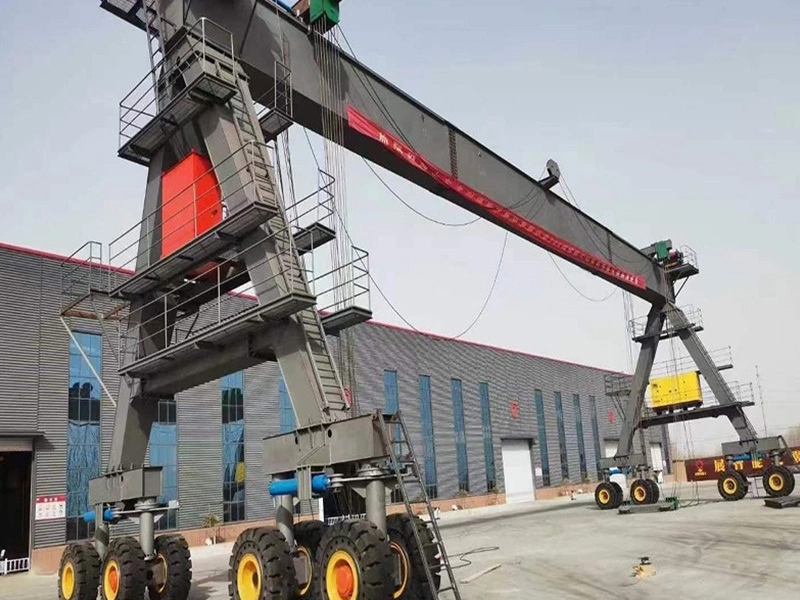
In steel processing and fabrication, gantry cranes can handle fabricated sections, plates, machinery parts, maintenance components, and coils when suitable attachments are used. Depending on the load, lifting beams, C-hooks, tongs, or electromagnets may be considered.
Dust, frequent operation, heat, or outdoor exposure can change equipment requirements, so these conditions should be discussed before design is finalized.
Manufacturing Plants and Maintenance Workshops
A 10-ton industrial gantry crane can support machine assembly, equipment installation, mold handling, component transfer, and maintenance. Gantry layouts are useful where floor-level rails are practical and an overhead runway is unavailable or undesirable.
Maintenance use may be intermittent, while production lifting can be frequent. That difference should influence working duty, speed control, and the hoisting mechanism.
Power Plants and Water Facilities
Power and water facilities may need lifting equipment for pumps, motors, valves, mechanical assemblies, and maintenance components. Where a full overhead runway is impractical, a gantry or semi-gantry arrangement can cover a defined equipment area.
The design should follow the real maintenance route: pickup point, travel path, and set-down position. This is more useful than selecting by capacity alone.
10 Ton Gantry Crane Cost: What Buyers Should Check Before Requesting a Quote
What Determines the Price of a 10 Ton Gantry Crane—and What Should You Send the Supplier?
There is no meaningful single price for every 10-ton crane because structural and electrical requirements vary. Main cost drivers include:
- Single-girder, double-girder, or semi-gantry structure
- Span, lifting height, and travel length
- Working duty and operating frequency
- Hoist or trolley configuration and speeds
- Control method, electrical system, and power supply
- Indoor or outdoor conditions
- Rails, installation, and shipping destination
- Special lifting attachments
For an accurate proposal, FLAGCRANE needs rated capacity, span, lifting height, travel length, load description, lifting frequency, operating environment, power supply, and whether the facility is new or existing. A layout drawing or clear site dimensions can speed up engineering.
The objective is not the most complex crane. It is enough capacity, duty, control, and structural strength for the job without paying for unnecessary features.
FAQ About 10 Ton Gantry Cranes
Q: How much does a 10 ton gantry crane cost?
A: Price depends on structure, span, lifting height, duty, hoist or trolley, controls, electrical requirements, environment, installation, and delivery location. A reliable quotation starts with operating and site data rather than a universal price.
Q: What are the typical specifications of a 10 ton gantry crane?
A: Key specifications include capacity, span, lifting height, working duty, lifting and travel speeds, control method, power supply, runway length, and environment. For FLAGCRANE’s 10-ton MH configuration, the range includes a 7.5–35 m span and 6–30 m lifting height.
Q: Should I choose a 10 ton single girder or double girder gantry crane?
A: A single-girder design often suits standard industrial handling. A double-girder crane is worth evaluating for higher-frequency work, demanding duty, greater rigidity, or more complex lifting arrangements.