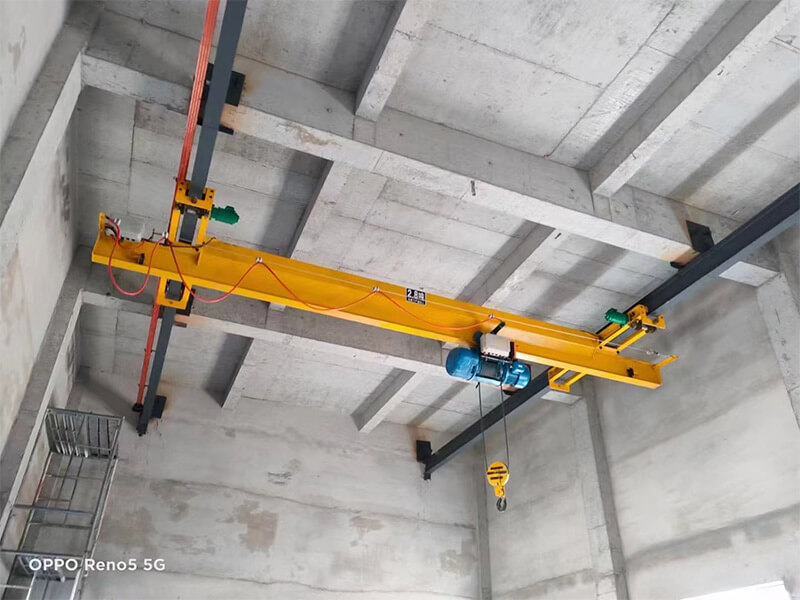
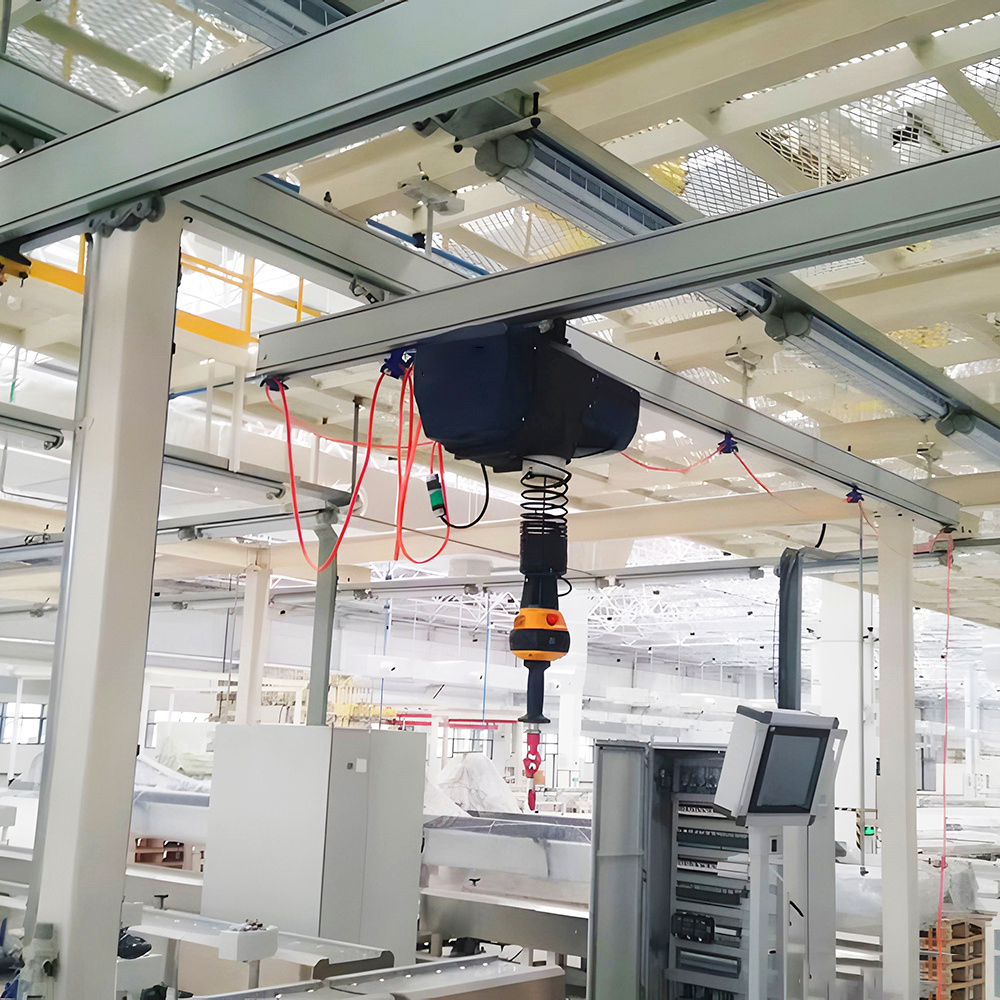
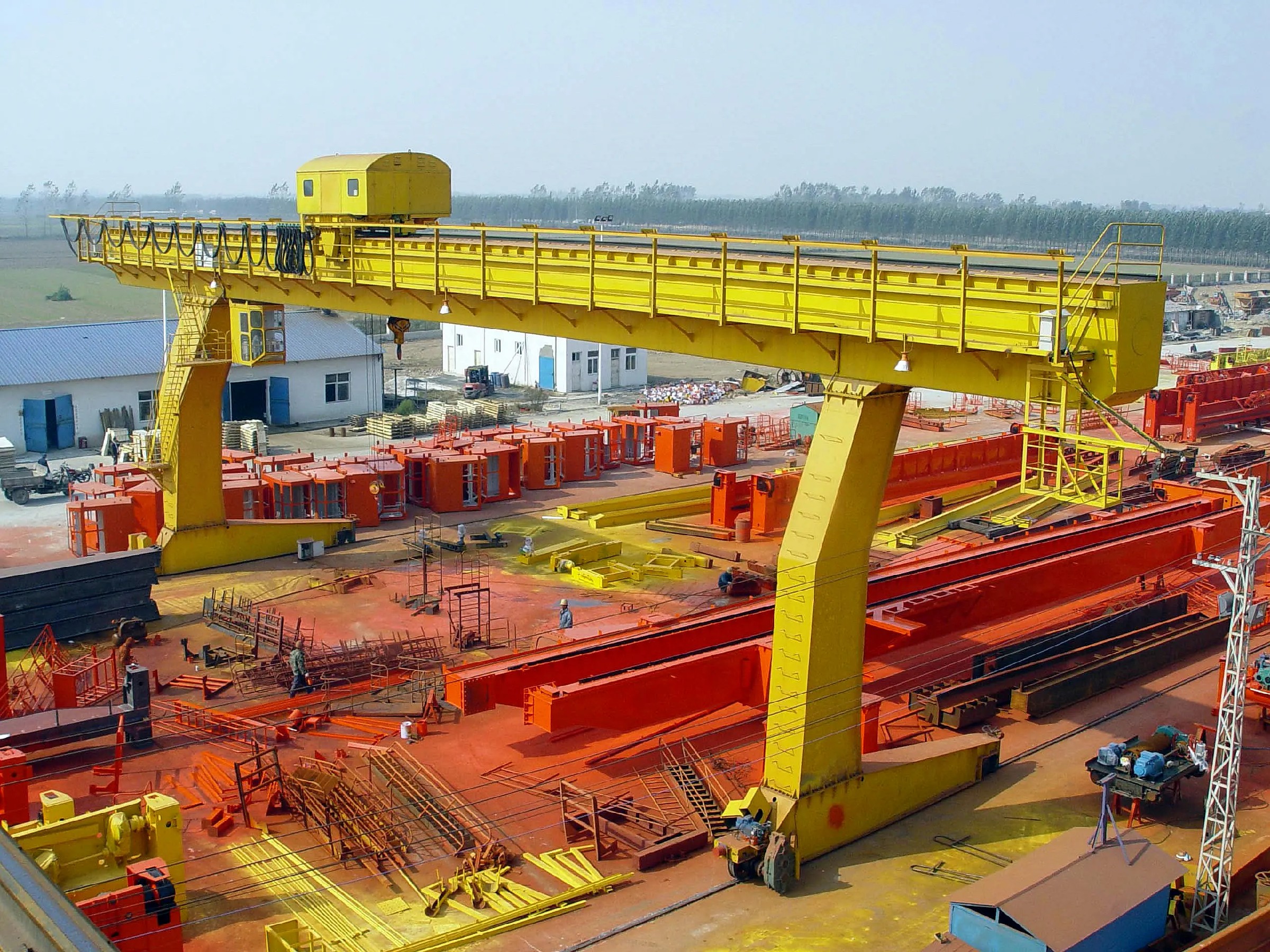
Buying an overhead crane involves more than choosing tonnage and comparing prices. The crane beam, hoist/trolley, crane track, controls, supporting structure, and crane accessories must operate as one system. A poor match may restrict coverage, overload the building, or increase maintenance.
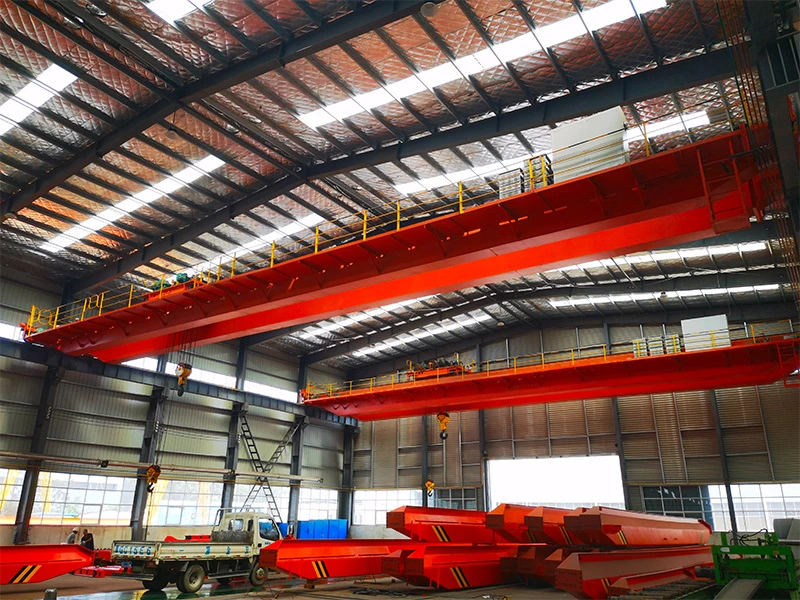
What to Define Before You Buy an Overhead Crane and Hoist
What Loads Will the Crane Handle?
Begin with the heaviest item, then describe the loads handled during a normal shift. Engineers need the load’s dimensions, shape, center of gravity, temperature, and lifting points as well as its weight.
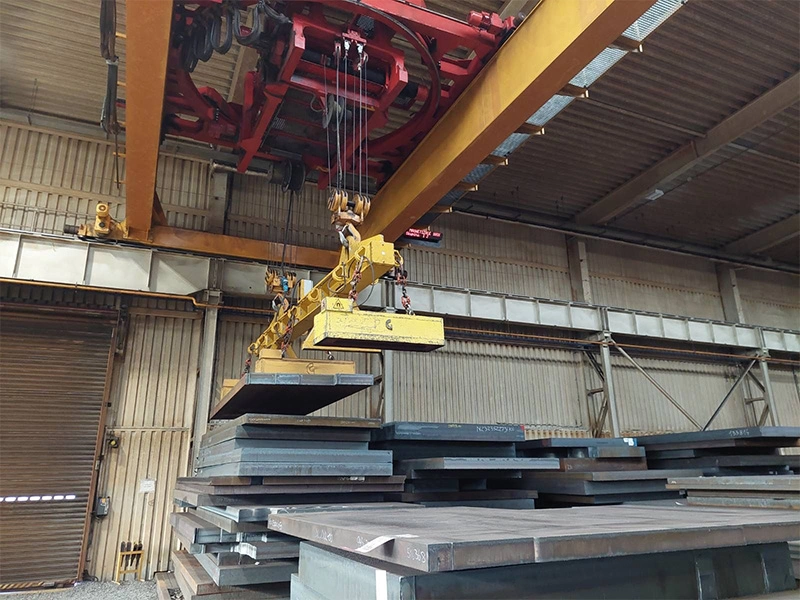
A machine component may use standard slings, while a steel coil may require a C-hook or lifting tong. Long fabrications may need a lifting beam to control bending and rotation. The weight of every attachment must be included in crane capacity.
Separate maximum load from typical load. A crane that occasionally lifts 10 tons but usually moves 3-ton parts has a different operating profile from one repeatedly handling 9 tons.
Capacity, Span, Lift Height and Hook Approach
Four measurements shape the basic design:
1.Capacity, including below-the-hook equipment
2.Span between runway rail centers
3.Vertical hook travel
4.Hook approach to walls, machines, and runway ends
Roof trusses, ducts, lighting, and service lines may restrict headroom above an existing runway. A compact crane can improve usable hook height, but only after checking building geometry and wheel loads.
Duty Cycle and Operating Environment
Identical capacity and span do not guarantee identical components. Record operating hours, lifts per hour, average load, travel distance, and starts. Frequent inching can be more demanding than a few long movements.
Environment affects motors, brakes, electrical protection, coatings, and maintenance intervals. Steel plants may involve heat and dust; water facilities may involve humidity or corrosion; outdoor utility work may need weather protection. Metallurgical work with frequent braking and high utilization requires a purpose-designed system rather than a standard workshop crane.
How to Choose the Right Overhead Crane and Hoist Configuration
Single Girder vs Double Girder Overhead Crane
Neither design is automatically better. The choice depends on load, span, headroom, duty, building strength, and plans.
| Decision point | Single girder | Double girder |
| Structure | One main beam | Two main beams |
| Common fit | Light to medium handling | Higher-duty handling |
| Building impact | Lower self-weight | Closer structural review |
| Hook height | May be more limited | Often better vertical clearance |
| Added options | Simpler arrangement | More room for walkways or auxiliary equipment |
FLAGCRANE’s LD single-girder range is used for machining, assembly, maintenance, and warehouse work. Our N/LH double-girder crane uses an electric hoist trolley for industrial production, assembly, maintenance, handling, and power-station applications.
Wire Rope Hoist vs Chain Hoist
A chain hoist is compact and practical for localized lifting, maintenance bays, and lighter handling cycles. FLAGCRANE’s HB electric chain hoist uses a compact alloy body, two-stage gearing, and can be installed on several crane configurations.
A wire rope hoist is usually considered for longer lifting travel, higher operating frequency, or an integrated crane mechanism. CD and MD models provide single-speed and dual-speed options and can work independently on an I-beam or on bridge cranes.
Choose by lifting height, speed, positioning accuracy, duty, available space, and maintenance access, not capacity alone.
Controls, Safety Features and Future Expansion
Pendant control suits straightforward workshop handling. Radio remote control lets the operator select a safer viewing position, while cab control may suit heavy-duty or long-travel service.
A practical safety package may include upper and lower limits, overload protection, emergency stop, buffers, voltage and current protection, and anti-collision devices where cranes share a runway. Variable-frequency control supports smoother acceleration, deceleration, and positioning.
Before finalizing the design, consider whether production volume, load size, runway length, automation, or the number of cranes may change. Planning realistic expansion early is easier than modifying the building and crane later.
Customer Case: A 25/5-Ton Double Girder Overhead Crane for a Philippine Customer
Project Background and Key Lifting Requirements
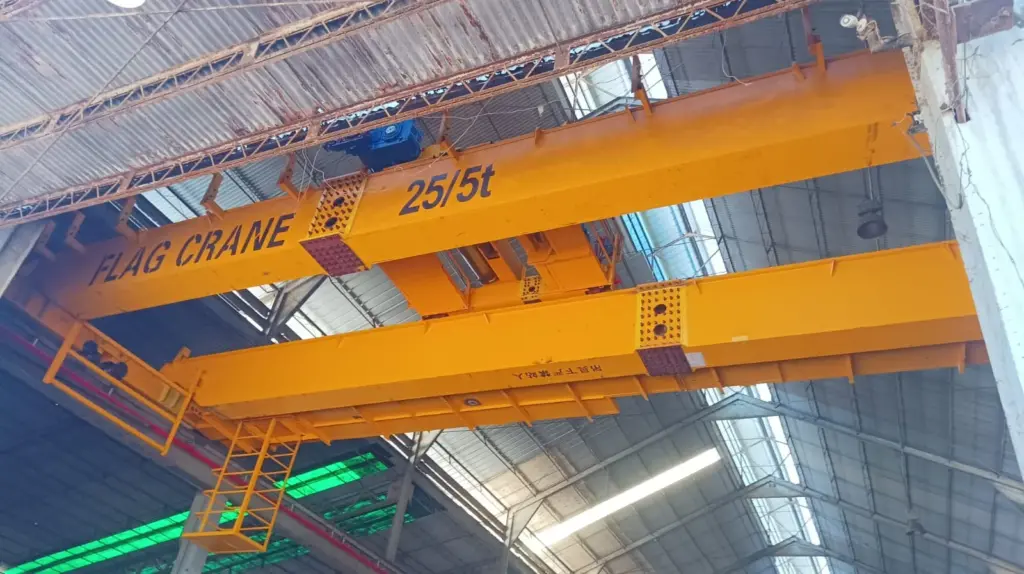
Our cooperation with this customer began in 2022, when they purchased a 25-ton double-girder overhead crane from FLAGCRANE. After three years of operation, the crane continued to meet their expectations for performance, reliability, and overall quality. This positive operating experience led the customer to return to us in 2025 for another production crane project.
The new overhead crane was specified for regular production use rather than occasional maintenance work. Its main technical parameters were:
| Specification | Project requirement |
| Main lifting capacity | 25 tons |
| Auxiliary lifting capacity | 5 tons |
| Crane span | 14 meters |
| Lifting height | 9 meters |
| Power supply | 440V, 60Hz, three-phase |
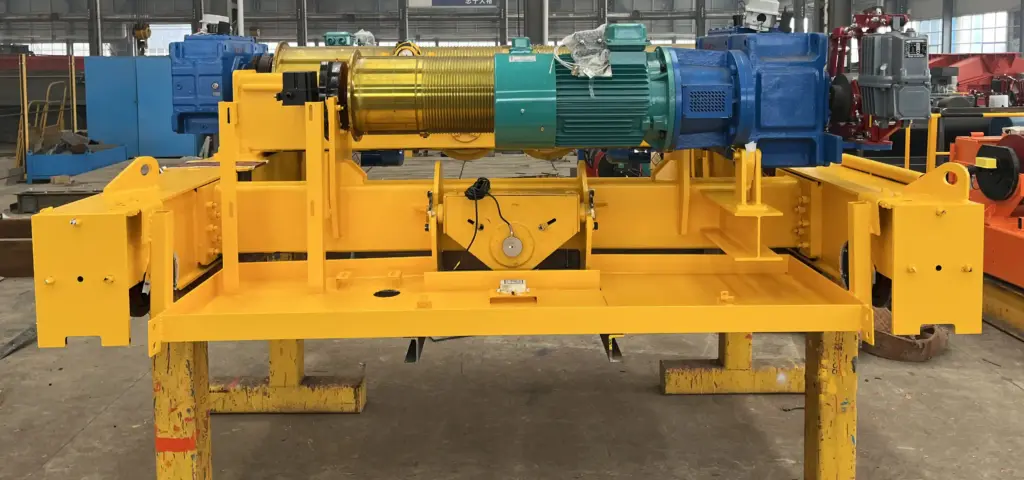
| Trolley configuration | Heavy-duty winch-type trolley |
The 25/5-ton arrangement provides separate main and auxiliary lifting capacities. This configuration can give production teams greater flexibility when handling loads that require different lifting speeds, hook capacities, or positioning procedures. The heavy-duty winch trolley was selected to support the customer’s production requirements rather than relying on a lighter hoist configuration.
Supplied Configuration and Lessons for Buyers
The crane was delivered to the customer’s site in April 2026. The customer’s own engineering team completed the installation in early June. After one month of reliable and trouble-free operation, the customer confirmed their satisfaction and shared an operating video with us as positive feedback. For more details of this customer case, please watch the video.
This repeat order offers three useful lessons for overhead crane buyers:
1.Previous operating performance is an important supplier evaluation factor. A crane’s real value becomes clearer after years of production use, not only during factory inspection or commissioning.
2.Production duty should influence the lifting mechanism. Capacity alone does not determine whether an electric hoist or heavy-duty winch trolley is appropriate. Operating frequency, load profile, required speeds, and positioning needs must also be reviewed.
3.Electrical and installation conditions should be confirmed early. Power supply, span, lifting height, site access, runway conditions, and the installation team’s responsibilities should be agreed before manufacturing and shipment.
At FLAGCRANE, we use this information to match the bridge structure, trolley, controls, and electrical system to the customer’s actual operating conditions. A complete technical review helps reduce specification changes and supports a smoother installation process.
What Determines Overhead Crane Cost and Long-Term Value?
Price Factors Beyond Lifting Capacity
Price is influenced by girder type, span, lift height, duty class, hoist design, speeds, controls, environmental protection, electrical components, runway requirements, and attachments. Freight, packaging, installation, commissioning, documentation, and spare parts also affect the total.
A low equipment price may not mean low ownership cost. Compare energy use, inspection access, parts availability, maintenance, and downtime risk. Focus on reliable performance over the system’s service life.
How to Evaluate an Overhead Crane Supplier
Review more than a catalog. A capable supplier should ask detailed application questions, check drawings, explain design choices, provide clear documents, and define installation and after-sales responsibilities.
At FLAGCRANE, we integrate crane design, manufacturing, sales, installation, after-sales support, and maintenance. Our production resources include CNC cutting, automatic welding, shot blasting, and inspection equipment for standard and customized lifting projects.
What Information Should You Send for an Accurate Overhead Crane Quote?
Overhead Crane RFQ Checklist
Send these details with your request:
1.Maximum and typical load, including attachments
2.Span, lift height, runway length, and headroom
3.Building drawings and runway details
4.Operating hours, lifts per hour, and positioning needs
5.Indoor or outdoor location and environmental conditions
6.Power supply, control method, and required speeds
7.New or existing factory, installation location, and destination
8.Required standards, commissioning support, and delivery date
Our project questionnaire also asks about intended purpose and detailed working conditions. Complete information helps us reduce assumptions and prepare a more accurate proposal.
Frequently Asked Questions
Q: How much does an overhead crane and hoist cost?
A: Cost depends on capacity, span, lift height, duty, hoist type, controls, environment, supporting structure, freight, and installation. A reliable price requires project-specific dimensions and operating data.
Q: How do I choose the right overhead crane capacity?
A: Include the heaviest load, slings, spreaders, and below-the-hook devices. Then consider operating frequency and possible future loads. Final capacity should be confirmed during engineering review.
Q: What is the difference between a single-girder and double-girder overhead crane?
A: A single-girder crane uses one main beam and generally has a lighter structure. A double-girder crane uses two beams and is often selected for demanding duty, improved hook height, or additional equipment.
Q: Should I choose a wire rope hoist or chain hoist for an overhead crane?
A: Chain hoists suit many compact and localized lifting tasks. Wire rope hoists are commonly selected for longer lifts, integrated crane service, or more demanding cycles.
Q: What information is needed for an overhead crane quotation?
A: Provide capacity, span, lift height, runway length, building drawings, duty cycle, environment, power supply, controls, installation location, and the material-handling task. Complete data produces a more accurate proposal.