An overhead crane shifts massive materials across a specific zone without taking up valuable floor space. The overhead crane hoist raises the cargo. Then, the overhead crane trolley shifts it along the overhead crane bridge. Finally, the bridge journeys along elevated overhead crane runways.
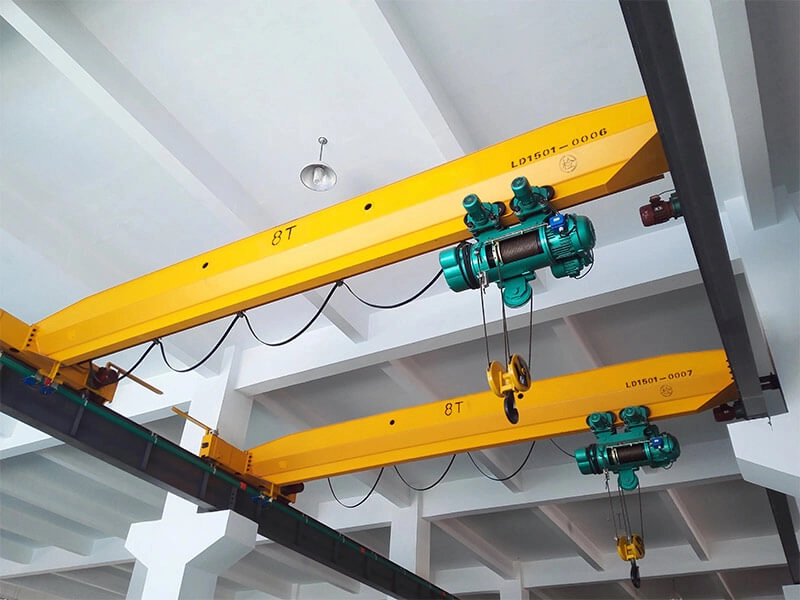
Lifting limit alone cannot guarantee a dependable setup. Span, hoist height, usage frequency, facility layout, movement pace, control systems, safety mechanisms, and cargo form all influence the final layout.
What Is an Overhead Crane?
An overhead crane has a movable bridge spanning a work area. The bridge travels on parallel runway rails, while a hoist and trolley position a suspended load within a rectangular coverage zone.
Because it operates above the floor, aisles, machines, and workstations remain accessible. This suits repetitive lifting, assembly, loading, installation, and repair work.
Overhead Crane vs. Bridge Crane: Understanding the Terminology
“Bridge crane” usually describes the common overhead configuration: one or two girders connected to end trucks and traveling on elevated runways. “Overhead crane” is often the broader commercial term.
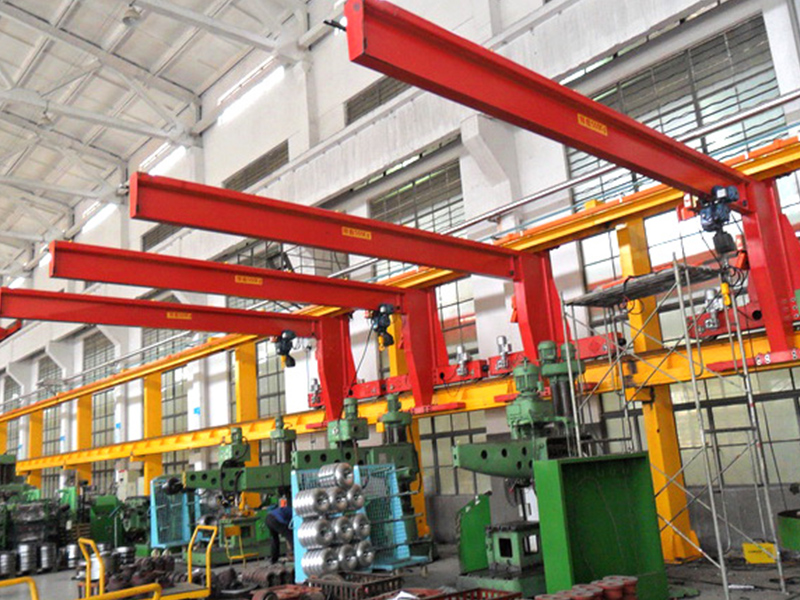
It differs from a gantry crane, which supports its bridge on legs, and a jib crane, which rotates around a fixed support. Selection depends on the required movement path, available structure, and floor layout.
Where Overhead Cranes Fit in Industrial Material Handling
Typical uses include:
- Moving steel products or fabricated components between workstations
- Positioning machinery during assembly and maintenance
- Handling motors, pumps, dies, tools, or production equipment
- Supporting planned maintenance in power and water facilities
A maintenance bay may use a moderate-duty single-girder unit. A steel-processing area may need double girders, higher duty, low-speed control, and a special attachment.
What Are the Main Components of an Overhead Crane?
A complete system combines structural, mechanical, electrical, control, and safety elements.
Bridge, Girders, End Trucks, Runways, and Rails
The bridge carries the lifting equipment across the bay. A single-girder design uses one main beam; a double-girder design uses two. End trucks contain the wheels and drives that move the bridge along the rails.
Runway beams and rails guide long travel. Their alignment, support spacing, rail selection, and allowable wheel loads must suit the crane and building. FLAGCRANE single-girder designs can reduce deadweight and structural loading, while double-girder arrangements provide greater strength for demanding service.
Hoist, Trolley, Hook, and Below-the-Hook Attachments
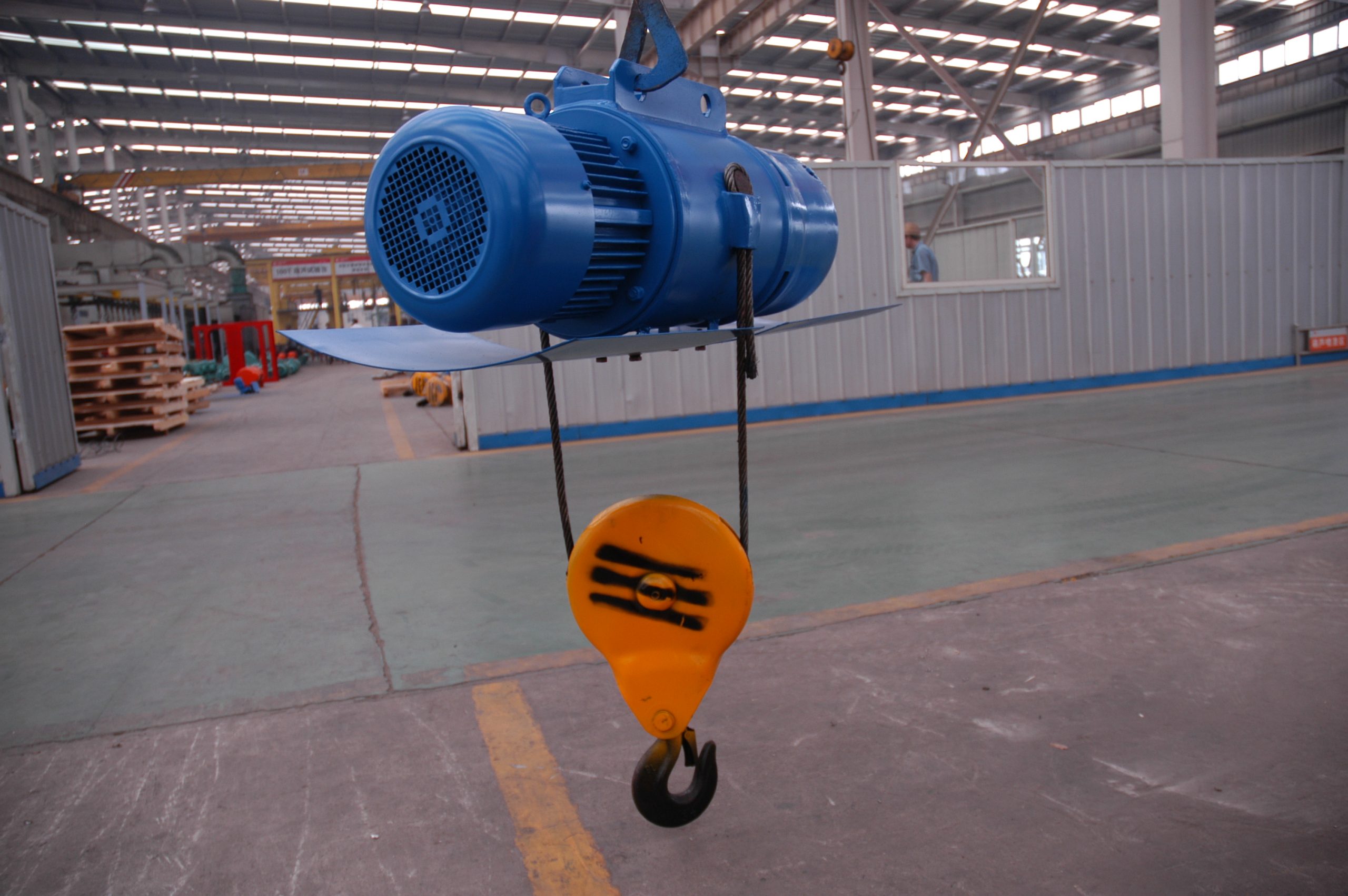
The overhead crane hoist elevates and lowers the item using steel cable or metal chain. The overhead crane trolley transports the hoist across the bridge. On a single-girder overhead crane, it usually moves beneath the beam. On a double-girder overhead crane, it might travel on rails situated above the beams. FLAGCRANE wire-rope hoists can act as hoisting devices for both single-beam and double-beam setups.
The load interface may be a hook, C-hook, lifting beam, electromagnet, grab, tong, or rotating hook. Attachment weight must be included in capacity calculations because it reduces usable payload.
| Component | Main function | Key design effect |
| Hoist | Vertical lifting | Capacity, speed, lift height |
| Trolley | Cross travel | Headroom, approach, positioning |
| Attachment | Connects to load | Stability, clearance, usable load |
Drives, Controls, Electrification, and Safety Devices
Motors, reducers, brakes, wheels, and variable-frequency drives control lifting and travel. Power may be supplied through conductor systems or festoon cables.
Controls can include pendant stations, wireless remotes, cabs, or combined methods. Safety provisions may include limits, overload protection, buffers, emergency stops, voltage protection, and current protection. Stepless speed control helps reduce swing and improve positioning.
How Does an Overhead Crane Work?
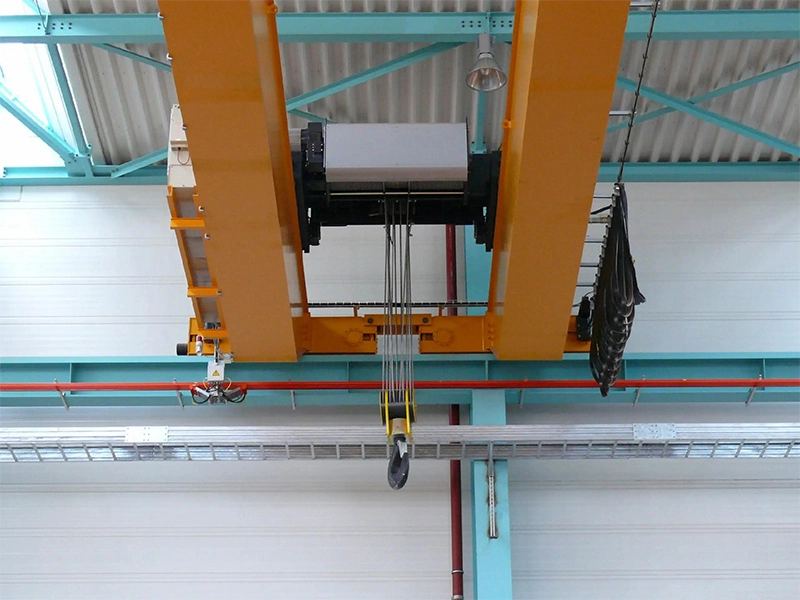
The crane uses three coordinated axes. Each motion has its own drive, although suitable systems can run movements independently or simultaneously.
Hoist Motion: Lifting and Lowering the Load
The hoisting motor transfers power through a reducer to a rope drum or chain mechanism. The hook rises or lowers, while a brake holds the load when the motor stops. Limit devices help prevent movement beyond the permitted range.
Before traveling, the operator centers the hook, connects the correct attachment, removes slack gradually, checks stability, and lifts clear of surrounding equipment.
Trolley Motion: Moving the Load Across the Bridge
The trolley provides sideways movement across the bay. Single-speed travel may suit basic transfer work, while dual-speed or variable-frequency control improves gentle starting and final positioning.
This matters near machines, fixtures, and maintenance openings, where controlled placement is more useful than maximum speed.
Bridge Motion: Traveling Along the Runway
End-truck drives move the bridge along the runway. Combined with trolley travel, this creates the full rectangular working envelope.
A normal handling sequence is:
- Lift the load
- Move the trolley across the bridge
- Travel along the runway
- Reduce speed near the destination
- Lower and release the load
Bridge speed should reflect travel distance, production rate, load behavior, and positioning needs. Excessive speed can increase swing.
How Do Crane Components and Designs Change by Application?
The working principle remains similar, but the structure and equipment change with the process.
Single vs. Double Girder and Top-Running vs. Under-Running Designs
| Design | Main advantage | Important consideration |
| Single girder | Lower deadweight and economical construction | Usually for light or medium duty |
| Double girder | Greater rigidity, hook height, and capacity potential | Higher structural requirements |
| Top-running | Strong span and capacity potential | Requires suitable runway support |
| Under-running | Can suspend from roof-supported tracks | Building loads need careful verification |
Design Priorities for Steel Mills, Manufacturing Lines, Maintenance Bays, and Power Facilities
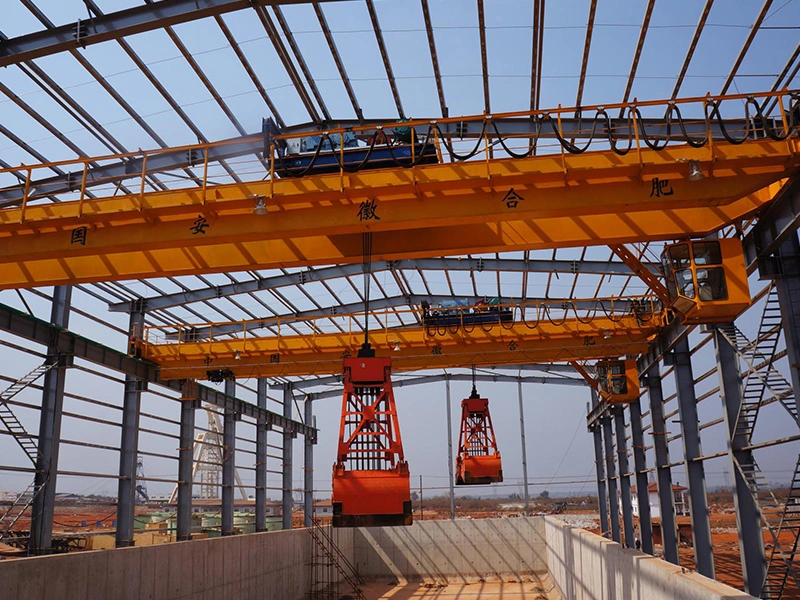
Steel plants may involve heat, dust, high utilization, coils, long products, or heavy parts. Designs may require higher duty, protected electrical equipment, controlled speeds, and specialized attachments.
Manufacturing lines prioritize repeatable travel, compact dimensions, and accurate positioning. Maintenance bays need good hook coverage and lifting height. Power stations and water facilities may use a crane less often, but it must remain dependable for major service work.
Case example: A workshop moves motors between a test stand and repair zone. We assess the heaviest motor, lifting-beam weight, span, hook approach, headroom, daily cycles, and placement accuracy. Moderate service may suit a compact single-girder system; higher stability, hook height, or future capacity may justify double girders.
What Should Buyers Define Before Requesting an Overhead Crane Quote?
Load, Span, Lifting Height, Duty Cycle, Environment, and Building Data
Provide:
- Maximum load weight, dimensions, and center of gravity
- Type and weight of the lifting attachment
- Span, lifting height, and travel length
- Number of lifts, operating hours, and load frequency
- Temperature, dust, moisture, heat, or corrosive exposure
- Building data, runway details, and headroom
- Power supply, control preference, and required speeds
- Applicable standards and special safety or automation needs
FLAGCRANE uses these inputs to match the bridge, hoist, trolley, controls, and supporting requirements to actual conditions. Capacity, span, power supply, travel length, building status, purpose, and environment are core project inputs.
Frequently Asked Questions About Overhead Crane Components and Operation
Q: What are the main components of an overhead crane?
A: The main components are the bridge girders, end trucks, runways, rails, trolley, hoist, attachment, drives, electrification, controls, brakes, and safety devices.
Q: How does an overhead crane move a load in three directions?
A: The hoist moves vertically, the trolley travels across the bridge, and the bridge moves along the runway. Together, they cover a rectangular work area.
Q: What is the difference between an overhead crane and a bridge crane?
A: A bridge crane is the most common overhead arrangement and uses a traveling bridge supported by elevated runways. “Overhead crane” may be used more broadly.
Q: Which overhead crane design is best for an indoor factory?
A: The choice relies on weight limit, span width, ceiling clearance, hoist height, usage frequency, building sturdiness, and placement needs. Single beams frequently fit average tasks. Double beams fit tougher or more intensive operations.
Q: What information is needed to design an overhead crane?
A: We need load details, span, lifting height, travel length, operating frequency, environment, building information, power supply, controls, and applicable standards. Special attachments or automation should also be identified.
.jpg)