Choosing a steel coil attachment involves more than matching rated capacity. Coil orientation, access space, handling frequency, crane configuration, and automation all matter.
What Is the Practical Difference Between C-Hooks and Coil Tongs?
A C-Hook supports a coil through its inner diameter. Its rigid lower arm enters the coil eye from the side. A mechanical or telescoping lifter approaches from above and uses movable arms to grip or support the load.
The practical difference is how each attachment reaches the coil, affecting clearance, control, maintenance, and size flexibility.
How Does a C-Hook Handle Eye-Horizontal Steel Coils?
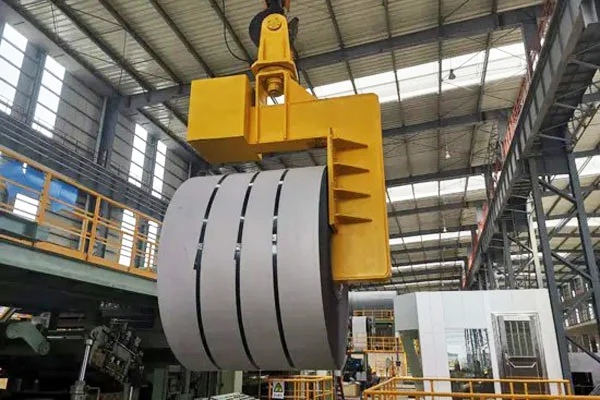
A C-Hook is normally used for eye-horizontal coils with an accessible inner diameter. The operator aligns the lower arm, inserts it through the bore, and lifts until the saddle supports the load. Its main limitation is side access. Columns, adjacent coils, racks, or processing equipment may block the insertion path.
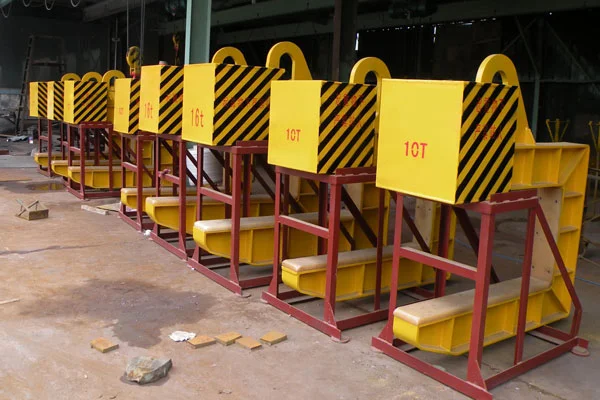
FLAGCRANE C-Hooks use a box-type body and counterweight. Features include high-tensile steel plate, a curved saddle, guide handles, an inside radius designed to avoid coil-edge contact, and optional padding. The counterbalanced structure hangs level when empty, helping with positioning. Reference configurations include 3, 5, 10, 15, and 22-ton models for different coil-width ranges, with custom designs available.
How Do Mechanical and Telescoping Coil Tongs Grip a Coil?
Mechanical coil tongs usually descend over the load. Their arms open, move into position, and close around or inside the coil. Depending on the design, they may grip the outer diameter or support the load from two sides.
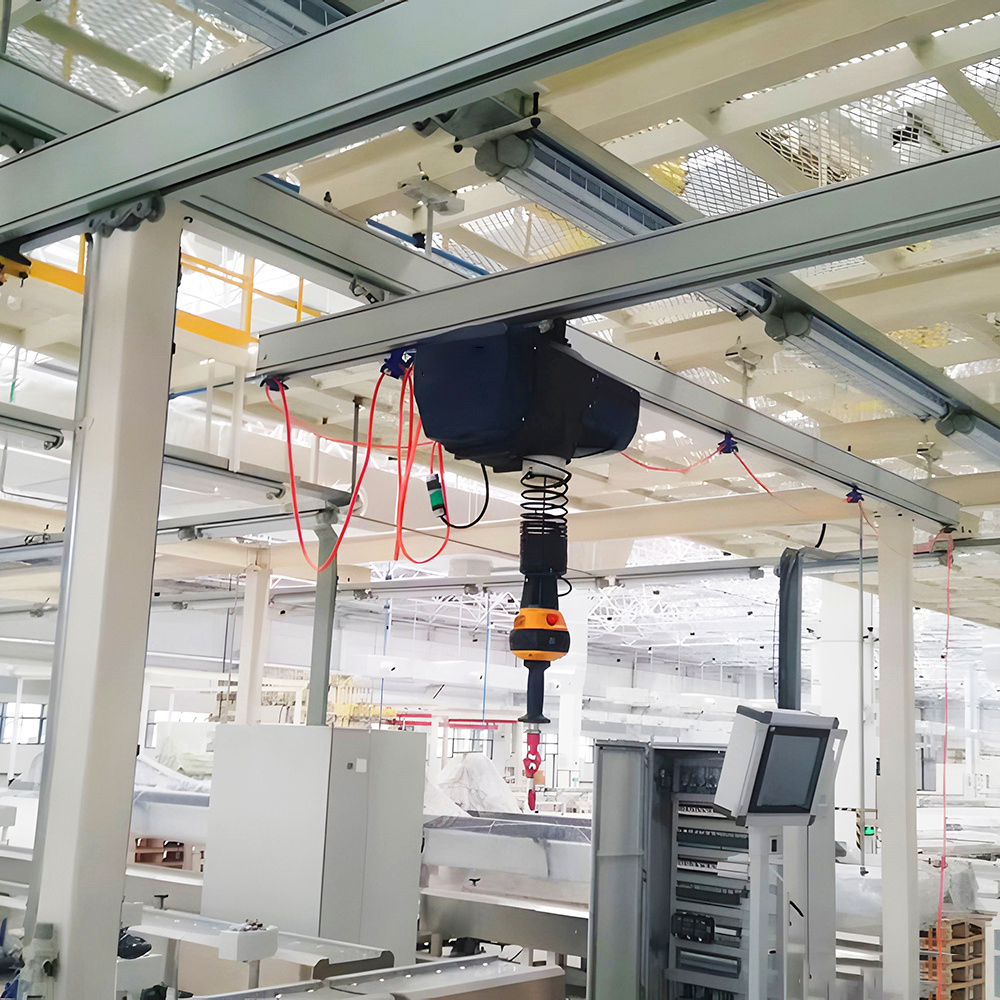
This approach suits restricted lateral access or frequent size changes. Powered versions can include electric opening and closing, rotation, remote control, warning indicators, cable reels, and protective pads. The trade-off is greater complexity.
FLAGCRANE lifting-tong reference models cover working load limits from 3 to 30 tons, with model-specific width ranges.
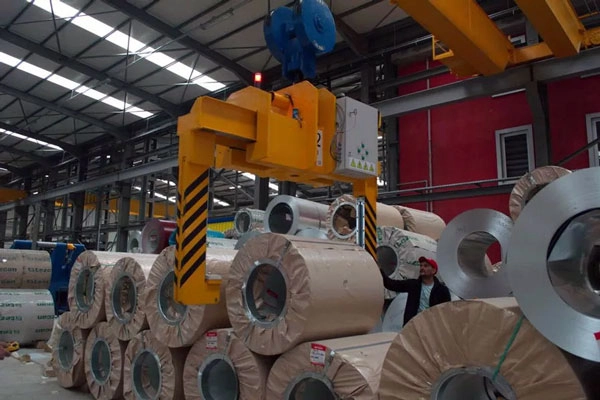
C-Hook vs Coil Tong: Which Performs Better for Your Project?
Neither device is universally better. A repetitive lifting route may favor a rigid hook, while a dense or automated operation may justify an adjustable system.
| Selection factor | C-Hook | Mechanical or telescoping lifter |
| Typical position | Eye horizontal | Depends on design |
| Engagement | Supports inner diameter | Uses movable arms |
| Side clearance | Usually required | Often lower |
| Size flexibility | Set by hook geometry | Adjustable options |
| Moving parts | Few | More |
| Automation | Limited in basic form | Powered functions available |
| Maintenance | Relatively simple | More components |
| Coil protection | Saddle and padding | Pads and controlled gripping |
How Do Coil Orientation, Clearance and Handling Frequency Affect the Choice?
Begin with coil-eye orientation and access direction as separate selection factors. An eye-horizontal coil with clear side access often suits a C-Hook, while top-only access may favor a top-entry coil grab. An eye-vertical coil requires a lifting device specifically designed and rated for eye-vertical handling.
Measure the complete approach path, including the attachment body, insertion movement, hook position, coil spacing, and nearby equipment.
Frequency also matters. A counterbalanced hook can provide a direct cycle when similar coils repeatedly move between storage and a processing line. An adjustable lifter becomes more useful when widths change often, coils are closely stored, or powered positioning is needed.
How Do Maintenance, Automation and Coil Protection Compare?
Inspection of any coil tong must follow the manufacturer’s instructions and the applicable below-the-hook lifting-device standard. For a C-Hook, inspect the suspension point, load-bearing structure and welds, saddle, padding, identification, wear, cracks, deformation, and corrosion. For powered equipment, also inspect all actuators, locking systems, pins, electrical cables, controls, sensors, warning devices, and other safety-critical components, as applicable. They can reduce manual intervention, but the plant must maintain them.
Painted, galvanized, aluminum, copper, or finished coils may need replaceable pads and shaped contact areas. FLAGCRANE lists optional C-Hook padding and load-protection pads for its lifting-tong configurations.
Which Device Fits Steel Mills, Processing Lines and Storage Areas?
When Is a C-Hook Better for Production-Line and Machine Loading?
C-Hooks suit repetitive eye-horizontal handling in steel mills, cold-rolled sheet plants, coil warehouses, and processing workshops.
Consider a slitting line where coils are stored horizontally and follow the same route to machine entry. With clear side access, a rigid body, balanced empty position, and few moving parts can keep the cycle straightforward.
The design must still match bore, width, outer diameter, weight, and headroom. Machine-entry clearance should also be checked to prevent interference with the body or counterweight.
When Is an Coil Tong Better for Narrow Aisles and Dense Storage?
A telescoping or tong-style lifter may be better when coils are tightly spaced or side access is restricted. A top approach can reduce the room needed to insert a long lower arm.
Adjustable arms also help when one crane handles several widths. Powered rotation or opening and closing can support more complex sequences.
Engineers must still check open-arm size, self-weight, headroom, and swing path. A close-stacking C-Hook may remain practical where the eye is horizontal.
What Project Data Should You Check Before Selecting a Coil Lifting Device?
A quotation should start with load data and site geometry. FLAGCRANE’s C-Hook selection inputs include coil weight, width, inner diameter, outer diameter, crane capacity, application, and operating conditions.
Which Coil Measurements Must Be Confirmed?
- Minimum and maximum coil weight
- Inner-diameter range
- Outer-diameter range
- Minimum and maximum width
- Eye orientation at pickup and set-down
- Material, temperature, and surface sensitivity
Do not design only around the heaviest coil. Capacity alone does not confirm suitability for a small bore, narrow width, or offset center of gravity.
Which Crane and Facility Conditions Must Be Confirmed?
Crane capacity must include both the coil and attachment. Confirm hook height, headroom, connection dimensions, lifting speed, duty cycle, approach direction, runway coverage, and control method.
Also check aisle width, coil spacing, racks, machine interference, visibility, dust, temperature, and electrical power for a motorized attachment.
For retrofit work, measure the existing crane and work area. Old drawings may not show later changes.
How Should You Make the Final C-Hook or Coil Tong Decision?
The final choice must connect the load, crane, facility, and operating method. An attachment can still fail operationally if it slows production or exceeds maintenance capability.
Quick Decision Matrix for Engineering and Procurement Teams
Use this process:
- Select the attachment family from coil-eye orientation.
- Remove options that cannot fit the approach space.
- Add attachment self-weight when checking crane capacity.
- Confirm the full bore, outer-diameter, and width range.
- Decide whether manual, remote, or powered control is required.
- Review contact points and padding.
- Confirm inspection, maintenance, and training needs.
A C-Hook is usually simpler for eye-horizontal coils, open side access, and consistent handling routes. A telescoping or tong-style unit is often better suited to dense storage, frequent size changes, or automated handling.
When Is a Custom Below-the-Hook Coil Tong Necessary?
Customization is needed when standard geometry cannot cover the operation. Typical triggers include unusual dimensions, several bore sizes, low headroom, restricted machine entry, frequent cycles, rotation, delicate surfaces, harsh environments, or automated crane integration.
FLAGCRANE can configure C-Hooks and lifting tongs around load size, crane capacity, operating purpose, and working conditions. Documented options include customized capacity and range, powered rotation, electric opening and closing, remote operation, warning indicators, cable-management choices, and protective pads.
The best attachment is the design that completes the full lifting route safely without unnecessary complexity.
FAQ
Q: Is a C-Hook considered a coil tong?
A: Yes. A C-Hook is one type of coil lifting device. “Coil Tong” often refers more specifically to a mechanical, telescoping, or tong-style attachment.
Q: Which is better for horizontal steel coil lifting, a C-Hook or a coil tong?
A: A C-Hook is often suitable when the eye is horizontal and side clearance is available. A powered adjustable coil grab or lifting tong may be preferable when powered engagement, frequent size changes, or reduced lateral access is required.
Q: What steel coil lifting device works best in narrow aisles?
A: A top-approaching telescoping or tong-style lifter may reduce side-entry requirements. Its open-arm size, headroom, and crane approach still need to be measured.
Q: What measurements are needed to choose a C-Hook or coil tong?
A: Provide weight, inner diameter, outer diameter, width, eye orientation, coil spacing, headroom, crane capacity, cycle frequency, and surface-protection requirements.
Q: Can one coil tong handle different coil sizes and orientations?
A: Only when the device is specifically engineered and rated for the full size range and the required coil-eye orientation. Adjustable arms may cover several coil widths, but rotating a suspended coil in plan does not change the coil eye from horizontal to vertical. Changing the coil-eye orientation requires a purpose-designed coil upender, turnover device, or lifting system rated for that operation.