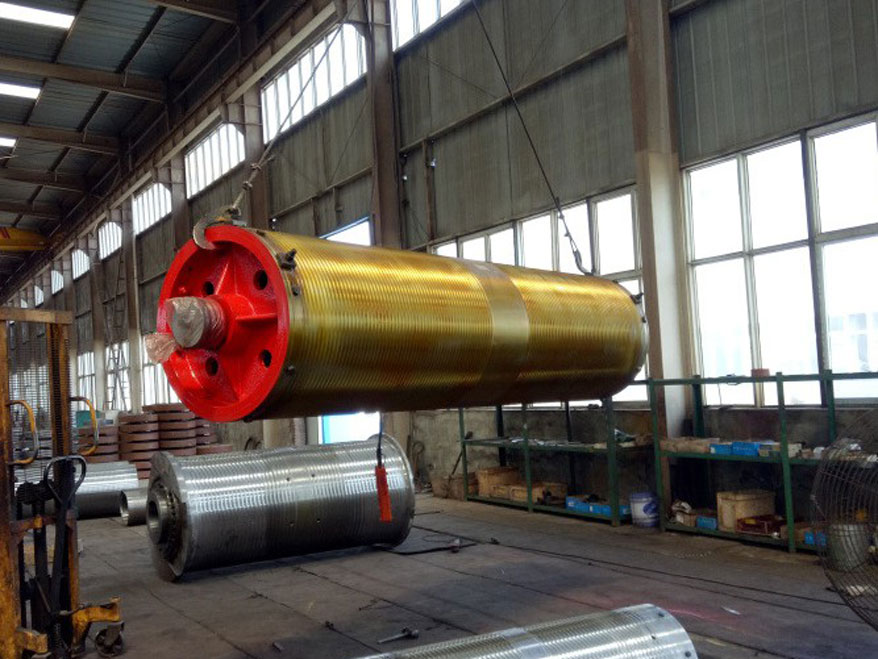
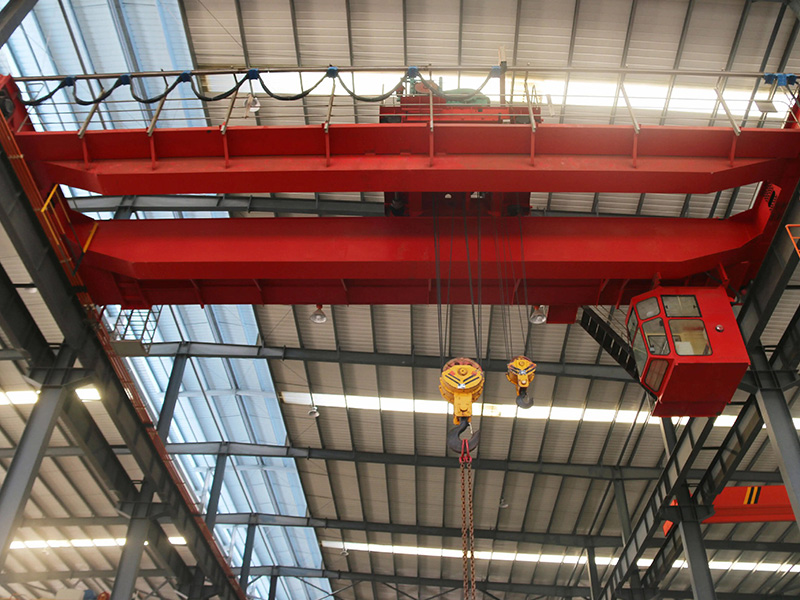
Choosing the right crane depends on the building structure, lifting route, duty cycle, floor space, environment, and installation scope. For steel mills, manufacturing plants, maintenance workshops, power stations, and water treatment facilities, the equipment must fit the process as well as the load. This guide compares both designs from an industrial buyer’s perspective.
What Is the Difference Between an Overhead Crane and a Gantry Crane?
What Is an Overhead Crane?
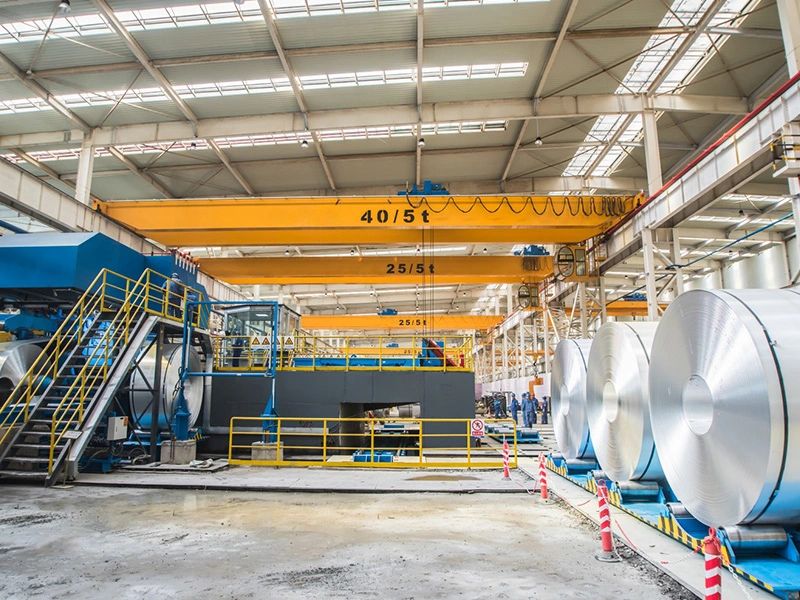
An overhead crane consists of a bridge traveling along elevated runway rails, which can be supported by the building columns or a separate steel structure. The trolley and hoist travel along the bridge, enabling the hook to operate within a rectangular area.
The support structure is located above floor level, and thus the production aisles remain accessible. An overhead crane system is suitable for workshop areas, assembly bays, warehouses, steel manufacturing facilities, and maintenance areas.
What Is a Gantry Crane?
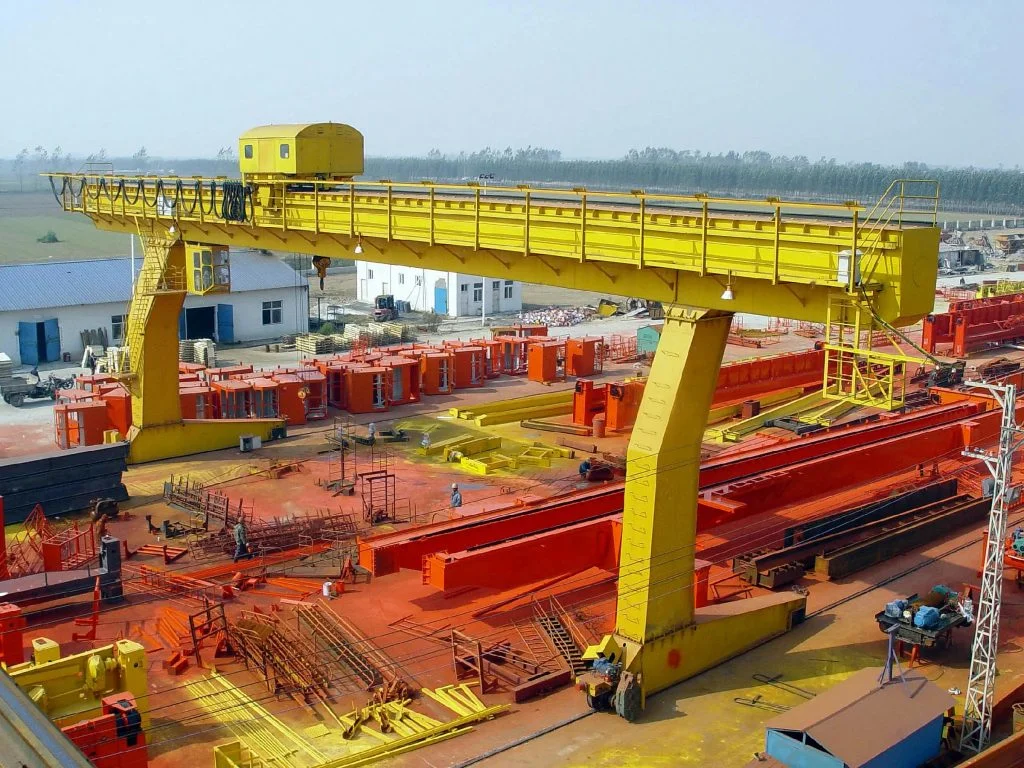
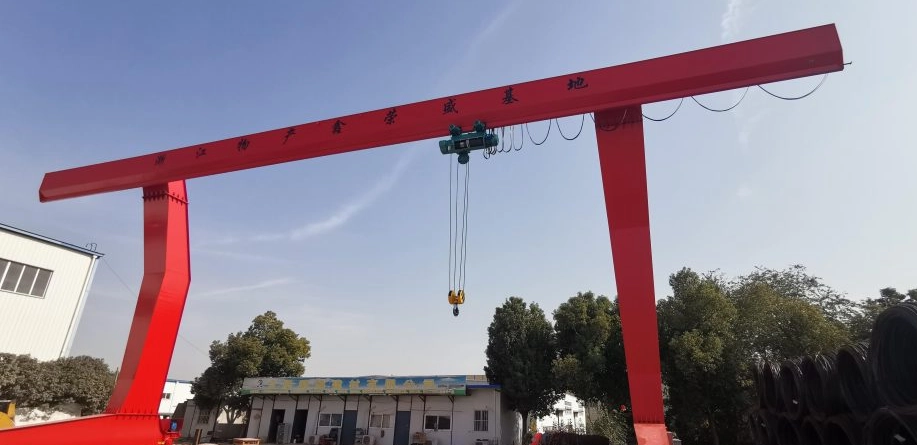
A gantry crane has a bridge, trolley, and hoist similar to those of an overhead crane, but its bridge is supported by legs that travel on ground-level rails or, in some designs, rubber tires or casters. The crane loads are transferred through the legs to the runway foundations or supporting floor. A gantry crane is often selected when the building cannot support elevated runway loads, when the lifting operation is outdoors, or when an independent lifting zone is required.
A semi-gantry mixes the two approaches. One side rolls on a ground rail while the other side uses an elevated rail supported by the building. FLAGCRANE BMH/BMG models follow this design.
| Main support | Elevated runways | Legs on rails or wheels |
| Building dependence | Building or independent columns | Usually self-supporting |
| Floor obstruction | Low | Legs and rails need clearance |
| Typical location | Fixed production bays | Indoor or outdoor work areas |
| Best fit | Repetitive lifting | Independent lifting zones |
What Are the Key Differences Between Overhead and Gantry Cranes?
Support Structure and Runway Requirements
An overhead system sends crane forces into runway beams, columns, and foundations. An existing factory, therefore, requires careful checking for these loads.
A gantry carries the bridge through its legs. This arrangement lowers dependence on the building. Rail-mounted legs still demand proper foundations. A semi-gantry can succeed when only one side can support an elevated runway.
The structural choice needs to occur early in a project. Placing a crane without first assessing the building or foundation may cause rail misalignment, rapid wheel wear, unwanted vibration, or expensive reinforcement later on.
Mobility, Coverage, and Floor-Space Use
Overhead cranes cover a fixed bay and leave most floor space free for machines, forklifts, and workers.
Gantry legs take up part of the work area. Ground rails can also interfere with vehicle crossings. A gantry can still create a lifting zone without large changes to the building.
Large rail-mounted gantries normally operate on a fixed track. Portable gantries represent different products meant for lighter or short-term jobs. Buyers must therefore decide whether permanent production coverage, occasional movement, or a temporary maintenance solution is required.
Load Capacity, Duty Cycle, and Positioning Accuracy
Neither design offers higher capacity by default. Capacity rests on girder design, span, hoisting mechanism, wheel loads, duty classification, and the material being lifted.
A maintenance crane used a few times each week carries different demands than a steel plant crane that starts, stops, and reverses often. Buyers should verify several points.
1. Maximum and normal load
2. Number of lifts per shift
3. Required travel and lifting speeds
4. Positioning accuracy
5. Load dimensions and attachment method
Double-girder systems deliver better stability and greater lifting height. Variable-speed control can cut load swing and raise placement precision. The chosen working class must match the real operating frequency instead of the maximum load alone.
Indoor, Outdoor, and Harsh-Environment Suitability
There are variations of the overhead crane and gantry crane that can be used outside as well as in a factory; the location should not be the deciding factor.
Outdoor cranes must be designed for site-specific wind loads, precipitation, corrosion exposure, temperature, drainage, and weather protection. Steel-production cranes face additional demands from radiant heat, dust, and frequent starts, stops, and reversals, which place severe duty on motors, brakes, wire ropes, hooks, electrical controls, and structural components.
Molten-metal handling requires a purpose-designed metallurgical or hot-metal-handling overhead crane with an appropriate duty classification, heat-resistant components, enhanced braking and safety provisions, and controls suited to frequent starts, stops, and reversals. Standard general-purpose cranes should not be used for transporting or pouring molten metal unless they have been specifically engineered and rated for that service.
How Do Installation, Maintenance, and Cost Compare?
Installation and Site Preparation
An overhead crane project may involve a building survey, runway beams, columns, rail alignment, power supply, and elevated access. Reinforcement could become necessary inside an existing workshop.
A gantry project directs attention to ground conditions, rail foundations, drainage, wheel loads, travel clearance, and production routes. Equipment price forms only one element of the decision.
| Structural work | Runways and possible reinforcement | Rails and foundations |
| Space impact | Little floor obstruction | Leg clearance required |
| Environmental protection | Depends on location | Often important outdoors |
| Installation focus | Elevated structure | Ground and rail work |
The installation plan must also examine how the crane will enter the facility, where assembly will occur, and whether production must pause during installation. Limited access can greatly affect the project schedule.
Maintenance Requirements and Total Project Cost
Both systems need regular inspection of the hoist, brakes, wire rope or chain, wheels, rails, electrical equipment, limit devices, and structural connections. Overhead runway alignment can affect wheel wear. Gantry rails remain subject to settlement, debris, water, and outdoor conditions.
Total project cost must cover structural work, installation, commissioning, power supply, corrosion protection, maintenance access, spare parts, and downtime. A lower purchase price may fail to deliver better value when the crane interrupts production.
Maintenance access deserves attention during design. Technicians require safe reach to the trolley, hoist, brakes, electrical panels, wheels, and runway components. The design must avoid creating extra shutdowns.
Which Crane Fits Steel Mills, Manufacturing Plants, and Utilities?
Steel Mills and Continuous Heavy-Duty Production
Steel mills frequently choose overhead cranes. Production paths stay fixed, and floor space must remain open for furnaces, rolling equipment, coils, vehicles, and personnel.
There are several different processes and, therefore, a variety of different lifting devices that can be required to service them. Coils, for example, are typically lifted with C-hooks or tongs, while scrap metal can be lifted by an electromagnet or grab. Molten metal, on the other hand, can be lifted by a metallurgical crane. When selecting the crane and below-the-hook lifting attachment, engineers must consider the crane duty classification, load spectrum, operating frequency, heat, dust, braking frequency, and safety requirements—not only the rated load and the self-weight of the attachment.
Power Stations and Water Treatment Facilities
In power stations, most of the lifting tasks for turbines, generators, pumps, motors, and valves are executed by overhead cranes. Turbine halls and major maintenance areas are commonly equipped with fixed overhead cranes arranged to provide the required hook coverage over turbines, generators, maintenance laydown areas, and equipment-removal routes.
FLAGCRANE’s HD single-girder overhead crane targets light industrial tasks. These tasks include equipment installation and maintenance inside power stations and workplaces that operate infrequently. The N/LH double-girder design addresses wider assembly and maintenance duties.
In water treatment facilities, an overhead crane may serve an enclosed pump hall. A gantry can cover outdoor pumps, gates, screens, or maintenance zones. Humidity, corrosion protection, and inspection access require careful thought.
The crane must also supply enough hook coverage to remove equipment. This coverage avoids extra manual handling or temporary lifting setups.
How to Choose Between an Overhead Crane and a Gantry Crane
Before requesting a proposal, define the lifting process and site constraints first, then prepare the following technical data for the RFQ.
1. Maximum load and normal load range
2. Span, lifting height, and travel length
3. Operating frequency and shifts
4. Indoor or outdoor conditions
5. Heat, dust, moisture, or corrosion exposure
6. Building drawings and structural capacity
7. Floor clearance and traffic routes
8. Required control and positioning accuracy
9. Maintenance access
10. Future expansion plans
Choose an overhead crane for fixed, repetitive lifting within a suitable building bay when unobstructed floor space is a priority. Choose a gantry crane when the building cannot support two elevated runways, when the lifting area is outdoors, or when an independent lifting zone is needed. Choose a semi-gantry crane when one side can use an elevated runway on the building structure and the other side must travel on a ground-level rail.
FLAGCRANE enables configuration of the various capacity, span, and height characteristics, travel, power supply, control system, and accessories to suit site operating requirements. A site-specific engineering study is, however, required.
FAQ
Q: What are the main differences between overhead cranes and gantry cranes?
A: An overhead crane has a movable bridge that travels on an elevated fixed runway structure. A gantry crane has a bridge supported by legs that travel on ground-level rails or another runway.
Q: How do overhead crane vs gantry crane costs compare?
A: You should compare the total installed cost and not only the price of the equipment. Overhead systems require beams on the runway and possibly even reinforcement of the building. Rail-mounted gantry cranes require ground-level runway rails, suitable foundations, drainage where applicable, and clearance for the legs. Rubber-tired or portable gantry cranes have different floor-loading and travel-surface requirements.
Q: Is an overhead crane or gantry crane better for a steel mill?
A: We typically recommend Overhead Cranes for fixed, high-frequency production as they are the most space-efficient of the three types. Gantry and semi-gantry cranes are typically used for outdoor storage, maintenance work, etc., or for locations where there is no elevated runway support.
Q: Can a gantry crane be used inside a manufacturing plant?
A: Yes. When an overhead runway is not cost-effective to build in a facility or when an independent lifting zone is desired, then mobile hoists can be used indoors. Care must be taken in planning the leg path, the rails, forklift circulation, and pedestrian circulation.
Q: How do I choose between an overhead crane and a gantry crane for my facility?
A: Take into account the load, span, lifting height, duty cycle, environmental factors, building capacity, floor space required, installation conditions, maintenance access, and future expansion requirements when choosing a suitable crane.