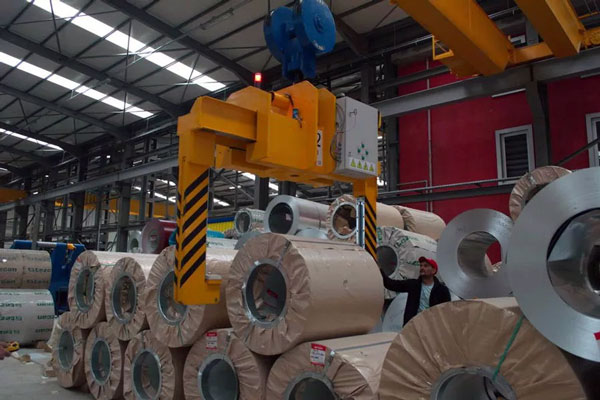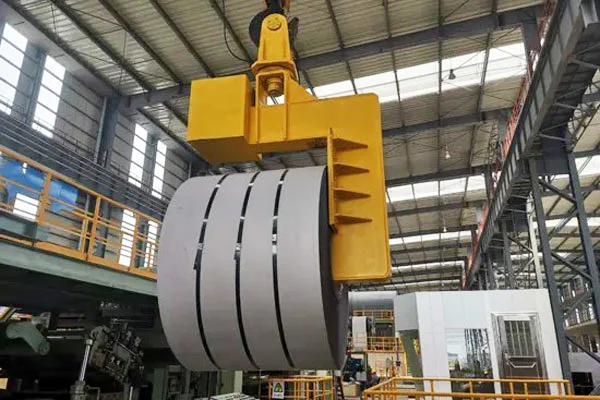
What is a C-Hook Coil Lifter?
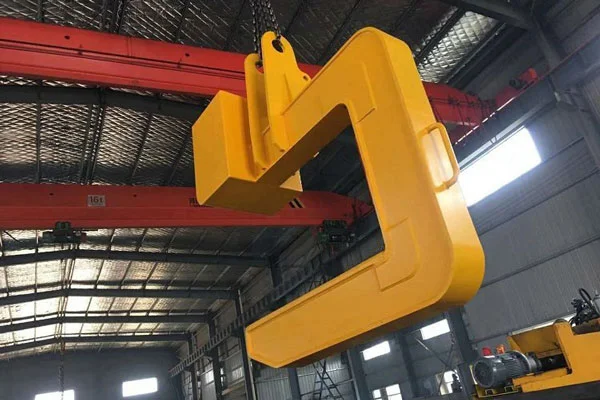
A C-hook steel coil lifter is mainly composed of hook main body and counterweight iron. This specialized lifting equipment is primarily used in industrial facilities, including steel mills, cold-rolled sheet processing plants, and transit warehouses. Designed for heavy duty applications, the equipment operates reliably in ambient temperatures ranging from -20℃ to 40℃. Operators mostly use this tool for hoisting steel coils, aluminum coils, copper coils, wire rods and other coils. It is also highly effective for hoisting plates and wire rods such as machine entry slots, I-shaped, box-shaped, and cylindrical types.
Why Choose a C-Hook Over Slings or Grabs?
Evaluating material handling equipment requires understanding the operational bottlenecks within industrial facilities. Utilizing a dedicated solid hook provides distinct operational advantages over flexible fabric slings or general-purpose mechanical grabs.
Efficiency and speed in repetitive lifting
Continuous production cycles require lifting attachments that minimize manual rigging time. Guide handles for ease of hook positioning allow operators to maneuver the bale directly into the inner diameter of the material. This direct engagement eliminates the need for personnel to manually wrap slings around heavy loads. Such streamlined operation is perfect for steel mills, warehouses, ports, and heat treatment processes where speed is critical.
Cost-effectiveness for high-volume environments
Allocating budget toward durable equipment reduces recurring maintenance overhead. The C-type hook has the characteristics of light weight and long service life. Fabric slings frequently suffer from severe wear when rubbing against sharp metallic edges, necessitating constant safety replacements. A solid steel structural tool eliminates this frequent replacement cycle and lowers long-term operational costs.
Key Components and Design Engineering
The Anatomy of a C-Hook
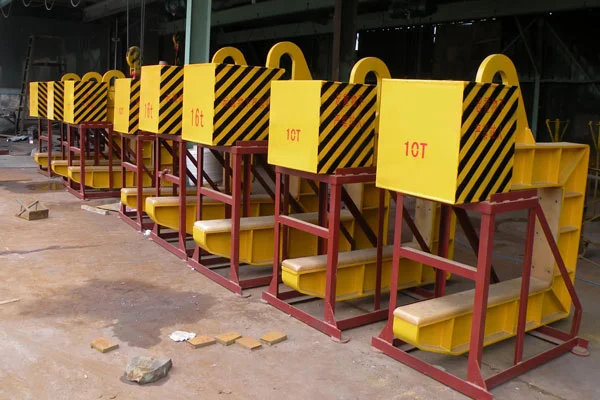
Analyzing the structural materials provides insight into the longevity and safety of the equipment. The main part of the hook is made of Q355B steel plate (high-quality low-alloy steel) and steel pipe. The section is a box-shaped structure, which has good resistance to bending and torsion. This strong and lightweight structural design ensures the tool remains durable while being easy to handle on the facility floor.
Lifting Bale, Counterweight, and Support Saddle
The primary load-bearing points require specific geometric configurations to protect the handled materials. A curved coil saddle is standard on these devices. Furthermore, the inside radius on hooks avoid coil edge contact, preventing material deformation during the initial lift. The counterweight element sits at the rear spine, providing the necessary counterbalance to keep the lifting arm perfectly horizontal when suspended.
Understanding the Balance Principle
Weight distribution dictates the precise control operators have over suspended industrial loads. Proper mechanical balance prevents hazardous load swinging and allows for accurate placement onto machinery or transport vehicles. FLAGCRANE engineers incorporate advanced balancing mechanics into every lifting solution. The equipment is counter balanced to hang level when empty. Adjustable counterweights keep the tool stable and perfectly aligned with the coil’s center of gravity. This specific advantage prevents awkward tilting during the approach phase, minimizing the risk of accidental impacts with surrounding infrastructure.
Custom Features and Add-ons
Standard dimensional configurations meet many general warehouse needs, but specialized production lines demand tailored solutions. Customizing the lifting apparatus enhances its functionality for unique and demanding operational environments. FLAGCRANE provides comprehensive adaptation options for complex handling scenarios. We engineer fully customizable C-hook configurations tailored to meet your specific operational requirements. Our professional technical team will build you a custom coil lifter that has everything you need to effectively lift materials within your facility.
Protection Liners (Nylon, Urethane, Brass)
Preserving the pristine surface quality of processed metals remains a top priority for manufacturers. The equipment is available with optional padding for additional coil protection. Replaceable pads on the hooks prevent scratches and wear on the steel coils. Utilizing these protective elements ensures delicate materials like polished copper or cold-rolled aluminum remain undamaged during transit.
Motorized Rotators for Positioning
Complex spatial requirements frequently make manual load rotation impractical or unsafe. FLAGCRANE addresses this by offering advanced mechanical integration. The units can be customized with extra hooks or electric clamps for special jobs. This capability allows operators to precisely align materials with machine entry slots remotely, removing personnel from potentially hazardous pinch points.
Low Headroom Designs for Tight Spaces
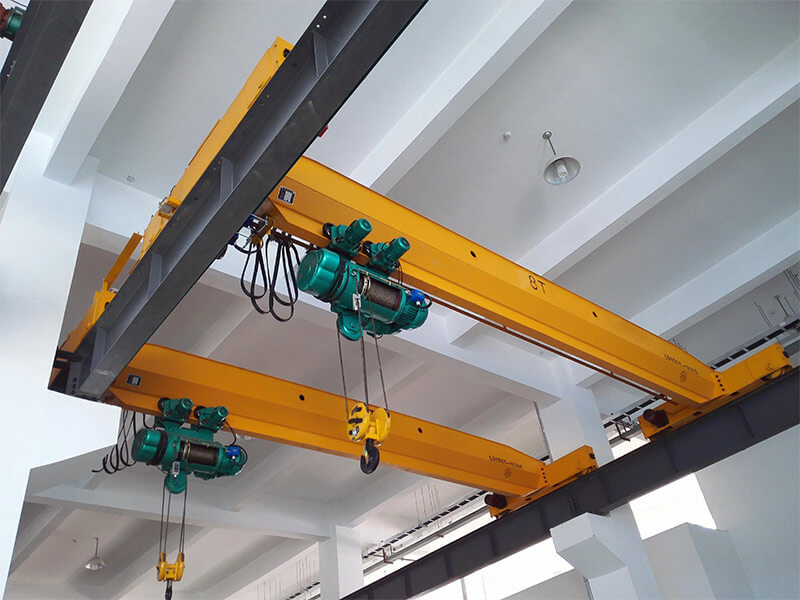
Facilities operating with limited vertical clearance face distinct challenges when integrating overhead bridge cranes. Utilizing high tensile alloy steel plate reduces physical size and weight. This intelligent material selection creates a highly compact dimensional profile without sacrificing the overall load capacity. It successfully maximizes the usable lifting height within constrained factory layouts.
Selection Guide: How to Choose the Right Lifter
Critical Measurement Data
Procuring the correct lifting device requires meticulous data collection regarding the daily materials handled. Analyzing specific dimensional parameters ensures the final engineered product aligns perfectly with the facility workflow.
Coil ID (Inner Diameter) & OD (Outer Diameter)
The inner diameter strictly dictates the maximum physical height and depth of the lifting bale. Providing accurate data including inner diameter in millimeters and outside diameter in millimeters is required for proper engineering. If the lifting arm is too thick, it will fail to enter the material core, while an undersized arm may cause uneven internal stress.
Maximum and Minimum Coil Width
Industrial hooks must accommodate the physical span of the manufactured materials securely. Adjustable hooks work for coils of different widths and can lift single or multiple coils, even other materials like steel bars. Selecting a robust model like the CH15 requires matching the width parameters exactly.
| Item | Rated Load (t) | Weight (kg) | Coil width (mm) |
| CH15 | 15 | 1140 | 900-1100 |
| CH15 | 15 | 1250 | 1100-1250 |
The CH15 unit configured for 900 to 1100 millimeter widths maintains a total equipment weight of 1140 kilograms. The CH15 variation engineered for 1100 to 1250 millimeter widths carries an equipment weight of 1250 kilograms.
Material and Surface Sensitivity
Distinct industrial metals require varying degrees of handling precision and surface care. Soft materials demand highly forgiving contact points compared to raw structural steel. Evaluating the inherent fragility of the final product guides the selection of necessary protective padding, mitigating costly material rejection rates.
Workload Limit (WLL) and Safety Factors
Maintaining operational safety relies entirely on adhering to strict structural load limits. The lifting tools are made from high-quality low-carbon alloy steel, and they handle loads from 1 to 100 tons with a safety factor 3 times higher than required. Documenting the crane capacity that will use the C-hook ensures the facility overhead systems can manage the combined weight of the load and the heavy lifting attachment.
FAQ
Q: Why does a C-hook have different tilt angles when empty versus loaded, and how does the counterweight manage this?
A: The center of gravity shifts drastically once a heavy metallic load engages the lifting arm. The engineered unit is counter balanced to hang level when empty. Once the material is lifted, the adjustable counterweights keep the tool stable and perfectly aligned with the coil’s center of gravity. This dynamic load balancing ensures the material remains completely horizontal and secure during transit.
Q: C-hook vs. Motorized Coil Grab: Which is more efficient for high-volume steel mill operations?
A: A solid structural hook requires significantly less mechanical maintenance for rapid, repetitive transfers. It is built with a box-shaped structure using tough steel plates and pipes that resists bending and twisting, making it both durable and easy to handle. However, if specific motorized gripping is necessary for automated processes, the hook can be customized with extra hooks or electric clamps for special jobs.
Q: What are the critical ASME inspection requirements for C-hook coil lifters?
A: High-capacity lifting equipment complies with ASME standards to ensure ongoing facility safety. Maintaining this compliance requires proper and documented routine care from maintenance personnel. Maintenance personnel must perform routine lubrication of moving parts and conduct comprehensive corrosion inspections to ensure optimal operational performance.
Q: How do I choose between Urethane, Nylon, and Brass protection liners for a C-hook?
A: Selecting the appropriate liner depends on your material's surface sensitivity. Urethane and Nylon are ideal for delicate metals like polished copper or cold-rolled aluminum, while Brass provides robust protection for harder steel coils without causing abrasive wear. Furthermore, the inside radius of the hook avoids direct coil edge contact, providing structural clearance that works in tandem with the padding.
Q: What specific measurements (ID, OD, Width) are required for a custom C-hook coil lifter RFQ?
A: Accurate engineering requires a comprehensive profile of the daily operational demands. Required specification data includes the coil weight in tons, the coil width in millimeters, the inner diameter, and the outside diameter. Additionally, documenting the detailed working conditions of the crane ensures the final product handles a wide range of coil widths safely.