Navigating material handling challenges needs a good grasp of equipment choices. Industrial facilities often struggle with tight floor space or slow workflows. Choosing suitable lifting solutions matters a lot for operations. This guide reviews overhead crane types and covers structure details, uses, and specs in depth. Matching the needs of a facility allows setup of a system that improves output, protects workers, and brings solid returns.
What is an Overhead Crane and Why Does Your Facility Need One?
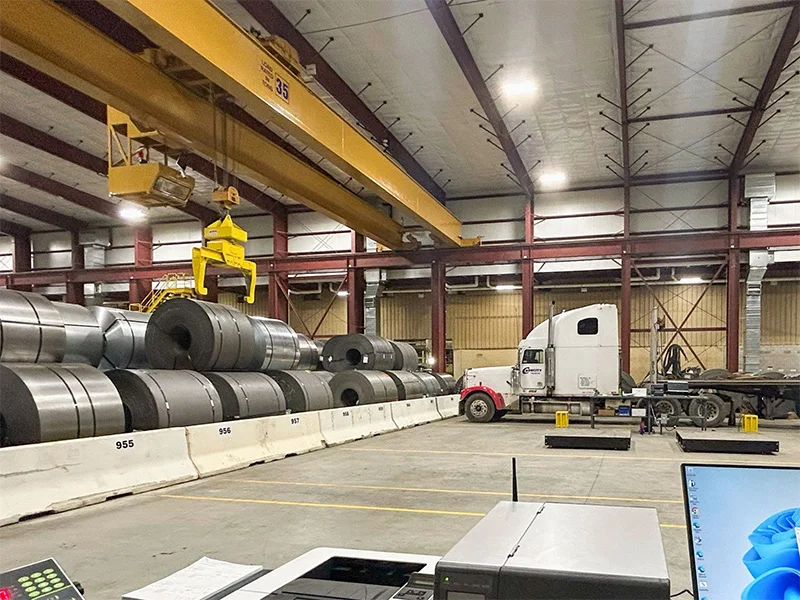
An overhead crane is a piece of heavy machinery designed to move bulky and heavy loads horizontally and vertically across a defined rectangular area. The core components generally include a hoist to lift the load. The core components also include a trolley to move the hoist laterally. The core components further include a bridge that spans the width of the facility. The core components finally include runways that support the entire structure.
Investing in these systems addresses several fundamental warehouse and manufacturing pain points. They optimize floor space by moving materials through the air rather than through crowded aisles. The approach reduces forklift traffic and the associated risk of collisions. Precise load positioning also supports heavy equipment assembly. Precise load positioning supports metal processing. Precise load positioning supports large-scale manufacturing tasks.
3 Common Overhead Crane Types and Their Best Applications
Different production environments demand different configurations. The following review examines three common lifting systems. The review also covers the industrial scenarios where each performs best.
Bridge Cranes (Single vs. Double Girder)
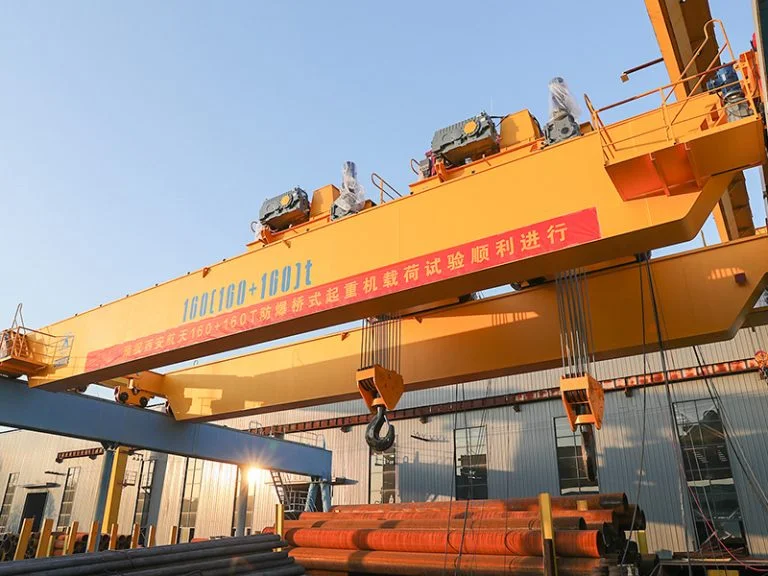
Bridge cranes are the most prevalent category in industrial manufacturing. These cranes operate on elevated runways. These cranes utilize a bridge beam to span the workspace. The primary decision buyers face is choosing between a single girder and a double girder configuration. The single girder version works with one main bridge beam. The single girder version fits lighter loads along with shorter spans well. The double girder version uses two bridge beams. The double girder version delivers the needed strength for very high load limits and broader spans.
When evaluating bridge cranes, FLAGCRANE provides engineered solutions that cover both spectrums and solve real-world industrial challenges.
Gantry Cranes (Outdoor and Mobile Heavy Lifting)

Unlike bridge systems that rely on building columns for support, gantry cranes utilize independent legs that travel on floor-mounted rails or rubber tires. This makes gantry cranes the definitive choice for outdoor material handling. Outdoor material handling includes shipping yards, railroad depots, and outdoor manufacturing sites. Because they do not require structural building support, they can also be used indoors in facilities where the roof cannot bear heavy loads. Variations include the MG type double girder gantry crane for heavy duty outdoor use. Variations also include the portable aluminum simple gantry crane for lightweight, flexible positioning.
Jib Cranes (Targeted Workstation Efficiency)
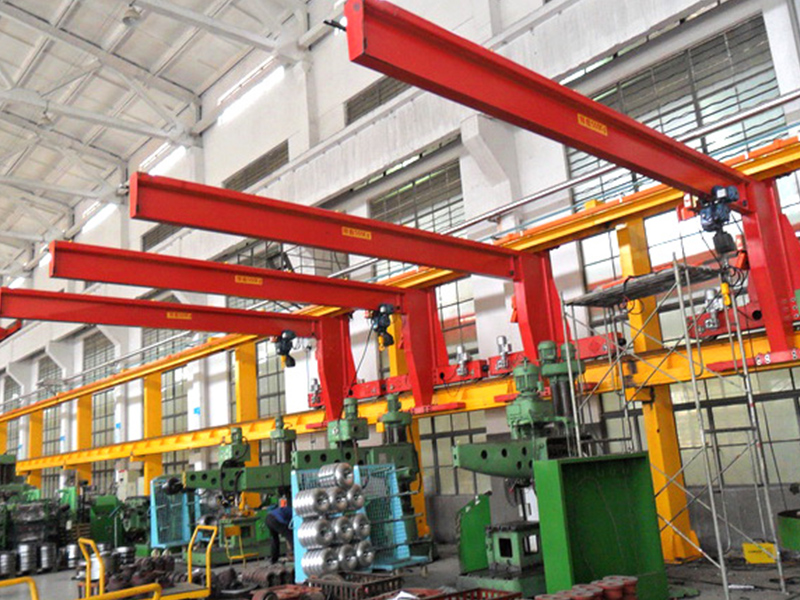
Jib cranes serve as focused lifting tools. Each features a mast along with a pivoting boom. Installation usually happens right on a structural wall. Or the setup occurs firmly on the factory floor. The design avoids coverage for an entire large plant. Instead the focus stays on particular assembly stations. The BZ-type fixed column pillar jib crane gives precise help to one operator. This support lets the operator lift and move parts. No need arises to wait for the main facility crane.
Top-Running vs. Under-Running Cranes: Structural Differences
Understanding the differences between top-running and under-running bridge crane configurations is vital for maximizing your building layout. Buyers must evaluate their ceiling strength and lifting requirements before choosing a configuration.
Top-Running Configuration Characteristics
This design features end trucks that ride on top of the runway beams. The design provides the highest load capacity and maximum hook height because the hoist is positioned above the bridge. This configuration requires substantial building support or engineered freestanding columns to bear the heavy downward pressure. It is the optimal choice for heavy industry sectors handling enormous weight volumes.
Under-Running Configuration Characteristics
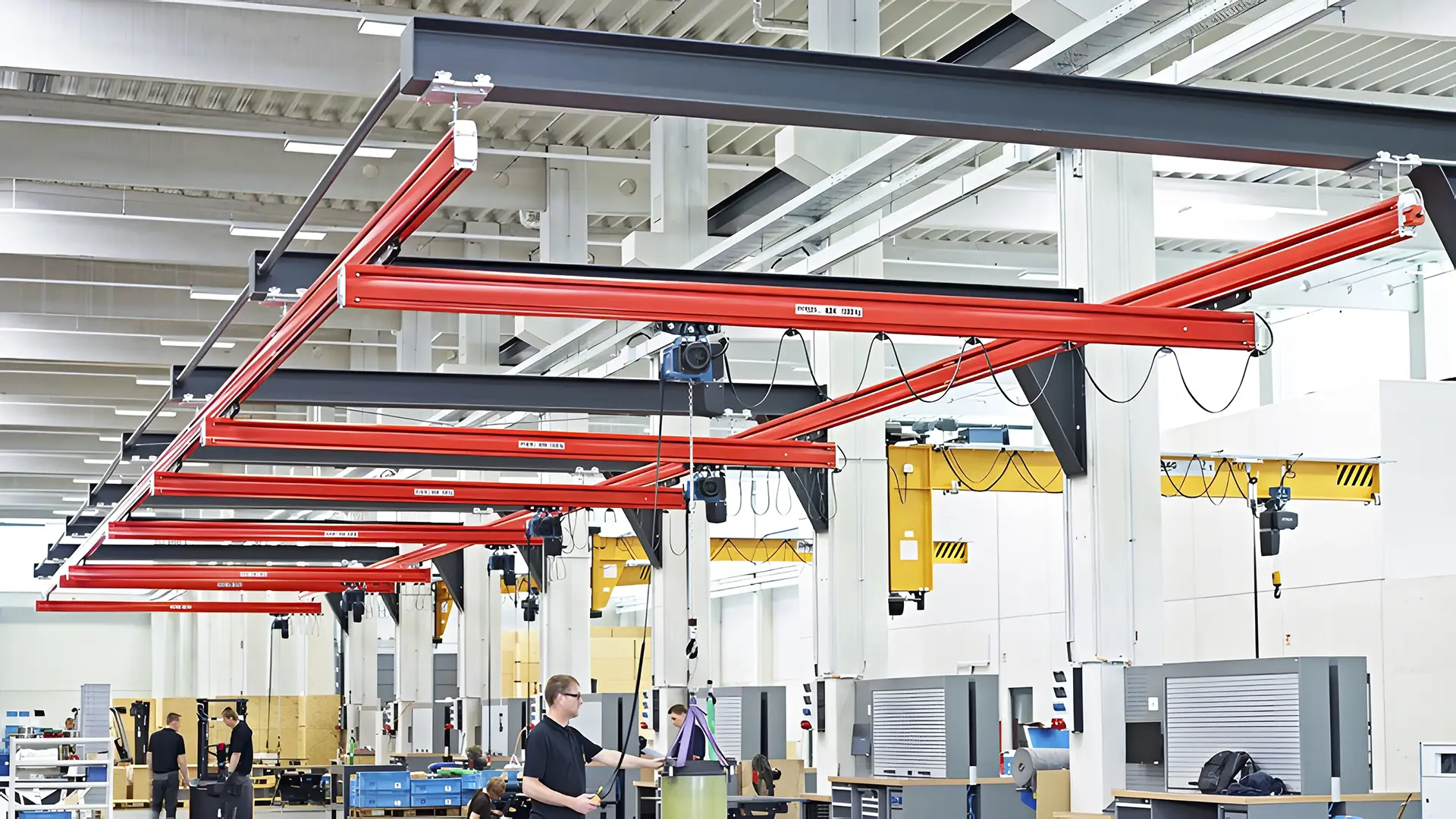
Also known as underslung cranes, these systems utilize end trucks that travel on the bottom flange of the runway beam. The runways are typically suspended from the existing ceiling structure. This approach completely eliminates the need for floor columns. The approach frees up valuable ground space. Load capacities are generally limited to 10 tons. The available hook height is lower than that of top-running models.
Selecting the Right Capacity: A Deep Dive into 15-Ton Overhead Cranes
Shifting from light manufacturing to medium or heavy industrial processing often calls for better material handling capacity. A 15-ton lifting system delivers the right mix of power for heavy loads and ease in daily operations.
When to Upgrade to a 15-Ton Lifting System
Facilities often need a 15-ton overhead crane once handling starts for bulk steel coils, large automotive dies, heavy precast concrete components, or industrial-grade machinery. Current hoists may run at full capacity most times. Two smaller cranes may also combine efforts for one item. A move to a 15-ton system then raises workflow speed and workplace safety by a large margin.
Key Technical Specs for 15-Ton Load Handling
When specifying a 15-ton overhead crane, the technical parameters must align with daily operational rhythm. A standard 15-ton system typically utilizes a double girder configuration to ensure stability. The span length usually falls between 7.5 meters and 31.5 meters. The exact length depends on the width of the facility. The lifting height ranges from 6 meters to 30 meters. For a 15-ton load, selecting an appropriate working class is essential. An A5 working class is highly recommended for standard manufacturing environments. The rating ensures the equipment can handle the duty cycle without premature wear on the motor or hoist components.
The Professional Buyer's Decision Checklist
Before finalizing any procurement documentation, professional buyers should evaluate the following criteria to ensure the chosen material handling equipment aligns with factory reality.
1. Assess Facility Structure: Determine if your existing roof can support an under-running system or if floor-mounted columns are required for a top-running system.
2. Calculate Duty Cycle: Identify how many lifts per hour the crane will perform. High-frequency operations require a higher working class rating.
3. Evaluate Environmental Hazards: If the crane will operate in areas with flammable gases or heavy dust, specify specialized equipment like a BCD explosion-proof electric hoist.
4. Measure Clearances: Accurately measure the required lifting height, span, and runway length to prevent installation conflicts.
5. Review Component Upgrades: Consider adding variable frequency drives for smoother operation, or select high-performance crane wheels and rope drums to extend the maintenance cycle.
Frequently Asked Questions (FAQs) About Overhead Cranes
Q: How do I choose between top-running and under-running overhead crane types?
A: The decision depends on building framework and capacity needs. Choose a top-running crane for heavy loads over 10 tons. Maximum headroom comes with this option. Choose an under-running crane if the facility has a strong roof structure, loads stay under 10 tons, and the factory floor must remain completely clear of support columns.
Q: What is the standard price range and lead time for a 15-ton overhead crane system?
A: Pricing for a 15-ton overhead crane varies significantly based on the span length, lifting height, and technological integrations like variable frequency drives. Delivery and installation lead times generally range from several weeks to a few months.
Q: Which types of overhead cranes are best suited for outdoor heavy-duty applications?
A: Double girder gantry cranes are engineered specifically for outdoor heavy-duty applications. Double girder gantry cranes operate on freestanding legs and ground rails. This setup eliminates the need for an enclosing building structure while safely handling heavy loads in shipping yards and construction sites.
Q: What are the main differences in maintenance for single girder vs. double girder crane types?
A: Single girder cranes have fewer moving parts and a simpler structural layout. The layout translates to easier and less frequent routine maintenance. Double girder cranes have more complex hoist trolleys and electrical festoon systems. These cranes require more detailed inspection protocols. Double girder cranes offer greater durability for high-capacity, continuous operations.
.jpg)