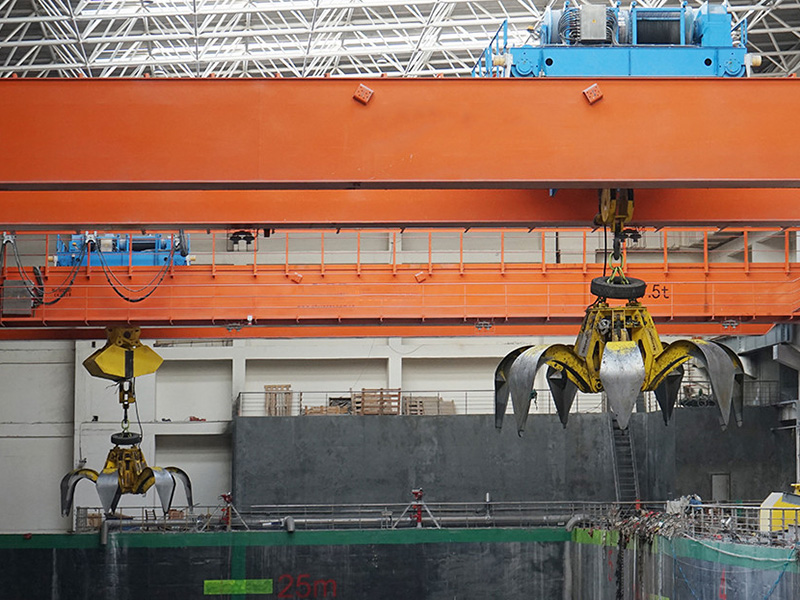
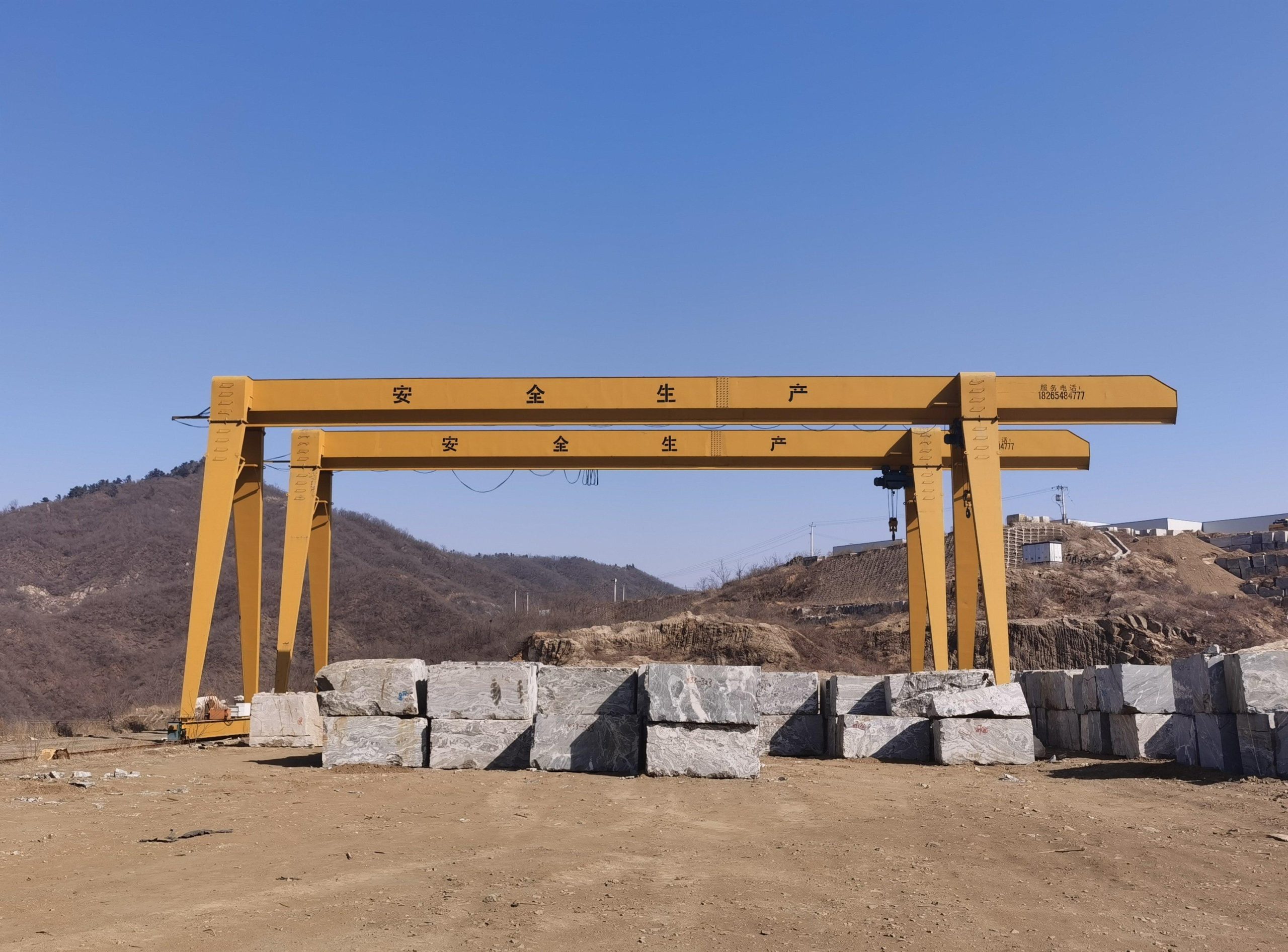
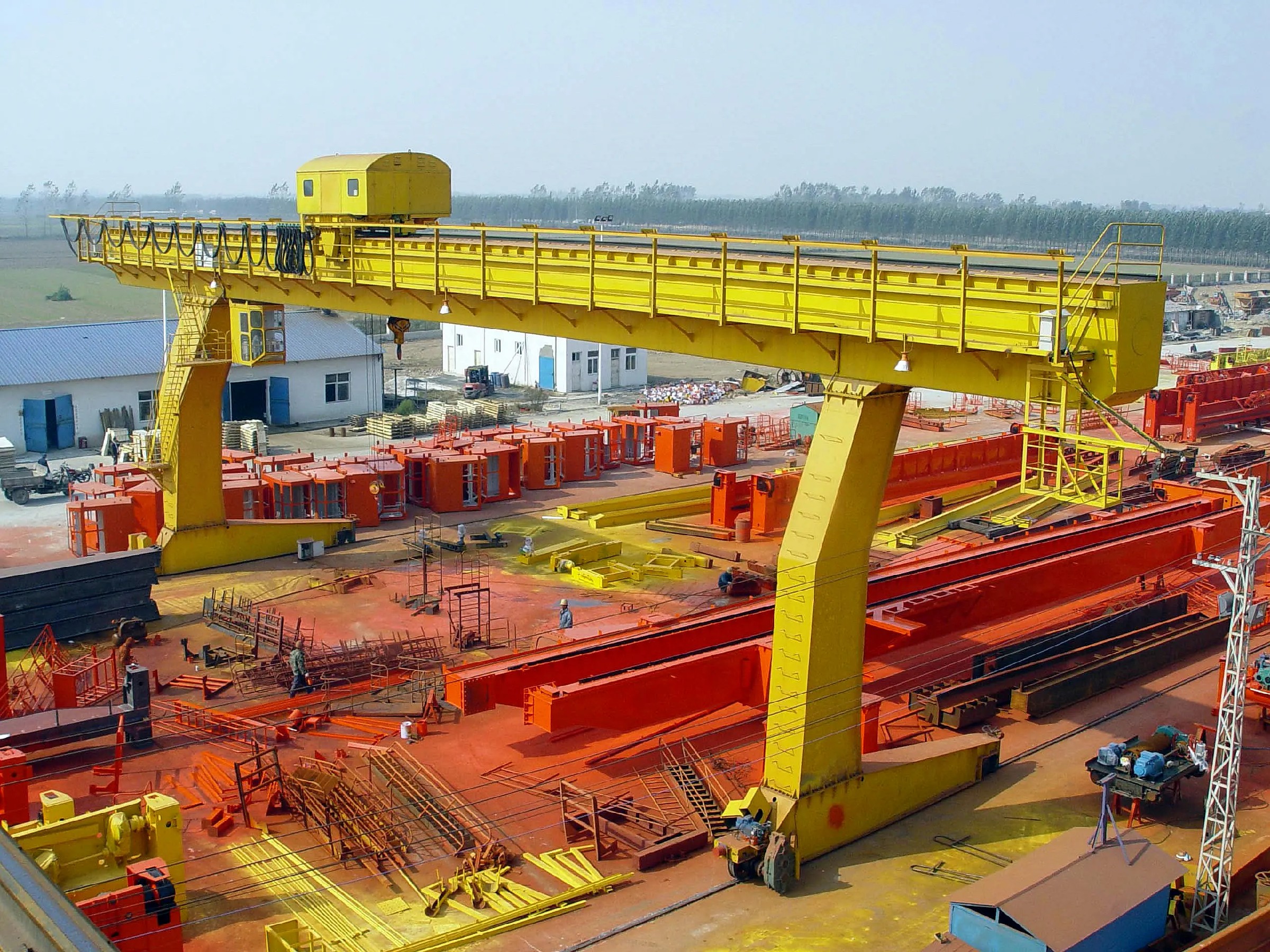
For plants where loads are moderate and floor space must remain clear, an electric single beam crane offers an efficient alternative to heavier, more complex double-girder systems. One main girder spans the work area, an electric hoist provides lifting and cross travel, and the bridge travels along runway rails.
For buyers, the key question is whether the structure, duty, controls, and lifting envelope match the actual job. This guide explains those points from a factory perspective.
What Is an Electric Single Beam Crane?
Electric Single Beam Crane vs. Single Girder Overhead Crane: What Do the Terms Mean?
Among various overhead crane types, the terms "electric single beam crane" and "single girder overhead crane" generally refer to the same basic setup. They both feature one load-bearing bridge girder equipped with an electrically driven hoist. The hoist moves across the girder while the bridge runs on parallel runway rails.
Terminology varies by market and specification. For selection, focus on rated load, span, lifting height, duty class, hoist type, travel speed, controls, and operating environment.
Why Do Factories Use Single Beam Overhead Cranes?
A single-girder design is practical where loads are moderate and floor space must remain clear. Its relatively light bridge can also reduce demands on supporting structures.
FLAGCRANE’s LD single-girder electric hoist crane is used for machining, machine assembly, equipment maintenance, and warehouse handling. It combines a compact bridge arrangement with an electric hoist for routine industrial material movement.
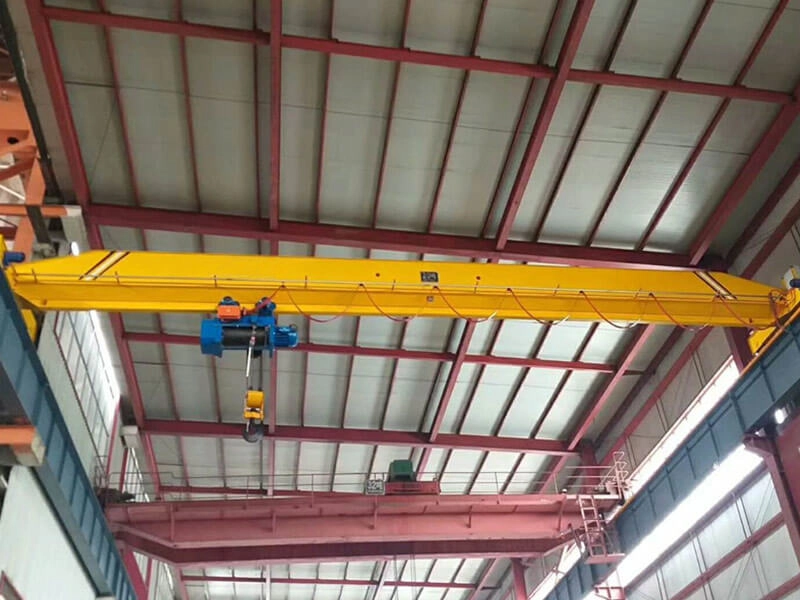
What Are the Main Components of an Electric Single Beam Overhead Crane?
A crane works as a complete system. The bridge, hoist, travel drives, electrical equipment, and safety devices all need to suit the required duty.
Main Girder and End Beams: The Load-Carrying Structure
The main girder spans the bay and transfers the lifted load toward the end beams and runway. The end beams carry the bridge wheels and guide long travel.
The LD arrangement includes the main beam, end beam, electric hoist, trolley running mechanism, and electrical equipment. Its lightweight structure also supports easier installation and maintenance.
Electric Hoist: Lifting and Cross-Travel Functions
The hoist raises the load and moves the hook across the span. FLAGCRANE’s LD design is commonly paired with a CD/MD wire-rope electric hoist. A standard CD hoist provides single-speed lifting, while MD versions provide dual-speed lifting.
For assembly or maintenance, controlled positioning may matter as much as speed, so hoist selection should consider load, lifting height, precision, and operating frequency together.
Crane Traveling Mechanism and Runway System
The traveling mechanism moves the complete bridge along the runway. Together with hoist cross travel, this gives the crane coverage over the working bay.
In an existing factory, rail alignment, support structure, clearances, and travel length matter. That is why we ask whether a project is for a new or existing building before finalizing the configuration.
Electrical Controls and Safety Devices
Controls command lifting and travel, while protective devices limit unsafe movement. Depending on configuration, cranes can use pendant or wireless remote control. Protection can include buffers, limit switches, overload limiters, emergency-stop functions, and voltage/current protection.
The protection package should match the operating environment, access conditions, duty, and maintenance practice.
How Does an Electric Single Beam Crane Work?
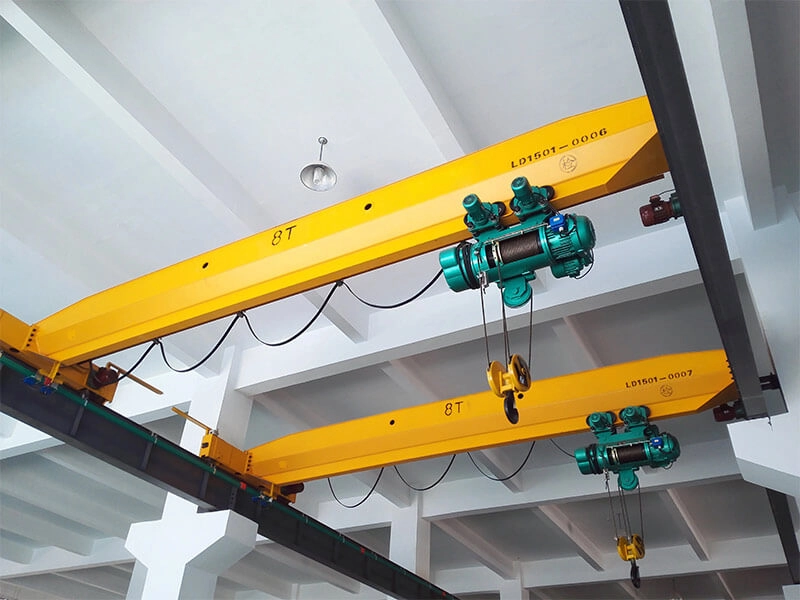
The Three Basic Motions: Lifting, Cross Travel and Long Travel
A typical handling cycle uses three motions:
1.Lifting raises or lowers the load with the electric hoist.
2.Cross travel moves the hoist along the bridge girder.
3.Long travel moves the bridge along the runway.
Together, these motions let the crane move a component across the bay without occupying floor lanes.
How the Crane Components Work Together During a Lifting Cycle
For example, when a machine component moves from an assembly station to a maintenance area, the hoist first lifts it clear. Cross travel positions it laterally, and bridge travel carries it down the bay. Brakes, limits, controls, and drive systems manage stopping and positioning.
On the HD design, a compact three-in-one drive combines a hardened-gear reducer with a variable-frequency brake motor. This reduces the bridge’s blind area and improves usable coverage.
Where Is an Electric Single Beam Crane Used and How Should You Specify One?
Factory Crane Applications in Manufacturing, Assembly and Maintenance
Single-girder cranes suit many indoor production tasks where repeated handling is needed but extreme heavy-duty service is not. Typical uses include moving machined parts, feeding assembly areas, lifting motors or equipment for servicing, and transferring materials within a workshop.
Selection should start with the process, not tonnage alone. A maintenance crane used several times per shift has a different duty profile from one supporting continuous production, even at the same rated load.
Power, Water and Steel Industry Applications: Where Single Beam Cranes Fit
Power and water facilities often need overhead lifting for equipment installation and planned maintenance. Our HD FEM-standard single-girder crane is intended for light-industrial duties including equipment installation and maintenance in power stations, workshops, and warehouses. It uses an ND European electric hoist and FEM 2m/ISO M5 duty.
Case-based application: in a power-station maintenance bay, the HD configuration is a useful reference when equipment is positioned during installation or servicing rather than handled continuously in a heavy process. Its compact drive and reduced blind area improve usable working coverage.
Steel plants need a stricter distinction. A single-beam crane can suit auxiliary maintenance and lighter workshop handling. High-temperature, molten-metal, high-frequency, or very heavy process lifting requires separate engineering assessment and may need a heavy-duty or specialized crane.
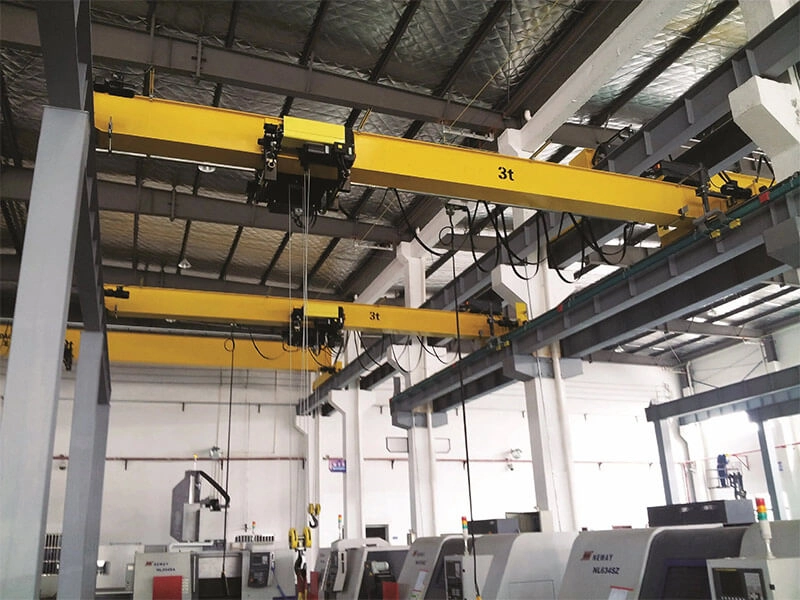
Capacity, Span, Lifting Height, Duty and Environment: What to Send a Crane Supplier
A useful inquiry should give the engineering team enough information to evaluate the whole lifting system:
1.Lifting capacity and actual load.
2.Span, lifting height, and crane travel length.
3.Power supply.
4.New or existing factory conditions.
5.Crane purpose and detailed working conditions.
6.Special control, environmental, or handling requirements.
Two FLAGCRANE configurations show why duty and layout matter:
| Selection point | LD single-girder crane | HD FEM single-girder crane |
| Typical use | Machining, assembly, maintenance, warehouse handling | Light industrial work, equipment installation, power-station maintenance |
| Hoist | CD/MD electric hoist | ND European electric hoist |
| Span reference | 7.5–28.5 m | 7.5–28.5 m |
| Lifting height reference | 6–30 m | 6–30 m |
| Working duty | A4 | FEM 2m / ISO M5 |
At FLAGCRANE, we use these inputs to match the crane to the building and process instead of treating capacity as the only selection criterion.
FAQ
Q: What is an electric single beam crane?
A: It is an overhead bridge crane featuring one main girder and a motorized lifting unit. The hoist picks up the load and travels sideways across the bridge. Concurrently, the entire bridge rolls along the runway rails. The phrase single girder overhead crane is another frequent way to describe this layout.
Q: What are the main components of an electric single beam overhead crane?
A: The main parts are the bridge girder, end beams, electric hoist, traveling mechanism, electrical controls, and safety devices. The exact hoist, drive, control method, and protection package depend on the duty and factory conditions.
Q: Where are electric single beam cranes commonly used in factories?
A: Common applications include machining, equipment assembly, maintenance bays, workshops, and warehouse handling. Suitable configurations can also support equipment installation and maintenance in power facilities.
Q: What maintenance does an electric single beam overhead crane require?
A: Maintenance should cover the hoist, wire rope or lifting medium, brakes, wheels, electrical controls, limit devices, and runway condition. Inspection frequency should follow operating duty, environment, applicable requirements, and the maintenance instructions for the selected equipment.