What Is an Outdoor Gantry Crane?
Gantry cranes used outdoors can be considered overhead lifting devices designed for operations under the open sky. Such a device consists of a frame, which is mounted on legs running on rails or wheels. With such an arrangement, it becomes possible to transport heavy objects easily. The only distinction between indoor and outdoor gantry cranes is the durability of the former in relation to climatic conditions. They are made of anti-rust materials and are capable of protecting the mechanism from adverse weather influences. Outdoor gantry cranes support major lifting jobs where permanent overhead setups do not work well.
Common Applications Across Industries
Outdoor gantry cranes find use in many fields because of their adaptability. Construction workers employ them to manage big concrete beams and steel parts. Shipyard staff use them to raise ship pieces. Factory teams shift large machines with them. Logistics experts handle containers and loads using them. Load limits range from 5 tons in small movable units to 800 tons in big factory systems. Lifting Capacity: 5t to 800t Span: 7.5m to 35m Lifting Height: 6m to 30m Working Class: A5, A6, A7, A8 Ambient Temperature: -20℃ to 50℃. These details show how engineers design outdoor gantry cranes for tough settings. The cranes boost work speed by cutting down on hand labor time.
Types of Outdoor Gantry Cranes
Single Girder Gantry Crane
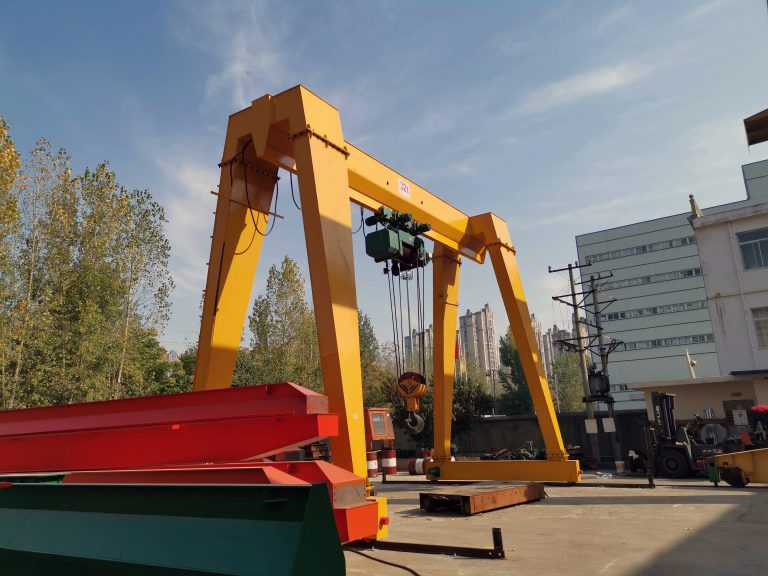
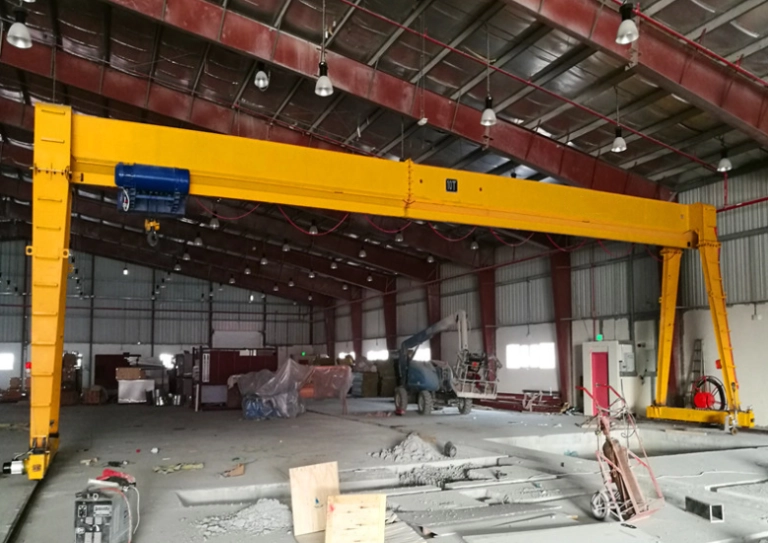
A single girder gantry crane has one primary beam backed by two supports. This setup brings straightforward design, less weight, and lower price for basic to average lifting jobs. Workshops or small yards often see this crane in action for loads between 0.5 tons and 10 tons. Lifting Capacity: 0.5t to 10t Span: 3m to 31.5m Lifting Height: 6m to 18m Working Class: A3 to A5 Ambient Temperature: -20℃ to 50℃. The small build makes setup simple and moving straightforward, so this crane fits changing work needs.
Double Girder Gantry Crane
The double girder gantry crane suits tough jobs that demand strong lifting power and wide reaches. Two side-by-side beams add power and balance during use. Lifting Capacity: 5t to 320t Span: 7.5m to 35m Lifting Height: 6m to 30m Working Class: A5, A6, A7, A8 Ambient Temperature: -20℃ to 50℃. Double girder models give more height for the hook and spread weight better than single girder ones. Steel plants or major building sites benefit from this design.
Rail-Mounted vs Rubber-Tyred Gantry Cranes
Rail-Mounted Gantry (RMG) Cranes
RMG cranes run on set rails placed in container areas or work lines. High accuracy and steady motion make them good for repeated tasks like piling containers or shifting heavy parts along set routes.
Rubber-Tyred Gantry (RTG) Cranes
RTG cranes come with rubber wheels for free travel over various spots without rail limits. Terminals that need adaptable placement use them well. New RTGs run on diesel motors, mixed power setups, or full electric systems based on site power choices.
Structural Design Considerations for Outdoor Use
Box Girder vs Truss Girder Designs
Box Girder Cranes
Box girder setups use closed beams for strong stiffness and weight support. Long reaches or jobs with extra heavy items call for this type.
Truss Girder Cranes
Truss girders apply open frame builds that cut down on wind push—a key plus for outdoor spots in wide fields or near the sea. Light build lowers material needs while keeping solid strength.
Key Factors to Consider When Choosing an Outdoor Gantry Crane
Load Capacity and Lifting Height Requirements
Selecting the proper crane begins with checking the top weight handled each day. Too high a capacity adds extra expense without need. Too low a capacity creates danger at work.
Working Environment Conditions
Outdoor factors like sharp cold or damp air impact crane strength. Picking rust-proof paints makes sure the crane lasts in rough weather.
Mobility and Space Constraints
Site plans guide the choice between fixed rail setups or moving wheel models. Ground type and turn space play into this decision.
Power Supply Options
Site power guides the pick of electric runs for better energy use or fuel-based ones when free movement matters more than plug-in access.
Safety Features and Operational Reliability
Essential Safety Devices for Outdoor Gantry Cranes
New outdoor gantry cranes include overload guards to prevent too much stress on parts. Limit switches manage hoist path length. Wind locks hold steady in gales. Anti-sway tools improve load handling precision.
Operator Training and Safety Protocols
FLAGCRANE acts as a full-service provider. FLAGCRANE offers safety classes and related training to clients in various fields. This training raises safety and output in lifting work. Certified operators meet global safety rules. Routine checks lower accident chances a lot.
Maintenance Practices to Extend Service Life
Routine Cleaning and Lubrication
Steady cleaning stops dirt or rust on active parts. Oil application cuts the friction on gears, wheels, and ropes. This keeps motion even over long use periods.
Anti-Corrosion Measures
Surface Protection Techniques
Rust-block paints, or zinc coating on steel hold off water damage seen often outdoors.
Weatherproofing Electrical Components
Control boxes need tight seals to block water entry. This setup ensures steady work even in showers.
Scheduled Inspections and Repairs
Regularly look for early wear or breaks in parts. Quick fixes stop big failures in key jobs.
Matching Crane Types With Industry Applications
Construction Sector Needs
Big projects turn to double-girder gantries for concrete beams up to hundreds of tons. Truss styles bring easy movement for short-term sites far out.
Logistics & Container Handling
Rail setups lead in container areas for exact pile needs. Wheel models bring shift ease over many load spots in ports.
Manufacturing & Assembly Operations
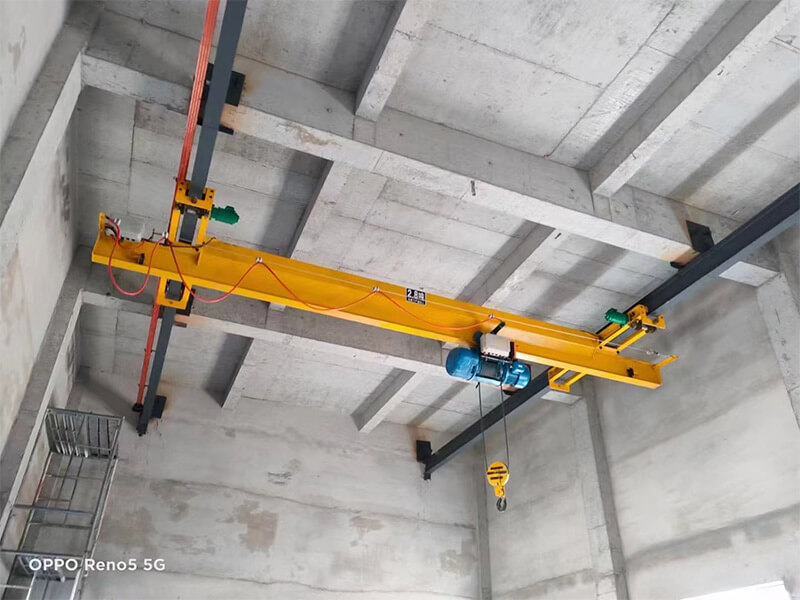
Single girder overhead cranes aid steady line shifts with span sizes fit to shop plans.
Common Selection Mistakes to Avoid
Ignoring Site Conditions
Bumpy ground brings shake risks. Early site checks make sure the model matches space limits before setup starts.
Overestimating Load Requirements
Too big gear hikes buy price and uses extra power without speed gains.
Neglecting Long-Term Maintenance Costs
Cheap units without rust guards face high fix bills later. Quality builds save money in the end.
Practical Buying Checklist
Technical Specifications Review
Check load limits like Lifting Capacity: 2t to 32t, Span: 7.5m to 31.5m, Lifting Height: 6m to 18m, Working Class: A4, A5 Ambient Temperature: -20℃ to 50℃ to match daily work.
Supplier Evaluation
FLAGCRANE stands as a skilled firm that blends crane planning, building, sales, setup, after-sales service, and care. The firm works from Changyuan Crane Industrial Park with over 850,000 square meters of space including new heavy steel shops over 400,000 square meters. FLAGCRANE’s goods hold global approvals like ISO, CE, and SGS for sure performance around the world.
FLAGCRANE supplies varied lines, including:
- Single Girder Gantry Crane (capacity up to 10t)
- Double Girder Gantry Crane (capacity up to 320t)
- Heavy-Duty Custom Models like the 800T double girder gantry crane are built for top factory loads.
These choices show a design range for normal work and made-to-order fixes backed by round-the-clock after-service.
Budget Planning
Upfront spend balance with steady run gains brings the best value through less stop time and lower care costs.
FAQ
Q1: What is the maximum lifting capacity available for FLAGCRANE’s outdoor gantry cranes?
A1: FLAGCRANE supplies models from small movable units at 0.5 tons up to 800 tons, fitting basic shops to huge factory plans.
Q2: Are outdoor gantry cranes suitable for marine environments?
A2: Yes, FLAGCRANE builds add rust-block paints and closed power systems fit for seaside shipyards in salt air.
Q3: How does a rail-mounted gantry differ from a rubber-tyred model?
A3: Rail-mounted types run on set paths for exact repeat moves, while rubber-tyred kinds offer shift over mixed ground without tracks.
Q4: What maintenance schedule of outdoor gantry crane equipment should be followed?
A4: Weekly clean tasks pair with three-month oil checks plus yearly build looks to keep the long run under outdoor strains.
Q5: Can FLAGCRANE customize designs based on unique site requirements?
A5: Yes—FLAGCRANE’s planners adjust each crane to client needs, including span changes from 7.5 m up to 35 m, for an exact match in work setups.
.jpg)