Selecting suitable material handling systems calls for knowledge of facility dimensions, load weights, and workflows. Industrial lifting solutions are highly engineered configurations designed to achieve space savings, safety gains, and productivity increases. The guide offers an overview of the main industrial crane types, structural setups, and technical details and case study. Facility managers receive help from the guide during decision-making.
1. Identifying Your Material Handling and Lifting Challenges
Assessing Workplace Space Constraints and Clearances
Before evaluating different lifting configurations, a thorough assessment of the existing facility layout is essential. Key dimensional factors include runway beam height, total clearance beneath roof trusses, and necessary hook coverage. Low headroom workshops present challenges, as standard equipment restricts maximum hook height, preventing efficient stacking. Facilities handling raw materials require specialized designs that minimize the vertical profile of the crane girder while maximizing the vertical travel of the hook block.
Determining Capacity and Load Weight Requirements
Accurately defining the required lifting capacity is the foundation of structural safety. Facility managers must calculate the maximum weight of the heaviest load and the average weight handled during daily shifts. Designing a system near its ultimate limit accelerates fatigue and increases maintenance frequencies. It is critical to match mechanical components, such as the wire rope hoist and end trucks, to the operational cycle. Under-engineering compromises workspace safety and reduces equipment lifetime.
2. Core Overhead Crane Types
Bridge Cranes (Single Girder vs. Double Girder Systems)
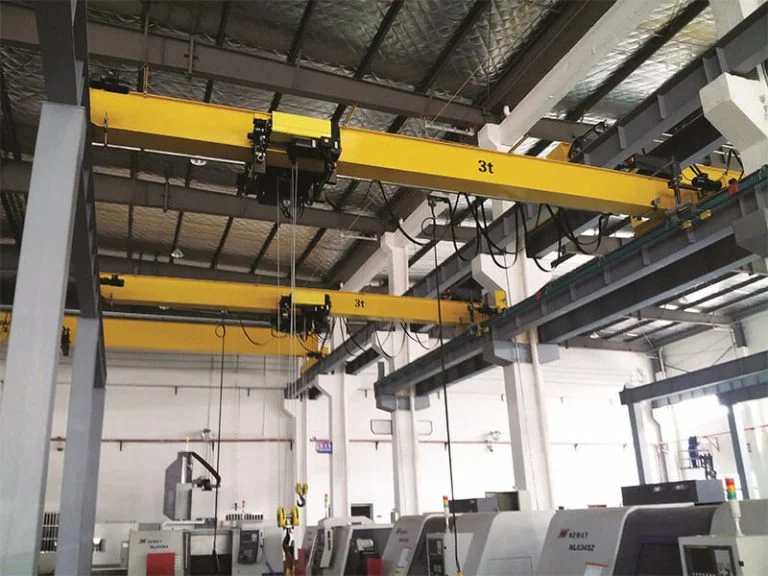
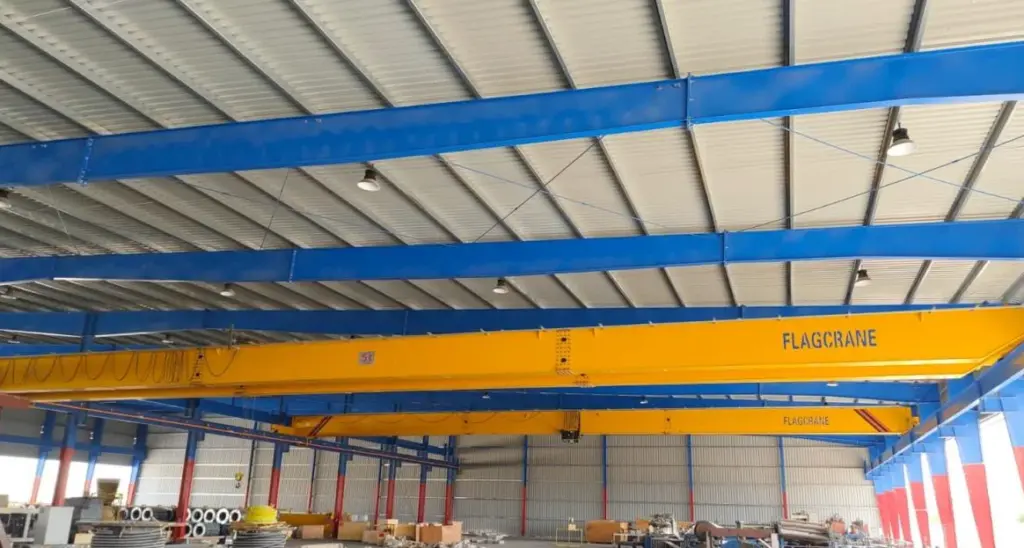
Bridge cranes are characterized by traveling girders supported on overhead runway rails. Single girder designs utilize a single cross beam with a hoist traveling along the bottom flange, providing a cost-effective solution for moderate applications. Conversely, double girder systems feature two cross beams with a trolley running across the top. This configuration is required for higher capacities and heavy-duty classifications. Engineers looking for optimized weight-to-strength ratios often select European style configurations. For example, the HD single girder design and the QDX double girder system from FLAGCRANE utilize computer-optimized box girders that reduce deadweight and minimize the wheel load exerted on factory columns, saving structural costs.
Gantry Cranes: The Ideal Choice for Flexible and Outdoor Operations
Gantry crane solutions eliminate the need for elevated runway beams by utilizing floor-mounted rails supported by rigid A-frame legs. The MH type single girder gantry crane is widely used in outdoor storage yards for loading tasks. For heavier applications, double girder gantry systems like the MG type provide robust structural integrity over expansive spans. These systems allow operations to expand outside without modifications to the building structure.
Jib Cranes and KBK systems for Specialized Workstations
For localized lifting tasks inside specific manufacturing cells, jib crane configurations and KBK cranes provide targeted efficiency. A wall-mounted or pillar-mounted jib crane offers excellent radial coverage for individual workstations, handling components without tying up the main bridge crane. Monorail installations follow a fixed overhead track, making them ideal for linear transport workflows like moving parts through painting booths.
3. Evaluating Crane Runway Support Structures and Building Layouts (Solution)
Optimizing Clearance and Lifting Heights via Top-Running Frameworks
Evaluating the building envelope helps engineers choose between distinct runway support tracks. Top-running systems place the crane bridge above the runway beams, demanding specific vertical clearance below the roof trusses. This layout provides exceptional structural stability and allows the system to achieve maximum potential hook travel relative to the rail level. It remains an ideal choice for facilities requiring heavy manufacturing and heavy duty cycles.
Structural Advantages of Suspending Under-Running Configurations
Under-running systems feature end trucks moving along the bottom flange of the runway tracks. These tracks are usually suspended directly from the roof trusses without requiring independent floor columns, saving valuable factory floor layout space. Advanced modular tracks, including specialized single girder suspension models, offer close hook approach dimensions to reach the outermost building walls. These compact configurations work perfectly in workshops where unobstructed ground areas are mandatory.
4. Key Procurement Decision Factors for Facility Managers
Evaluating Total Cost of Ownership (TCO) and Maintenance Cycles
Buying decisions need to factor in all costs over the full operating life. Costs cover energy use, replacement parts, and service schedules. Modern equipment designs come with variable frequency drives. Schneider inverters serve as one example. Such drives cut down on gear wear through steady speed changes. Steady speed changes also cut shock forces on the structure. Power use drops at the same time. Intervals between replacements grow longer for key parts that wear out, such as brake linings.
Matching Crane Classifications with Your Industry Duty Cycle
Matching equipment to correct international standards, such as FEM or ISO classifications, ensures safe operation. Working classes range from light standby duty to continuous severe mill operations. An ISO A5 or FEM 2M classification indicates a system capable of handling moderate to heavy duty cycles with frequent lifts near rated capacity. Misjudging the duty cycle can lead to structural cracking and severe operational downtime.
5. Real-World Case Study: Integrating Multiple Overhead Crane Types for a Steel Facility
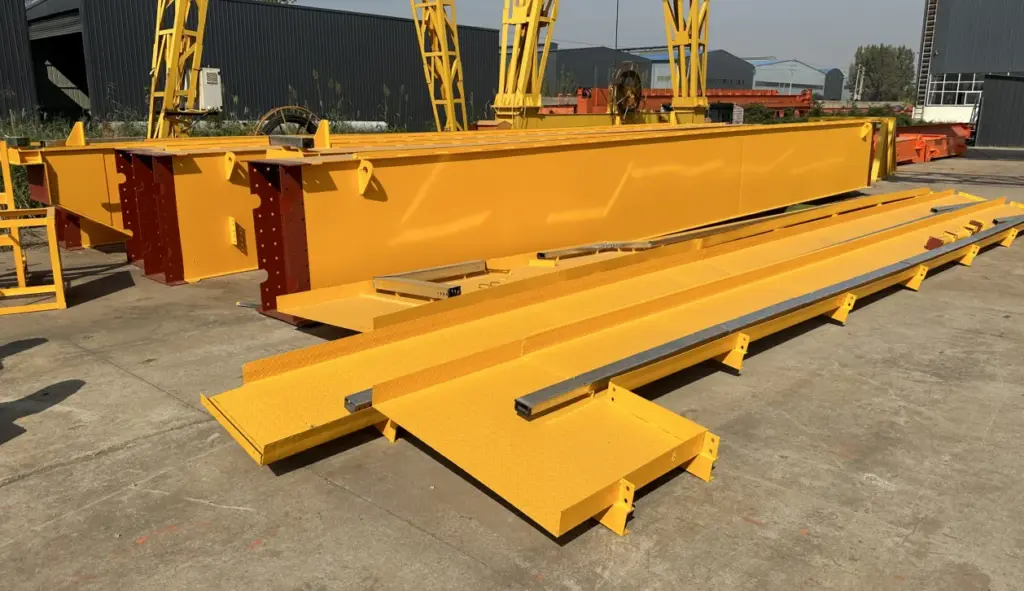
The Client's Material Handling Challenges
A prominent supplier of cold-rolled steel materials planned the construction of a large local sheet storage facility. The client faced structural constraints during the warehouse design phase. A primary challenge was operating lifting equipment across interconnected indoor storage zones and outdoors. Due to the diverse nature of cold-rolled steel handling, the customer was hesitant regarding the exact equipment models needed to optimize the layout.
Technical Selection: Combining Single and Double Girder Types
To resolve clearance issues and meet intense operational demands, a multi-crane solution was implemented. The system was designed to meet a strict FEM 2M and ISO A5 working class standard. The final configuration combined four distinct lifting systems:
- One QDXX 10-ton double beam electric overhead crane with a span of 32.77 meters and a lifting height of 9 meters, featuring an open winch double girder trolley.
- One HD 10-ton European type single girder overhead crane with a span of 32.77 meters and a lifting height of 9 meters.
- One NLH 5-ton double girder bridge crane with an electric hoist trolley, featuring a span of 32.72 meters and a lifting height of 9 meters.
- One HD 5-ton European type single girder overhead crane with a span of 32.72 meters and a lifting height of 9 meters.
The core 10-ton QDXX system utilized a variable frequency drive layout for lifting and traveling functions with Schneider inverters. The remaining three systems were equipped with European style hoists featuring two-speed lifting, variable frequency cross-travel and Schneider inverters.
Customization and Operational Results
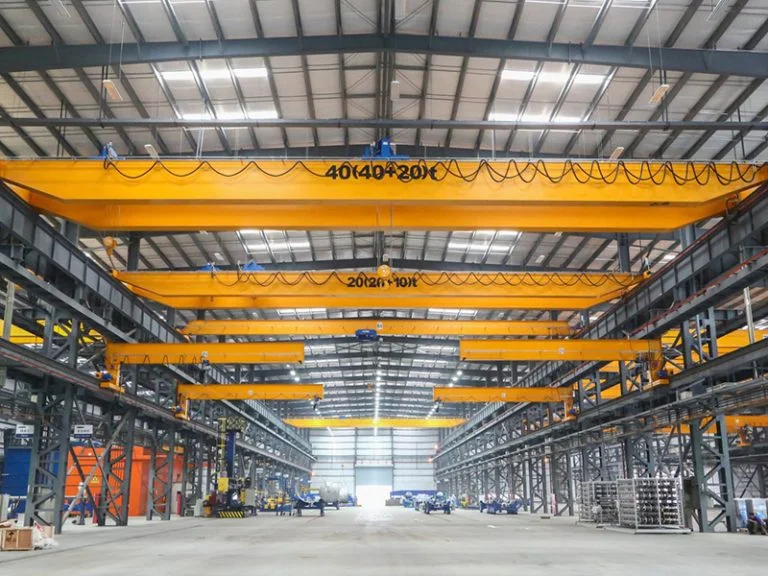
Drawing upon extensive material handling experience, the engineering team recommended the winch-type double girder trolley for the heavy-duty 10-ton QDXX unit. This configuration allowed the hoist mechanism to remain compact while handling large steel coils with precision. Through non-standard structural customization, FLAGCRANE designed the bridge girders to adapt seamlessly to the existing warehouse dimensions, which successfully reduced the overall vertical profile of the equipment. This structural optimization ensured exceptionally smooth travel transitions between indoor and outdoor zones, prevented load swinging, and increased daily throughput.
6. Frequently Asked Questions (FAQs) About Overhead Crane Types
Q: What are the most common overhead crane types used in manufacturing facilities?
A: The most common varieties used in production environments include single girder bridge systems for light maintenance, double girder overhead systems for heavy manufacturing, and gantry configurations for outdoor storage yards. Monorails and workstation jib lifting devices are frequently used for localized handling along assembly lines.
Q: How do I choose between different types of overhead cranes for a low headroom factory?
A: For workshops with restricted vertical clearance, European style low headroom single girder cranes or double girder models with nested hoists are recommended. These configurations position the hoist mechanism higher up relative to the bridge girder, allowing facility managers to reclaim vertical hook travel without altering the roof structure.
Q: What is the main difference between bridge crane and gantry crane types?
A: The primary difference lies in the structural support method. Overhead bridge systems travel on elevated runway rails attached to the building columns. Gantry systems feature rigid supporting legs that move along tracks mounted directly to the ground surface, eliminating the need for elevated building structures.
Q: Which overhead crane configurations offer the highest lifting capacity and span?
A: Double-girder top-running bridge systems and heavy-duty box-girder gantry configurations offer the maximum lifting capacities and longest spans. These systems allow heavy-duty open winches and multi-wheel end trucks to distribute extreme loads safely.
Q: Are custom overhead crane types available for specialized hazardous industrial environments?
A: Yes, custom configurations can be engineered for demanding conditions. Manufacturing industries often deploy explosion-proof hoists, spark-resistant components, or dedicated metallurgical cranes equipped with heat shields and insulated electrical panels to handle molten metal safely.