What is an Outdoor Gantry Crane and What Are Its Common Applications?
Core Components of Outdoor Systems
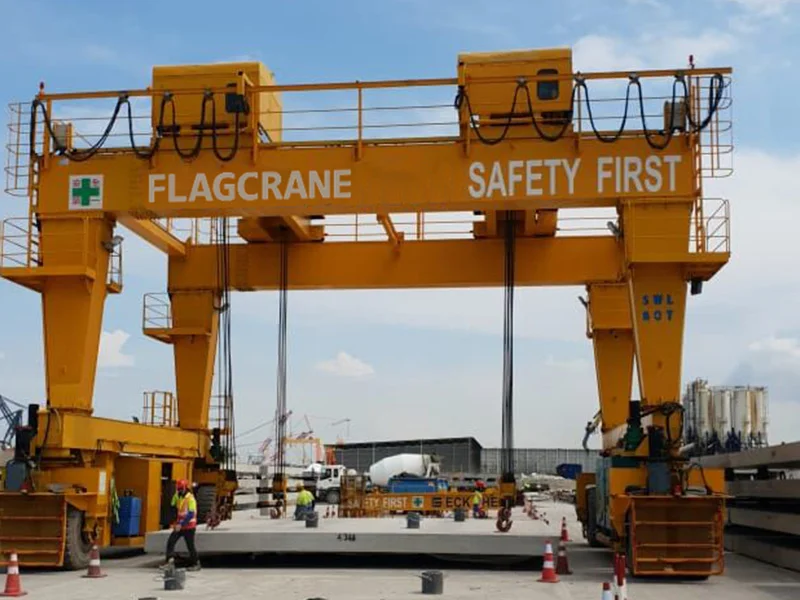
The gantry crane mainly consists of the main girder, support legs, hoisting mechanism, and ground travel mechanism. The hoisting mechanism usually employs high-strength electric wire rope hoists, such as CD single-speed or MD double-speed hoists, to achieve stable and precise vertical lifting. The support legs run along preset ground rails, eliminating reliance on load-bearing columns or roofs of modern factory buildings, which grants the equipment great independence. The electrical control system is safely enclosed in a dedicated electrical cabinet, paired with an operating cabin or remote control, to achieve full scheduling and control of the crane.
Popular Industries Using Outdoor Cranes
Construction sites, port terminals, scrap recycling yards, and plastic product manufacturing plants are the primary application scenarios for this equipment. For example, in the plastic product manufacturing industry, handling large injection molds and bundles of raw materials requires efficient and safe hoisting equipment to maintain the continuous operation of production lines. In these open-air operating environments, the equipment needs not only to cover the spans of different areas but also to possess high operational stability and environmental adaptability, thereby ensuring the smooth flow of logistics channels.
Essential Features of All-Weather Outdoor Gantry Cranes
Wind Resistance Capability and Special Main Girder Design
In open outdoor venues, wind load is one of the core physical factors affecting the operational safety of the equipment. Cranes adopting a truss girder design can effectively reduce the overall structural windward area, thereby significantly improving the wind resistance rating and reducing the total weight of the machine. FLAGCRANE's engineering team, when designing outdoor hoisting equipment, comprehensively assesses the historical climate and wind speed data of the project location, optimizes the windward cross-section of the main girder, and equips the crane with high-precision anemometers and storm-proof rail clamps. This precise design and optimization concept can effectively enhance the safety performance of the crane while ensuring the physical quality of the product, helping enterprises effectively reduce potential risks and maintenance costs of the material handling system.
Anticorrosion Coatings and Electrical Protection Ratings
Long-term rain erosion and high-intensity UV exposure can cause conventional steel structures to rust rapidly and may trigger serious electrical short-circuit failures. Applying C4 or C5 grade heavy-duty anticorrosion topcoats that meet ISO 12944 standards to all external steel components of the crane is an effective method to extend the physical service life of the equipment. At the same time, all electrical control boxes, motor junction boxes, and sensors should reach an electrical protection rating of at least IP65, and dedicated rain covers should be added at key electrical nodes to ensure operational stability during heavy rain or high-humidity weather.
How to Choose the Right Outdoor Crane Based on Needs
Determining Lifting Capacity, Span, and Lifting Height
The first step in choosing equipment is to clarify the core technical parameters. Taking the common 15-ton load requirement in industrial production as an example, the rated lifting capacity must have a safety redundancy, slightly larger than the maximum weight of the daily handled workpiece. For a 15-ton outdoor gantry crane, if the actual span requirement is between 7.5 meters and 28.5 meters, and the operating frequency is medium-to-light, the MH single-girder gantry crane is an economical and applicable choice; if the production rhythm is tight and the usage frequency is extremely high, choosing an MG double-girder gantry crane with a working class of A5 to A8 will better meet the rigorous demands of long-term operation. The lifting height depends on the maximum vertical height of the goods stacked on-site and the extra space occupied by the attached spreader.
| Project | MH Single-Girder Gantry Crane | MG Double-Girder Gantry Crane |
| Applicable Load | 1 ton to 32 tons (covers 15t) | 5 tons to 800 tons (covers 15t heavy-duty) |
| Working Class | A3, A4 | A5, A6, A7, A8 |
| Span Range | 7.5m to 28.5m | 7.5m to 50m |
| Main Features | Simple structure, low procurement cost, suitable for medium-to-light work | High load capacity, large span, suitable for high-frequency, heavy-duty logistics |
Comparison Between Rail-Mounted and Tire-Mounted Cranes
Rail-mounted gantry cranes (RMG) run linearly on preset fixed steel rails, suitable for large storage areas where logistics routes are fixed and site planning is clear. Tire-mounted gantry cranes (such as the RMH single-girder tire gantry crane) break free from the limitations of fixed tracks through rubber tires, allowing for flexible transfer operations between different work areas. For flexible handling needs, FLAGCRANE provides customized RMH single-girder tire gantry cranes. Professional crane engineering teams will design the optimal tire travel system for customers based on the flatness of the customer's site, the load-bearing capacity of the concrete floor, and complex operating routes, and provide comprehensive after-sales service, enabling the crane to be put into daily production quickly, stably, and reliably.

Cost Factors: How Much Does an Outdoor Gantry Crane Cost?
Initial Investment and Long-Term Value
The procurement budget must include not only the initial ex-factory price of the bare machine but also consider long-distance transportation, on-site installation, system debugging, and early civil foundation costs. The initial fixed investment for a 15-ton single-girder gantry crane is relatively low; however, if the actual operating frequency far exceeds the A3 or A4 working class design limit, the later costs of mechanical parts replacement and accidental downtime will quickly offset the initial price advantage. Therefore, strictly matching the actual operating frequency with the equipment working class for procurement planning is the key strategy to maximize long-term return on investment.
The Impact of Customization on Price
Customized development of spreaders and environmental adaptability modifications will directly affect the final procurement pricing. According to the different physical forms of the materials being handled, the gantry crane can be flexibly equipped with specialized extended spreaders such as standard hooks, grabs, lifting beams, crane lifting tongs,or C-hooks. For example, equipping a specialized multi-point lifting beam will increase hardware procurement costs but can significantly improve the handling efficiency of extra-long structural parts and prevent workpiece deformation.
Primary Safety and Maintenance Tips for Outdoor Environments

Rail Drainage and Foundation Maintenance
Outdoor rail systems are extremely susceptible to precipitation. Long-term foundation water accumulation can lead to soft soil underneath and local rail subsidence, subsequently causing intense friction and rail gnawing during crane operation. When initially laying ground rails, a reasonable drainage slope should be reserved, and designated personnel should be arranged to regularly clean the drainage ditches on both sides of the rails to prevent mud and sand accumulation from causing the drainage system to fail.
Daily Safety Inspection Checklist
Establishing and strictly implementing a standardized daily inspection process can effectively prevent serious mechanical and electrical failures. It is recommended that equipment operators carefully execute the following inspection procedures every day before starting the crane:
1. Check all load-bearing wire ropes for broken wires, severe wear, or kinks/bird-caging.
2. Confirm that all limit switches, especially the lifting height limiter, are sensitive and function normally.
3. Test the sensitivity of the main and auxiliary hoist braking systems to ensure they can instantly and effectively lock heavy objects in an emergency stop state.
4. Check the ground running rails for hard objects, debris, or winter ice that might obstruct the trolley wheels.
5. Confirm that anti-wind resistance safety devices such as rail clamps are fully released during operation and securely engaged when the crane is in a standby or storm-warning state.
Frequently Asked Questions About Outdoor Gantry Cranes
Q: How much wind can an outdoor crane withstand?
A: The physical wind resistance capability of an outdoor crane depends on its initial design standards and the structural form of the main girder. Cranes adopting a truss girder design generally have significantly better wind resistance than traditional box girders due to their excellent wind permeability. Standard operating procedures dictate that all lifting operations should be stopped immediately when ambient wind speeds exceed Beaufort scale 6, and the equipment should be locked using ground anchoring devices like storm-proof rail clamps.
Q: What is the average price of a 15-ton heavy-duty outdoor gantry crane?
A: The specific market price for 15-ton lifting equipment varies greatly, mainly depending on the required span, maximum lifting height, equipment working class, and whether special marine-grade anticorrosion coatings are needed. The best way to obtain an accurate quote and optimal budget configuration is to provide the supplier with detailed site dimensions and estimated daily operating cycles so that engineers can perform a precise cost calculation.
Q: How can I protect the electrical components of an all-weather crane from heavy rain?
A: The key to protecting core electrical components lies in comprehensively upgrading the equipment's physical isolation and protection levels. Ensure that all electrical control cabinets, inverter boxes, and drive motor housings reach at least an IP65 industrial protection rating. Furthermore, installing stainless steel or high-strength plastic rain covers over exposed electric hoists, motor cooling fans, and main control boxes, and using high-quality waterproof sealing joints at all external cable interfaces, can effectively prevent short-circuit faults caused by rain and condensation infiltration.