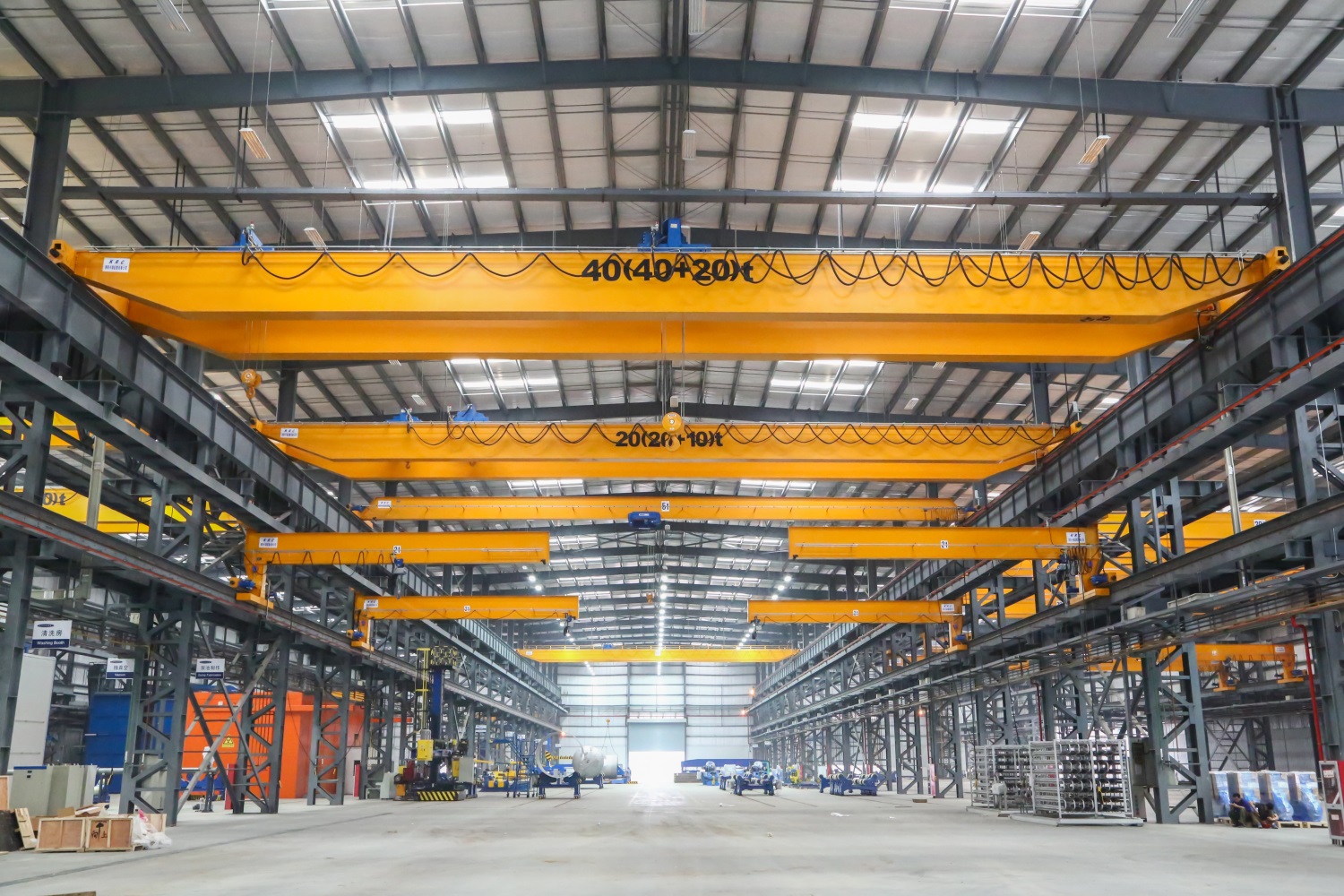
Quick answer. Two quotations arrive. One says “China,” the other “Europe,” yet that tells the buyer surprisingly little. Open the scope sheets. Does each price cover the same crane, the same site work and the same support after handover? Until those lines match, the totals do not.
The cheaper front page may hide rails, freight or commissioning on a later page—or omit them altogether. Start with the overhead crane product range. Mark every inclusion and exclusion with a pen. Only then compare totals.
Compare Overhead Crane Offers on the Same Technical Baseline
Read the Scope Before the Price
Take the two offers and work down this short list. A blank is not an assumption; it is a question for the bidder.
• Same load, span, hook travel and duty—or merely the same tonnage?
• What is actually in the supply: bridge, hoist, trolley, electrics, conductor system and controls?
• Are the governing standard and component makes written down?
• Where does the supplier’s responsibility stop: rails, erection, commissioning or load test?
• A fault occurs six months later. Who answers, and how will the right part be identified?
Rated load is only one input in ISO 4301-1. The work cycle and load spectrum also affect classification. That is why two cranes carrying “10 t” on the nameplate can have different brakes, hoists and structures without either quotation being wrong.
Compare Chinese and European Overhead Crane Prices
Why can two overhead crane quotations differ so much?
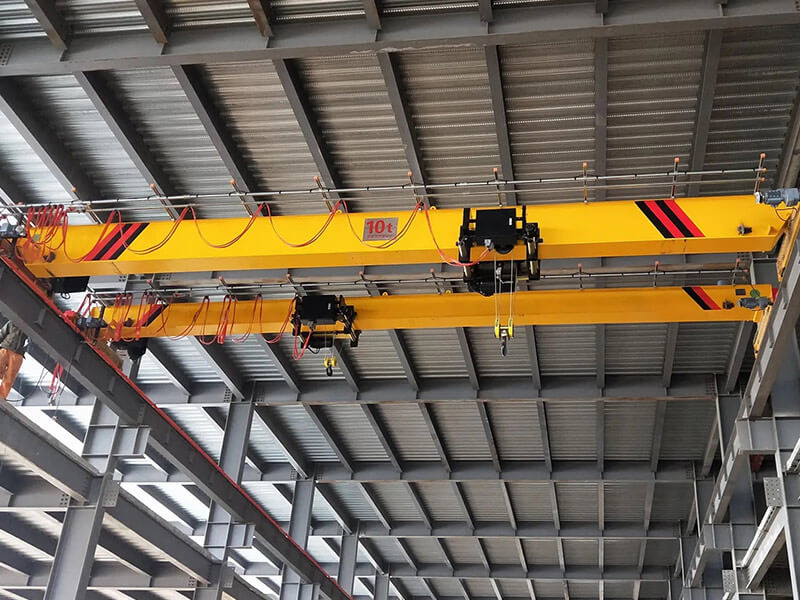
Overhead crane price changes with the drawing. A longer bridge adds steel; tight headroom changes the hoist arrangement; more starts per hour affect motors and brakes. Even a 10 ton overhead crane can be a modest maintenance machine or a production asset that rarely rests. The nameplate does not price the job.
Chinese production economics often make the equipment line attractive. In a European bid, local engineering or site management may already sit inside the number. Neither presentation is inherently better. Circle what each bidder has priced, add what remains outside, and compare the completed project—not the first subtotal.
Buyer check: Calculate the complete installed scope
• Open the equipment schedule. Find the hoist, trolley, controls, conductor system and lifting attachment.
• Write the Incoterm beside the freight allowance. Note packing, insurance and handling of long bridge sections.
• Ask the importer which origin and conformity papers customs will expect; check them against the document list.
• Building interface: price rails, runway beams, reinforcement and incoming power if they sit outside the crane package.
• Site work: name the party providing labor, access equipment, test weights and final acceptance support.
• Years two and three: obtain part numbers, ordinary lead times and the route for an urgent warranty shipment.
Before accepting the site-work allowance, compare it with the overhead crane installation checklist so runway, power, access and testing responsibilities remain visible.
Compare Overhead Crane Quality with Evidence
Does country of origin define crane quality?
No. Place a basic light-service crane beside a compact high-duty design and the quality discussion becomes meaningless, whatever the passports of the two factories. Use the project file instead: drawing, calculations, component schedule, weld inspection and test record.
On many tender sheets, European overhead crane is shorthand for compact geometry and a particular hoist or drive philosophy. It is not a country-of-origin certificate. For a compact single-girder example, review the HD European Type Single Girder Overhead Crane. Do not buy the adjective. Buy the stated hoist, drives, brakes, duty and performance.
For a heavy-duty configuration with a trolley, compare the stated duty and components of the QDX Type Double Beam Electric Overhead Crane with the operating profile in the RFQ.
Which technical evidence should the supplier provide?
Duty class and operating profile
Specify working cycles, typical load, lifts per hour and shifts per day. Request the ISO or FEM classification in the proposal. Capacity alone does not show whether the crane is suitable for the real duty.
Structural design and building loads
Give the supplier the span, hook height and available headroom. Then obtain wheel loads and the design basis with the general arrangement drawing; the building engineer needs those figures before the runway can be accepted.
Hoist drives and controls
List hoisting and travel speeds, reeving, motor ratings, brakes, control method and VFD functions. Request a component schedule and data sheets. Brand names without model numbers and performance data are not enough.
Build the inspection file around this crane
Do not ask for “all QC documents.” Name the useful ones: material identity, weld inspection, critical dimensions, safety-device checks and the agreed factory test. Approve the report forms while changes are still easy.
Set document dates before shipment
Make a register part of the order. Each manual, drawing, certificate, test report and parts list gets a language, owner and due date.
Use the overhead crane selection guide to cross-check capacity, span, lift height and duty before approving the technical baseline.
Test the Service Route Before Award
Run a Sample Fault Through the Supplier
Manufacturing may be global; a breakdown is painfully local. Ask both bidders to walk through the same example: the hoist stops on a Tuesday afternoon. A European maker might dispatch a nearby technician. A Chinese overhead crane manufacturer might diagnose remotely, send an engineer or use a service partner. The useful answer is the route, not the brand’s home address.
Write down the first contact, covered hours and evidence needed for a warranty decision. For a partner network, verify the actual company and technicians. Then ask where routine parts sit and when an urgent shipment can leave. “Global support” can stay in the brochure.
Use One RFQ to Compare Every Crane Supplier
Put Both Bids on One Worksheet
Start with the same technical fields for both bidders; the overhead crane RFQ specification guide provides a practical input list for this comparison.
Start with one RFQ
Do not let the enquiry drift between suppliers. Copy the same load data, span, hook travel, runway, duty, electrical supply, controls, environment and building limits into both requests.
Step 2: Make exceptions visible
Ask bidders to mark the specification line by line: included, excluded, optional or still open. “Standard configuration” leaves too much room for interpretation.
Build the commercial total again
Choose one Incoterm for the comparison. Under the equipment subtotal, enter freight, import charges, erection, testing and buyer-supplied work as separate rows.
Open the technical file
Read the drawing and component schedule before ranking the bids. The design standard, inspection plan and test procedure belong in the same review. Move any difference into the clarification log.
Step 5: Put a number on support
Price the recommended spares and likely service travel. Also ask what an emergency part shipment would involve during the first operating years.
Decide Which Supplier Model Fits the Project
When may a Chinese overhead crane supplier be the better fit?
• Your team can handle import logistics and appoint competent local erection support.
• The crane needs non-standard span, headroom, controls or a special lifting attachment.
• The factory will name the standard, duty, components and tests in the contract documents.
• Local maintenance is already available and critical spares can be planned before shipment.
Where compact headroom and double-girder capacity must be balanced, include the N-LH Type Double Girder Bridge Crane as one technically defined option rather than relying on a country label.
When may a European supplier be the better fit?
• A short, contract-backed field response matters more than the initial saving.
• The new crane must match an installed fleet, proprietary controls or an approved component list.
• Engineering, compliance and erection must sit with one regional contractor.
• Lost production is expensive enough to justify a stronger local service commitment.
Request Two Technically Aligned Options from FLAGCRANE
What information does FLAGCRANE need for an accurate comparison?
We do not start this comparison with a model code. We start with what hangs from the hook, where the rails sit, how high the hook must travel and how often the crane will move. Roof clearance, environment and controls come next.
Send us the maximum suspended load and the usual load, not just one number. Add rail-center span, hook travel, runway length, power and a workshop drawing where possible. Shifts and lifts per hour help settle the duty. From that brief, we can prepare a standard arrangement and a compact European-style option without changing the basis halfway through.
Specific model pages are a shortlist, not the final selection. The site data decides whether a traditional or compact European-style arrangement belongs in the quotation.
Also flag non-negotiable standards or component makes. Tell us who will inspect, whether long bridge sections face a shipping limit and who takes charge of erection. Once those points are settled, the delivery date has a real scope behind it.
Mark Up the Order Before Signing
• Check whether “capacity” includes the hook block and lifting attachment.
• Write “rail center to rail center” beside the span.
• Hook travel and the highest hook position fit the actual roof clearance.
• The duty follows the real load spectrum and operating cycle.
• The building designer has both normal and maximum wheel loads.
• The hoist, trolley, drives, controls and electrical makes have model references.
• Safety devices and the governing design standard appear on the specification.
• Every exclusion has an owner on the buyer or supplier side.
• The packing list shows shipping dimensions before transport is booked.
• Erection, load test and acceptance duties are signed off.
• Attach the warranty contact, claim route and spare-parts schedule to the order.
FAQ
Q: Are Chinese overhead cranes always cheaper than European cranes?
A: The factory quotation often is. The completed project may not be. Put transport, import charges, runway work, erection, tests, spares and service beside the equipment figure; the answer is in that total.
Q: Does European overhead crane mean the crane was made in Europe?
A: No. Suppliers also use the phrase for compact geometry, European-style hoists and VFD travel. Check the factory address and component schedule rather than relying on the label.
Q: Which quality documents should an overhead crane manufacturer provide?
A: For this purchase, begin with the approved general arrangement, design basis and component schedule. Add relevant material and weld records, electrical drawings, inspection results, manuals, the factory test report and the destination conformity file.
Q: What information is needed to compare overhead crane price?
A: Give both bidders the load, rail-center span, hook travel, runway, headroom, duty, speeds, power and controls. Site, environment and destination follow. Finally, write whether rails, erection and testing are inside or outside the number.
Q: How should buyers compare after-sales service?
A: Describe a believable fault and listen to the route. Who takes the call? What starts a claim? Can the supplier name field coverage, stock location and ordinary dispatch time for the part?
Final Recommendation
Do not award the order from the comparison table’s first row. First confirm duty and building fit. Next close every gap in supply, erection, testing and service. The price that remains is a project price, not a headline. Use drawings and tests to judge the crane; use named contacts and response terms to judge the support. Review our customized overhead crane solutions, then send one complete RFQ and request two technically aligned options.
Sources URL
https://og.mhi.org/downloads/industrygroups/cmaa/specifications/toc/70.pdf