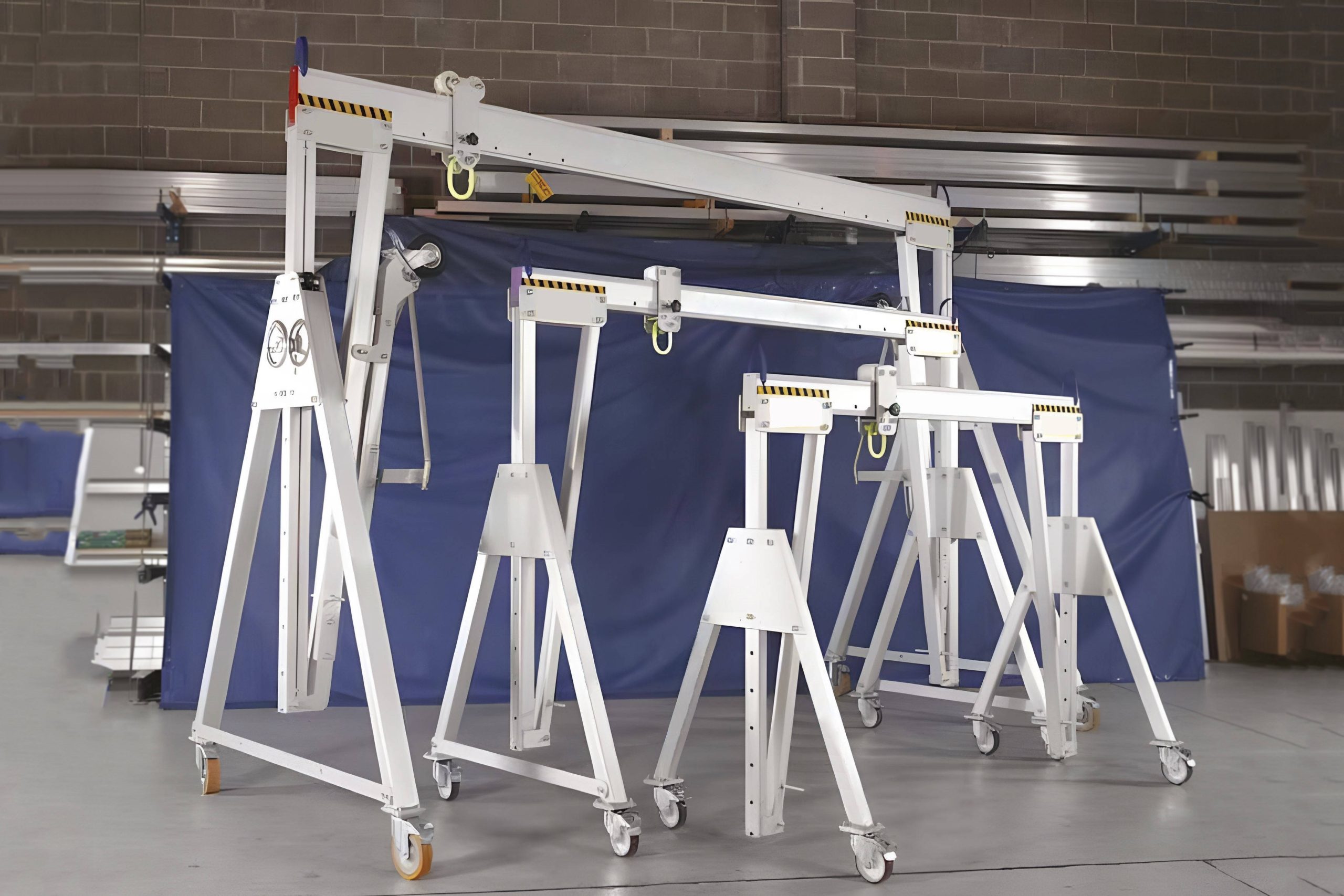
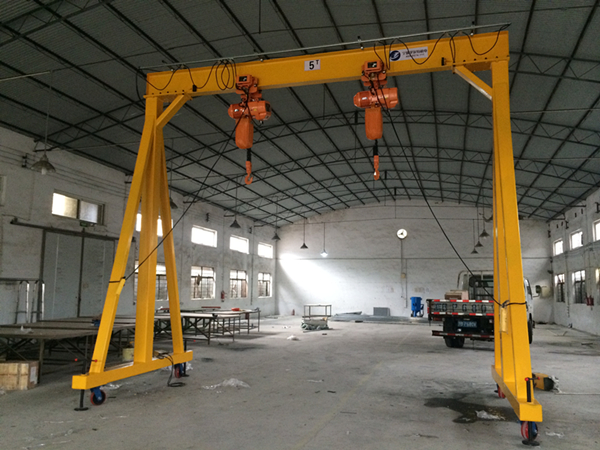
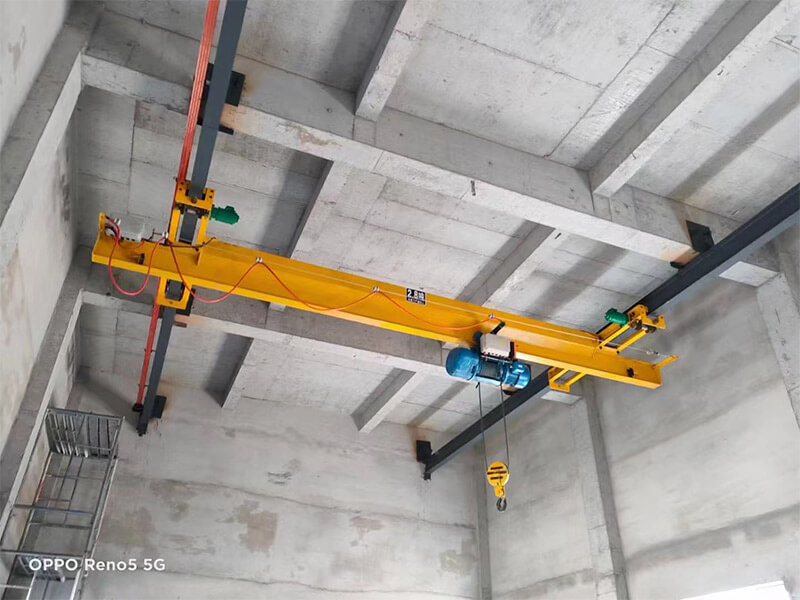
When selecting an overhead crane for a steel fabrication shop, size it for your heaviest welded assembly plus rigging — not just your heaviest raw plate. Most common setups fall within 5 t to 32 t capacity and 10 m to 30 m spans. It’s important to note that duty class is governed by lifts per hour, not the crane tonnage. Three critical factors determine your crane specification: maximum suspended load, hook coverage needed across your workstations, and lift volume per shift.
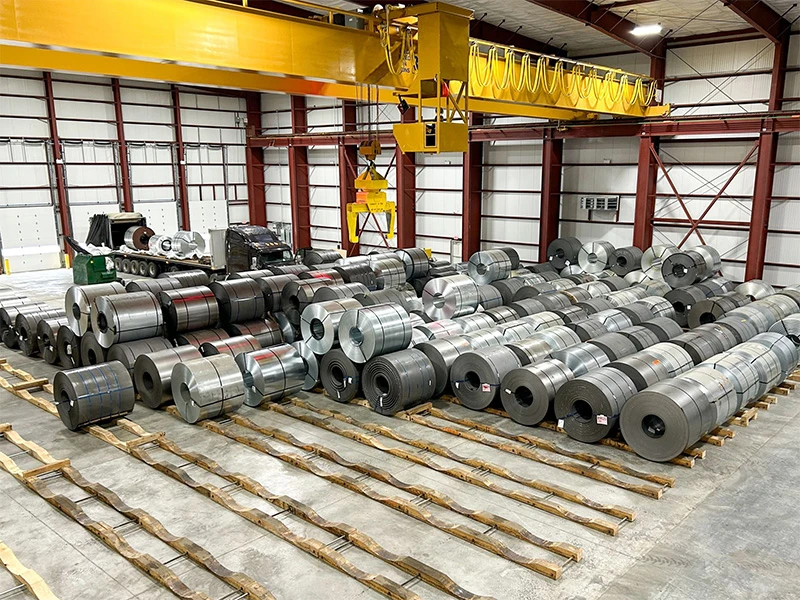
Define the Steel Loads Your Overhead Crane Must Handle
Start with the steelwork, whether it is a preferred tonnage or not. This includes unfinished steel parts as well as complete steel assemblies.
Identify the Heaviest Beams, Columns and Welded Assemblies
Measure weight, length, and width of typical beams, columns, plates, and finished products. A long truss may be lighter than a closed product but less easy to maneuver due to its length. Compare finished weldments with the incoming materials. For an overhead crane to lift steel beams, measure lifting points and required space for turning the load.
Include Rigging Weight and Long-Load Balance
In addition to the steelwork, slings, shackles, and lifting attachments are also covered by the capacity of the lifting beam. Long beams need multiple pick points to avoid deflection and to be in balance. Our crane lifting beams are customizable for large structural parts, also with an adjustable hook. Choose your rigging after a qualified lift assessment – higher capacity does not compensate for imbalance.
Match Crane Coverage to the Steel Fabrication Workflow
An overhead bridge crane has to reach the required stations. Its coverage must follow the production line.
Plan Hook Access from Cutting Tables to Welding and Assembly Bays
Map out the materials flow from raw steel through cutting, fit-up, welding, assembly and despatch. Mark all the pick-up and set-down points. If one crane is to serve both the fabrication area and loading area, then it will need to handle a lot of materials, and there is a risk of a queue. Be sure to allow space for an incoming beam whilst removing completed frames. Also check that you have got enough runways to meet your requirements.
Check Headroom, Runway Loads and Existing Building Limits
Clearance to obstructions below should be measured, not the height of the roof. Clearance to hook block, lifting beam, slings and load above should all be included when measuring vertical clearance. Measuring Span, Hook Approach, and End clearances will indicate practical coverage. For a workshop already completed, a structural engineer would verify columns, runway beams and foundations for the proposed wheel loads. Our installation checklist details further on-site verification.
Compare Single and Double Girder Overhead Cranes for Steel Fabrication
Compare the two types of cranes on the same load and same building configuration. The choice between them affects hook clearance and building requirements.
| Selection factor | Single girder | Double girder |
| Typical fit | Light to medium lifting tasks | Demanding load and duty requirements |
| Building impact | Often lighter | Check bridge weight and wheel loads |
| Hook arrangement | Hoist commonly below girder | Trolley may improve hook height |
| Buying priority | Simplicity and usable coverage | Capacity, duty and configuration flexibility |
When a Single Girder Overhead Crane Fits the Fabrication Task
Our HD single girder overhead crane is supplied with an ND European electric hoist and features a compact three-in-one drive. The variable-frequency travel control provides smooth travel. In spite of it being a small overhead crane, the crane is able to perform intensive service in a small fabrication workshop. Compare actual span, hook height, and lifting frequency with alternative cranes before selecting this model.
When a Double Girder Overhead Crane Deserves Consideration
Our QDX double girder overhead crane is designed for medium and heavy industrial lifting, with modular construction and variable-frequency speed control. Options include anti-sway and automatic positioning functions. Consider it for demanding lifting envelopes or operating profiles. The choice will also depend upon the allowable runway load and the desired hoist configuration.
Specify Crane Duty and Controls for Repeated Steel Handling
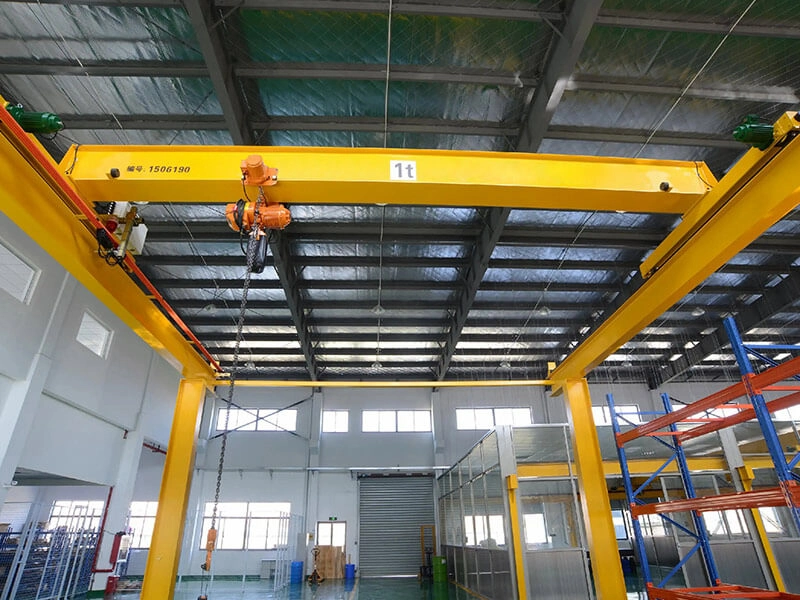
Same peak power does not necessarily mean same duty cycle. Frequency and controls also have to be taken into account when specifying.
Translate Shift Patterns and Load Mix into Crane Duty Requirements
For a typical fabrication workshop, we need to establish the number of lifts per hour, shop hours per shift, and approach load to rated capacity. A shop moving small parts occasionally has different demands from one transferring welded sections throughout two shifts. We offer HD cranes with A5 classification and QDX configurations covering A5–A8. These are not automatic assignments for fabrication work; confirm the duty standard and actual operating profile with our engineers.
Define Positioning Speeds and Options for Long-Beam Handling
For fit-up work, slow travel near fixtures and long travel between bays can be required. Separate speeds for hoisting, trolley, and bridge travel should be specified. Wireless remotes can be beneficial for viewing from longer distances. For long assemblies, verify sway control and lifting beams are adequate. For loads to be lifted by two hoists or cranes, get an engineered coordinated-lifting plan.
Prepare a Steel Fabrication Crane RFQ with FLAGCRANE
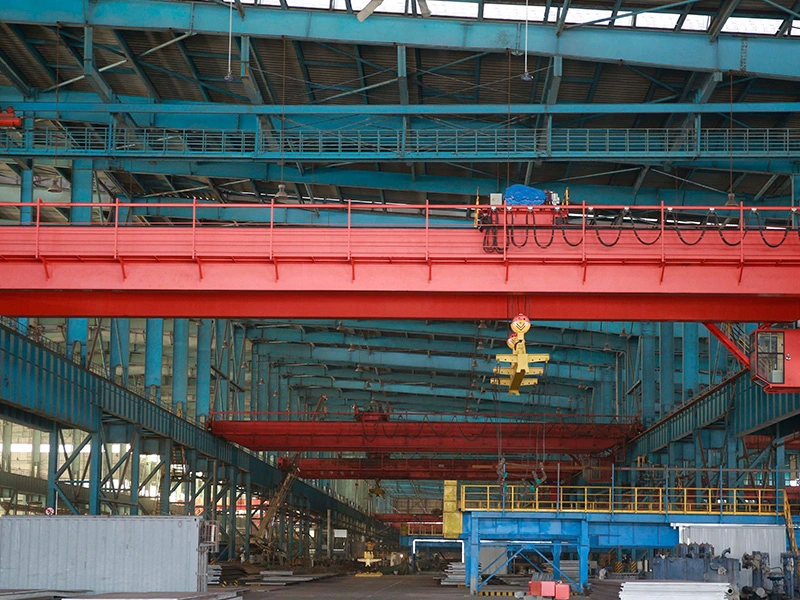
Make sure a quotation clearly describes the work to be carried out and not just the capacity to complete the work. Compare like with like when comparing proposals.
Submit Workpiece Drawings, Production Data and a Bay Layout
Send us representative component drawings, maximum suspended weight, expected lifting frequency and the intended handling route. Include building width, clear height, runway travel length and local power supply. Mark doors, columns and welding stations on the layout. These details help us select a factory overhead crane and attachments.
Compare the Installed Scope, Not Just the Crane Price
We supply separate equipment for lifting, electrification of the equipment, support of steelwork, transport, installation, commissioning and user training. We check on the availability of spare parts and test arrangements. FLAGCRANE designs, installs, and provides after-sales service for individual lifting systems. We would be happy to prepare a suitable system for you after you have shared your workshop layout and steelwork data with us. We then finalize the RFQ together.
FAQ
Q: What overhead crane capacity does a steel fabrication shop need?
A: Calculate the heaviest suspended load, including rigging and attachments. Then check the dimensions, lifting method, and frequency. No single capacity suits every workshop.
Q: Is a single girder overhead crane suitable for structural steel fabrication?
It depends on rated load, span, hook coverage, and duty required for the work at hand. A double-girder hoist is not necessarily the only option.
Q: What overhead crane duty class is suitable for a steel fabrication shop?
This depends on the load distribution, the number of lifts per hour, and the number of operating hours. Please provide the necessary information, and we will be happy to classify the product for you.
Q: Can an overhead crane be installed in an existing steel fabrication workshop?
A: Possibly. An engineer would have to assess the structural capacity of the stand and the runway end, check clearances, power supply, and installation access.
Q: How much does an overhead crane for a steel fabrication shop cost?
A: Price varies with capacity, span, duty, controls and installation scope. Compare itemized quotations using identical technical and service requirements.