Choosing a gantry crane is not just a matter of picking a tonnage. A suitable system has to match the load, working area, support arrangement, and site. For steel plants, manufacturing facilities, maintenance areas, power stations, and water plants, those details shape the final configuration.
At FLAGCRANE, we start with the job and site, then work toward the crane. This helps avoid forcing a standard model into a facility that does not suit it.
What Should You Confirm Before Choosing a Gantry Crane?
Define the Load, Lifting Path and Operating Pattern
Start with the real load. Record the heaviest item, any lifting beam, C-hook, magnet, tong, grab, or other attachment, and how often the lift is repeated. Note the pick-up and set-down points and whether the job needs only vertical lifting or repeated travel.
Operating frequency matters too. An occasional maintenance lift and continuous handling may have the same load weight but different duty requirements.
Separate Working-Area Requirements From Crane Dimensions
A factory bay width is not automatically the required crane span. The useful question is: how much area must the hook actually reach?
Measure hook coverage, lifting height, travel length, clearances, nearby structures, and equipment that must remain accessible. These figures give the engineer a practical working envelope.
How Should Gantry Crane Capacity and Span Be Selected Together?
Select Capacity Around the Real Lifting Requirement
Rated capacity should follow the heaviest actual lifting task, including the lifting attachment where relevant. Avoid choosing capacity from the average load alone.
A workshop may usually handle 6-ton assemblies but occasionally lift a heavier section. That occasional lift still belongs in the selection process. Load shape matters too. A machine, long beam, and steel coil may need different handling arrangements at similar weights.
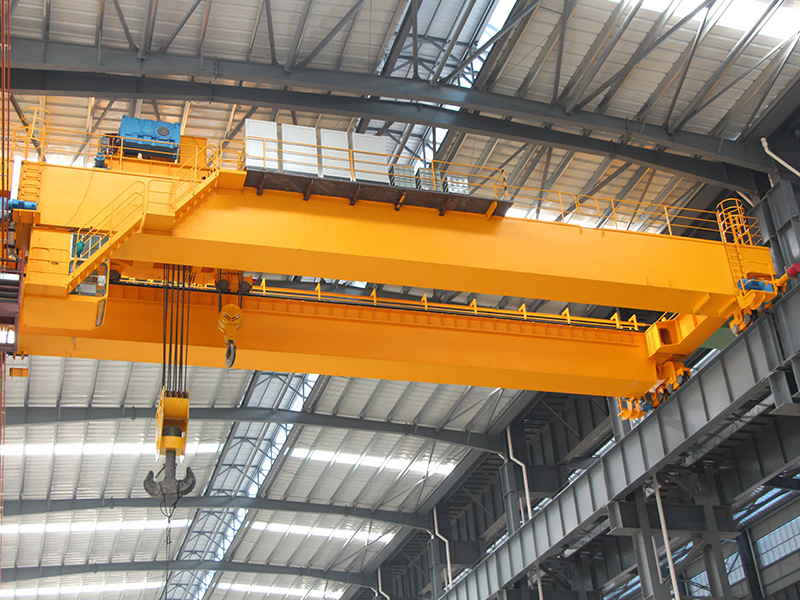
FLAGCRANE gantry systems can be matched with different lifting devices and spreaders. Our MG double girder gantry crane can work with hooks, grabs, lifting beams, lifting tongs, C-hooks, electromagnets and other attachments, and is intended for heavy-use applications.
Set Gantry Crane Span From Required Working Coverage
Span should follow the area that needs to be served. Rail position, leg position, clearances, hook approach, and nearby machines all affect the final dimension.
A useful sequence is:
- Mark the load pick-up and set-down zones.
- Define the required hook travel across the width.
- Check where the legs and rails can be placed.
- Confirm clearances for structures, pipes, doors, platforms, and maintenance.
- Finalize the span after the working envelope is clear.
This is especially useful in existing plants, where a small rail-position change can solve a large layout problem.
Treat Girder Configuration as an Engineering Result
Single girder and double girder arrangements should not be chosen from tonnage alone. Capacity, span, lifting height, operating frequency, headroom, trolley layout, and attachment type all matter.
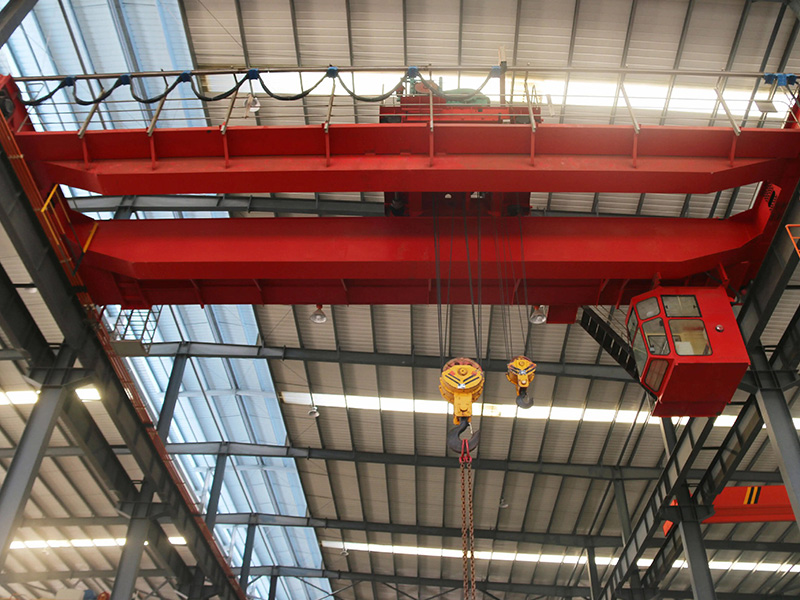
Our MH single girder gantry crane is a rail-operated medium and light lifting solution and can use a wire rope hoist or chain hoist. For heavier or more demanding service, the MG double girder design provides a different structural platform. The final choice should follow the complete duty and site picture.
Which Gantry Crane Leg Configuration Fits the Site?
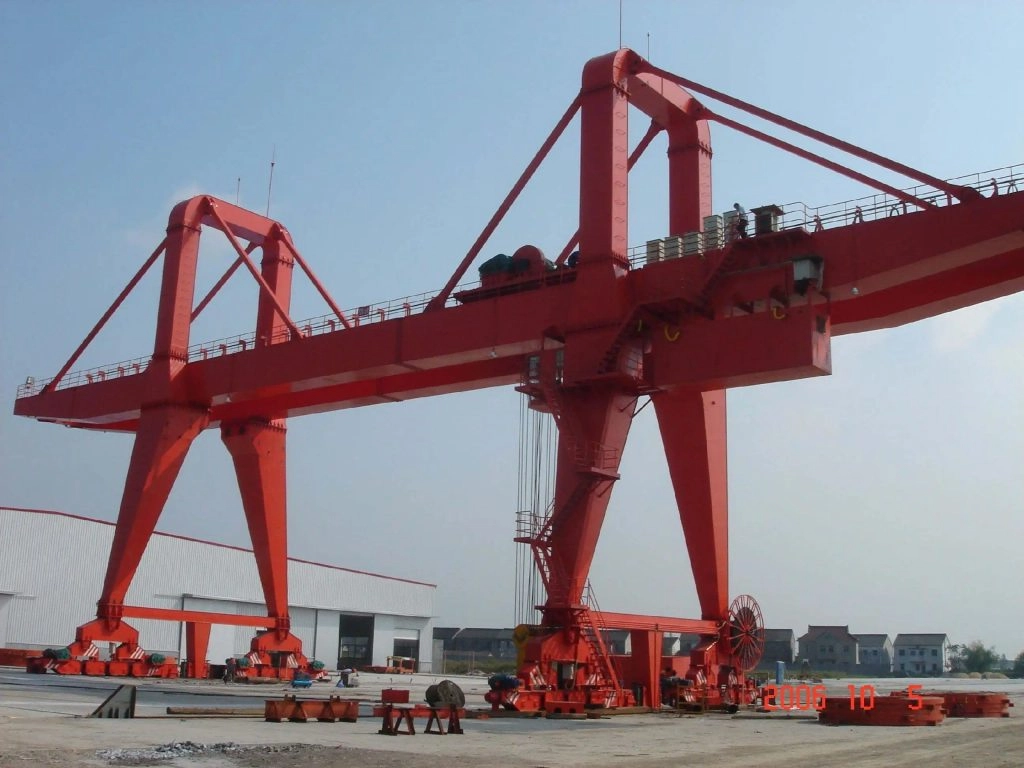
Full Gantry Cranes for Two-Sided Ground Support
A full gantry crane uses legs on both sides and ground-level travel paths. It is practical where the building should not carry runway loads or the lifting area sits outside the main structure.
Check whether the ground, rails, foundations, and travel path can support the arrangement without interfering with production traffic.
Semi or Single-Leg Gantry Cranes for One-Sided Building Support
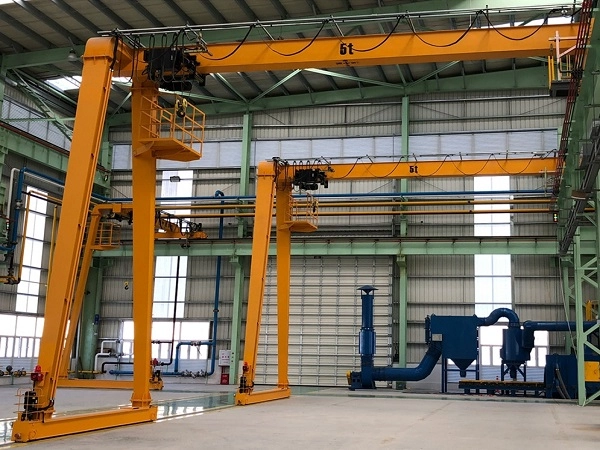
A semi gantry crane works well when one side can run on a building-supported rail and the other side needs a ground rail. Our BMH/BMG semi gantry crane uses this arrangement and can serve manufacturing workshops, warehouses, assembly plants, storage areas, and similar production spaces.
| Configuration | Typical site logic | Main selection concern |
| Full gantry | Ground support on both sides | Rail and foundation layout |
| Semi gantry | Building support on one side, ground support on the other | Building capacity and alignment |
| Mobile gantry | Relocation between work points | Floor condition and movement |
Fixed-Track vs Mobile Gantry Crane Configurations
Fixed-track systems suit repeated work along a defined route. Mobile gantries fit temporary work or changing maintenance positions.
FLAGCRANE portable simple mobile gantry cranes use a compact structure with movable supporting legs and can be used in workshops, warehouses, and temporary lifting areas. They suit relatively small and medium tasks, limited spaces, and applications that may require frequent movement.
For example, a maintenance team servicing pumps at several positions may value mobility more than long travel. A production line moving the same heavy component every shift usually needs a more fixed route.
Which Site Conditions Can Change the Gantry Crane Specification?
Check Ground, Foundation, Rails and Travel Path
Rail alignment, floor condition, foundation strength, drainage, travel length, and nearby traffic all influence the design.
Before engineering starts, identify trenches, uneven slabs, underground services, doors, columns, storage racks, and vehicle routes. For rail-mounted systems, rail type and wheel loading should be considered as part of the project, not after crane selection.
Account for Outdoor Exposure and Maintenance Access
Outdoor use adds temperature, rain, wind, corrosion risk, drainage, electrical protection, and inspection access to the selection process.
Maintenance access matters indoors too. A crane that fits the building but leaves no practical space to inspect the hoist, trolley, electrical equipment, or travel components can create service problems later.
Confirm Power, Building Conditions and Installation Access
Confirm voltage, frequency, phase, and whether the facility is new or existing before the electrical configuration is finalized.
Installation access can change the solution. Check whether structural sections can enter the building, where assembly can take place, and whether lifting equipment is available during installation.
At FLAGCRANE, we use project inputs such as lifting capacity, lifting height, span, power supply, travel length, new or existing factory conditions, application, and detailed working conditions when preparing a solution.
What Information Should You Send Before Requesting a Gantry Crane Quote?
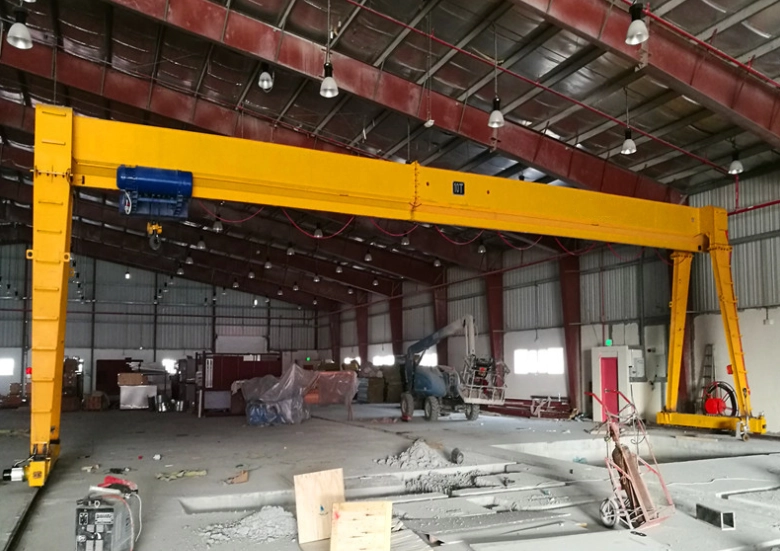
A useful RFQ does not need to be complicated. It does need to be specific.
Send us:
- Required lifting capacity
- Lifting height
- Required span
- Crane travel length
- Power supply
- Indoor or outdoor location
- New or existing facility
- Material being handled
- Expected operating frequency
- Ground, rail, runway, or building support conditions
- Installation and maintenance access limits
- Any special environment or control requirement
We design customized crane systems and support installation, after-sales service, maintenance, upgrading, and modification. FLAGCRANE has more than 30 years of crane experience and serves customers in more than 50 countries.
FAQ
Q: How do I choose the right gantry crane capacity for my needs?
A: Start with the heaviest real load, then include any lifting attachment. Also consider operating frequency, load shape, lifting height, and occasional heavier lifts. Final rated capacity should be confirmed with the complete working conditions.
Q: Portable gantry crane vs fixed gantry crane: which is better for indoor mechanical work?
A: A portable gantry is useful when the lifting point changes, floor space is limited, or the crane must move between maintenance tasks. A fixed system is better when loads follow the same route repeatedly and a permanent rail arrangement is practical.
Q: When should you use a single-leg or semi gantry crane?
A: Consider a semi gantry crane when one side can use an existing building-supported runway while the other side needs a ground rail. This can also help reach areas close to a wall. Building support must be checked during engineering.
Q: What gantry crane specifications should I provide for a quote?
A: Provide capacity, lifting height, span, travel length, power supply, facility type, application, operating frequency, site conditions, and any special attachment or environmental requirement. Site drawings are useful when available.
Q: How do site conditions affect gantry crane selection?
A: Site conditions can change the leg arrangement, rail position, span, travel system, electrical configuration, corrosion protection, and installation method. Ground strength, building support, obstacles, outdoor exposure, maintenance space, and assembly access should be reviewed before final design.